


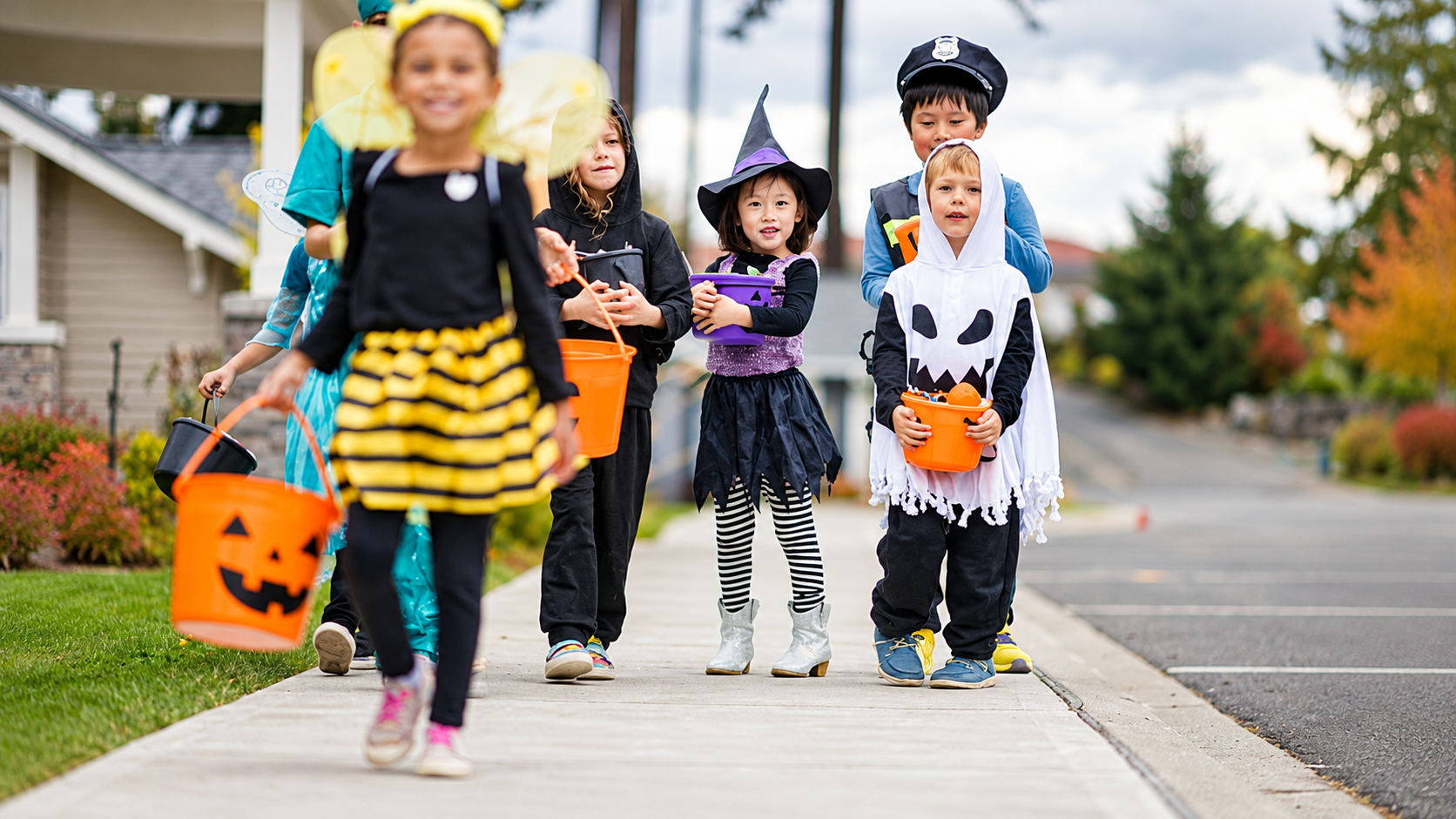
A dropped candy bag can send a child into the street. A costume that fits perfectly while standing still can slip beneath a shoe on the first flight of porch steps. A dark mask can hide the approaching car its wearer needs to see.
For Southern Oregon families preparing for Halloween, those brief moments deserve attention before the doorbell ringing begins. The evening puts excited children, unfamiliar walkways and neighborhood traffic together after dark, making preparation as much a part of the night as choosing a costume.
The first safety check belongs at home, with children dressed and ready to move. Have them walk, climb a few steps and turn their heads in both directions. A dragging cape, slipping hat or mask with limited visibility needs adjusting before departure. Shoes should stay securely on their feet, and costume accessories should be soft enough to avoid injury if someone stumbles.
Warm clothing should fit comfortably beneath costumes without restricting movement. Across Southern Oregon, families heading into neighborhoods with fewer streetlights or stretches without sidewalks should consider how well their children can see the route and how easily approaching drivers can see them. Check the evening forecast and choose clothing and footwear for the conditions.
A flashlight belongs in the preparations alongside the candy bucket. Test it before leaving, and make sure children know how to aim the beam toward the ground ahead. Reflective tape on bags, sleeves and costume hems adds visibility when headlights approach. Glow sticks can help identify members of a group, but they do not illuminate an uneven sidewalk or a dark porch step.
Company is another essential part of the plan. Children younger than 12 should have an adult accompanying them. Older children going without direct supervision should travel in pairs or groups, with a clear agreement that nobody leaves a companion behind to reach the next house first.
Parents should know the route, the companions and the expected return time. Older children should understand what to do if the group becomes separated or plans change. A charged phone can help maintain contact, but checking a message should mean stopping in a safe place, away from the roadway.
At each street crossing, the candy hunt needs to pause. Children should cross together at corners or marked crosswalks, look left, right and left again, and continue watching for vehicles. A driver’s headlights do not guarantee the driver has seen a small child near the curb.
Parked vehicles create another hazard by concealing children from approaching traffic. Crossing between them, even to reach a house directly opposite, can put a trick-or-treater into the roadway with little warning. Use sidewalks wherever available. Without one, walk facing traffic and remain as far from moving vehicles as possible.
Adults behind the wheel should expect frequent stops, crowded curbs and children who change direction suddenly. Slow down through residential areas, put phones away and check carefully before backing out of a driveway. A child bending down to retrieve spilled candy may be especially difficult to spot.
At the doorstep, children should remain outside. Treats should never require entering a house, garage or vehicle. Visit homes with porch lights on and a clear, illuminated approach, and keep the group together between stops.
The candy inspection should be agreed upon before departure, while the bags are still empty. Children need to know they will wait until home before sampling their collection. A meal beforehand and water available during the outing can help keep hunger and thirst from driving the evening.
Once home, spread the treats across a clean table under good lighting. Check for open seals, torn wrappers, pinholes, unusual discoloration and anything that appears damaged or altered. Discard loose, unwrapped or suspicious candy. Homemade food from an unfamiliar household should also be set aside.
For a child with food allergies, a familiar wrapper does not replace reading the label. Seasonal shapes, sizes and assortments may have different ingredients. Any treat without enough information to confirm that it is appropriate for the child should remain uneaten. Prescribed emergency allergy medication should accompany the child, and the supervising adult should understand the child’s emergency plan.
Younger siblings need their own review of the haul. Hard candies, gum, whole nuts and small toys can pose choking hazards. Remove unsuitable items before sharing begins, and keep wrappers and small objects away from babies and toddlers.
Families handing out treats have preparations of their own. Clear garden hoses, electrical cords and decorations from walking paths. Sweep slippery leaves from steps, turn on exterior lights and keep pets secured away from arriving children. Battery-operated pumpkin lights avoid placing an open flame beside passing costumes.
Back at home, children can help sort the approved treats and choose a portion to enjoy. Put the remaining candy away, offer water and keep the usual bedtime toothbrushing. Before the porch light goes out, check that younger children cannot reach the bags, discarded wrappers or small prizes left behind.