


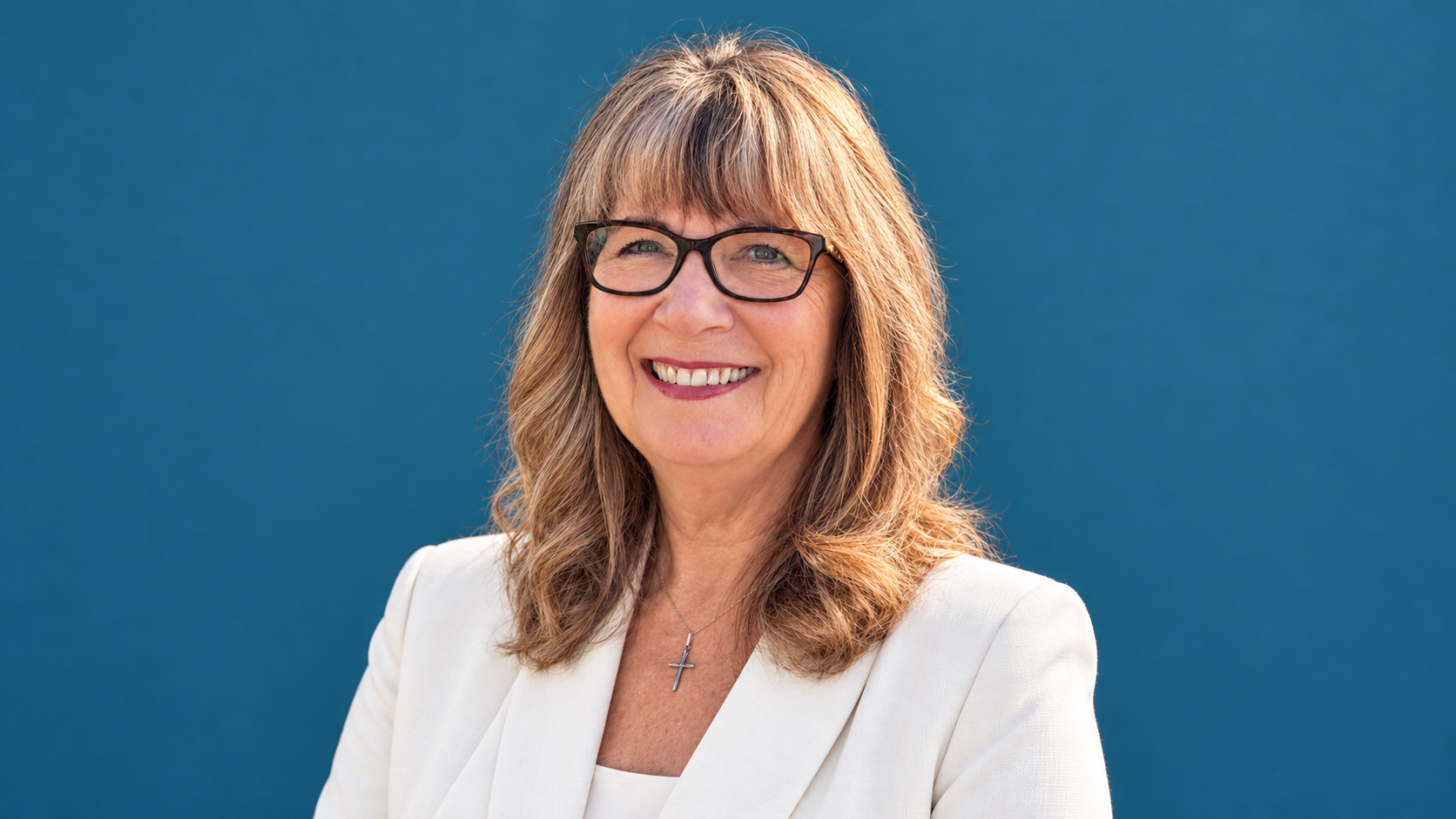
The Grants Pass Tribune sits down with Colene Martin, candidate for Josephine County commissioner Position 1, to ask the questions residents want answered before choosing who will represent them in county government.
The interview addresses taxpayer spending, financial stability, accountability, jobs, public safety, veterans, wildfire protection and data center development. Some of these questions came from voters. Martin’s answers appear below in full, in her own words.
Oliver: What are your immediate priorities for taxpayers, and how would you build long-term financial stability while protecting essential county services?
Colene Martin:
“My immediate priority is building a sustainable county budget that protects public safety and other essential services. As your commissioner since February, I have already begun that work and will continue it.
An organization the size of Josephine County operates under a complex financial model with many different funding mechanisms and restrictions. We must also remember that the county’s permanent property-tax rate is only approximately $0.58 per $1,000 of assessed value.
I will pursue a five-year financial forecast showing each department’s costs, funding restrictions, projected shortfalls, and reserves. Taxpayers deserve to know which services have dependable funding and which rely on temporary or uncertain revenue. Each department should identify measurable efficiencies, and every proposed expenditure should include its ongoing cost and funding source.
The county is already required to undergo an annual independent audit. In addition, we recently decided to hire someone who can conduct internal audits, giving us another important tool for accountability and financial oversight.
We must prioritize efficiencies and spending reductions based on their effects on services—not make across-the-board cuts that weaken essential operations.
Long term, I support responsible reserves, competitive purchasing, maintaining infrastructure before problems become costly emergencies, and economic development that strengthens our tax base. Federal timber revenue and SRS payments can help, but we should budget conservatively and avoid creating permanent obligations around uncertain federal funding.”
Oliver: What rules and safeguards would you support to strengthen accountability and public trust, and how would you ensure residents and the press receive answers from county government?
Colene Martin:
“Public trust requires enforceable rules that apply equally to commissioners, employees, citiizens and any vendors doing business with the county.
I support written conflict disclosures, recusals when required, competitive contracting, documented exceptions to bidding, and independent review of transactions involving personal or business relationships. Hiring should use published qualifications and consistent scoring. Appointments should have clear criteria and documented reasons for selection. County property transactions should include appropriate valuations, legal review and public authorization.
These safeguards should be backed by ethics training, separation of purchasing and payment responsibilities, audits, and a complaint process that protects employees from retaliation. Violations should have consequences consistent with law and county policy.
Citizens and the press deserve accessible budget reports, timely meeting packets and explanations of major expenditures. I support tracking information requests, assigning responsibility for responses and providing a clear timeline when research is needed. When information must remain confidential, we should explain the legal reason and release what we can.
I will explain my votes, acknowledge mistakes and correct the record when necessary.”
Oliver: What can county commissioners do to help local businesses retain and create jobs, and how would you fund those efforts and measure their results?
Colene Martin:
“My background as a business advocate with the Grants Pass & Josephine County Chamber of Commerce and the Oregon State Chamber of Commerce taught me that county government does not create private-sector jobs. Commissioners can, however, help create the conditions in which businesses remain, expand, and hire. That requires dependable infrastructure, timely permitting, a trained workforce, adequate housing, and a county government that responds when employers encounter obstacles.
I believe we should focus on four objectives:
First, we should work with the Grants Pass & Josephine County Chamber of Commerce and build upon its established business-retention program. The Chamber has a committee that meets monthly and a survey process that includes visits and discussions with local employers. This helps identify problems that businesses are facing.
I believe the Community Development department should designate a point of contact to help employers navigate permitting, land-use requirements, infrastructure, and workforce issues.
Second, we should establish reasonable timelines for county permit reviews and track whether those timelines are being met. A coordinated pre-application process would help businesses understand the requirements before investing significant time and money. This would provide greater predictability without weakening safety or environmental standards.
Third, we should prioritize the infrastructure needed to make employment lands development-ready, including water, sewer, broadband, transportation access, and adequate electrical capacity. This includes continuing our work around the Illinois Valley Airport and the Redwood Highway corridor, as well as identifying other appropriate industrial and commercial areas.
Fourth, we should continue working with our strong partners at Rogue Community College, local schools, and workforce organizations to better align education and training with available jobs. Employers should have a voice in identifying needed skills, and students should have clear pathways into local careers, apprenticeships, and skilled trades.
Funding should begin with existing economic-development resources, state and federal infrastructure and workforce grants, and shared investments with cities, utilities, educational institutions, and private employers. Any tax incentive should include clear performance requirements tied to wages, jobs, and private investment. Public funds should not be used for open-ended subsidies without measurable community benefit measure progress by tracking businesses retained or expanded, jobs created, wages and benefits offered, private investment, permit-processing times, infrastructure-ready employment land, grant funding secured, and the number of residents completing training and moving into local jobs.”
Oliver: How would you support public safety and emergency readiness, and what would you do if voters reject the jail and juvenile detention levy?
Colene Martin:
“Josephine County’s public safety system depends on three essential partners: the Sheriff’s Office which includes the jail, the District Attorney’s Office, and Juvenile Justice Services. Each plays a distinct role, and all three must be adequately supported for the system to work effectively. I call it a three-legged stool supported by the Sheriff’s Office, the District Attorney’s Office, and Juvenile Justice Services. For nearly 10 years, Josephine County has relied on levies to help bridge the gaps in public safety funding. Thankfully, those levies have been effective in supporting jail operations and juvenile justice services. We then added the district that supports patrol.
Each time a levy comes up for renewal, the circumstances have changed. Costs increase, and state and federal requirements can affect the services we are required to provide. It makes trimming off one-leg of the stool an easy option. In my opinion, we must look at public safety holistically—as one connected system rather than as separate departments and separate funding sources.
Public safety requires dependable funding and an honest accounting of what each funding source can cover. I support renewing the existing jail and juvenile detention levy at the same rate of $0.93 per $1,000 of assessed value. County departments are tightening their belts as much as possible, but responsible budgeting also requires us to recognize the true cost of maintaining essential services.
For emergency communications, I will continue pursuing grants and shared investments with partner agencies, including improvements to our communication towers. Every capital proposal must account for ongoing maintenance, replacement, and operating costs.
If voters reject the levy, I will support presenting a public contingency budget before the current funding expires. That plan should include verified savings, available lawful revenue, carefully limited use of reserves, and clearly explained service reductions. If a revised measure becomes necessary, voters should be given specific costs and clear service choices.”
Oliver: How would you support veterans and their families, and where do you see opportunities for the county to improve its services?
Colene Martin:
“Josephine County has a very good Veterans Service Office (VSO) committed to helping veterans and their dependents obtain the benefits they have earned. The county’s role is to provide qualified benefits assistance and connect veterans with the Department of Veterans Affairs. Our VSO counselors advise and assist veterans and their dependents in obtaining benefits available under county, state, and federal law. They serve as advocates and case managers for veterans who need services. Although we cannot control federal benefit decisions, we can help veterans submit complete claims and prevent them from being passed from office to office without receiving meaningful assistance.
We are also fortunate to have the Vet Center in Grants Pass, located near Seventh and Steiger Streets. Over the years, additional medical providers have become available in Grants Pass, reducing the need for veterans to travel to White City for care.
Veterans are a close-knit community, and they deserve every service we can provide in recognition of their brave service to our country. When considering gaps in service, transportation barriers are likely near the top of the list, especially for veterans traveling from rural areas such as the Illinois Valley, Sunny Valley, and Wolf Creek.
As for what the county could do better, we should evaluate appointment wait times, the number of rural veterans served, claims completed, benefits secured, and successful referrals. We should also ask veterans directly whether the assistance they received was accessible, timely, and useful.”
Oliver: What should Josephine County do to improve wildfire protection, emergency alerts and evacuation readiness, and what role should residents play?
Colene Martin:
“Since I have been in office, we have had to rebuild the Emergency Management Department this year and are off to a really good start with our new experienced Emergency Manager.
Emergency Management alerts use multiple systems, including Citizen Alerts, social media, door-to-door notification and coordination with local fire agencies. It also uses multiple agencies involving Emergency Managers, the Sheriff, Public Works, local fire districts, cities, Oregon Department of Forestry and the U.S, Forest Service. As well as state and federal land managers.
Our priority is protecting communities, critical infrastructure and evacuation routes.
Wildfire protection in our rural area we call home requires citizen participation as well. Landowners can help by hazardous-fuel reduction, practical evacuation planning, reliable alerts and coordination among their families.
Josephine County has a Firewise Program, and it helps to educate home owners on defensible-space, and provide some assistance for landowners seeking permits or grants.
Everyone should review evacuation routes, identify bottlenecks and dead ends, address routes serving vulnerable residents, and conduct at least one coordinated evacuation exercise before fire season. The county publishes clear information about evacuation levels, routes, shelters and transportation assistance.”
Oliver: With the changes in the county’s finance leadership, how would you stabilize financial management and strengthen oversight of taxpayer spending?
Colene Martin:
“My immediate priority is and has been a sustainable county budget that protects public safety and other essential services. As your current commissioner starting this past February, I will continue that work.
Our finance department has had 3 different CFOs in the past 3 years, in addition to an interim budget officer this year. Our new CFO is working to stabilize it and good progress is being made. We will pursue a five-year financial forecast showing each department’s costs, funding restrictions, projected shortfalls and reserves. Taxpayers deserve to know which services have dependable funding, and which rely on temporary revenue. We are required by law to do annual audits, and we do this with an outside firm. We are in the process of hiring additional staff in finance that will be doing internal audits. Each department should identify measurable efficiencies, and proposed spending should include its ongoing cost and funding source.
Long term, I support responsible reserves, competitive purchasing, maintaining infrastructure before repairs become emergencies, and economic development that strengthens our tax base. Federal timber revenue and SRS payments can help, but we should budget conservatively and avoid building permanent obligations around uncertain payments.”
Oliver: What is your position on large data center development, and what would you require before supporting a project?
Colene Martin:
“I don’t think Oregon is ready for any new additional mega data centers and that is what the citizens are concerned most about. This technology is growing very rapidly, and Oregon needs to get ahead of what the requirements will be. We already have several large ones in Oregon and the impacts of those need to be better studied. As for a project in itself, there is still a lot that the state and local communities will need in stronger planning, clearer standards and reliable information about their long-term impacts. We would evaluate each proposal individually and would not grant blanket approval.
Before supporting a project, we would require verified information on water use and drought impacts, electricity demand and ratepayer effects, noise, backup generators, traffic, land-use compatibility and emergency-service needs and most importantly neighborhood impacts. Projects should be located in suitable industrial areas and use water-efficient designs. Approval conditions must be measurable, enforceable and include consequences for violations.”
Her opponent, former commissioner John West, received the same questions and refused to respond to the Grants Pass Tribune’s request. His refusal denied readers his answers to the same issues Martin addressed, including concerns raised by the people seeking to elect their next commissioner. West is asking voters to return him to county office less than two years after the December 2024 recall election that removed him.
West’s refusal shows disregard for the residents whose questions he was asked to answer. These were questions about their taxes, their safety and the services their families depend on. He wants the authority to make decisions affecting their lives, yet declined to explain how he would exercise it. Answering voters is a basic obligation of anyone seeking public office, and West failed that obligation here.
Less than two years after voters removed him from office by 62%, West is asking them to hand him that authority again. Regaining public trust requires accountability, and refusing these questions undermines his case for a return. Voters owe him no second chance, and he has no claim to their confidence simply because his name is back on the ballot. If he expects their support, he should be prepared to answer to them.