


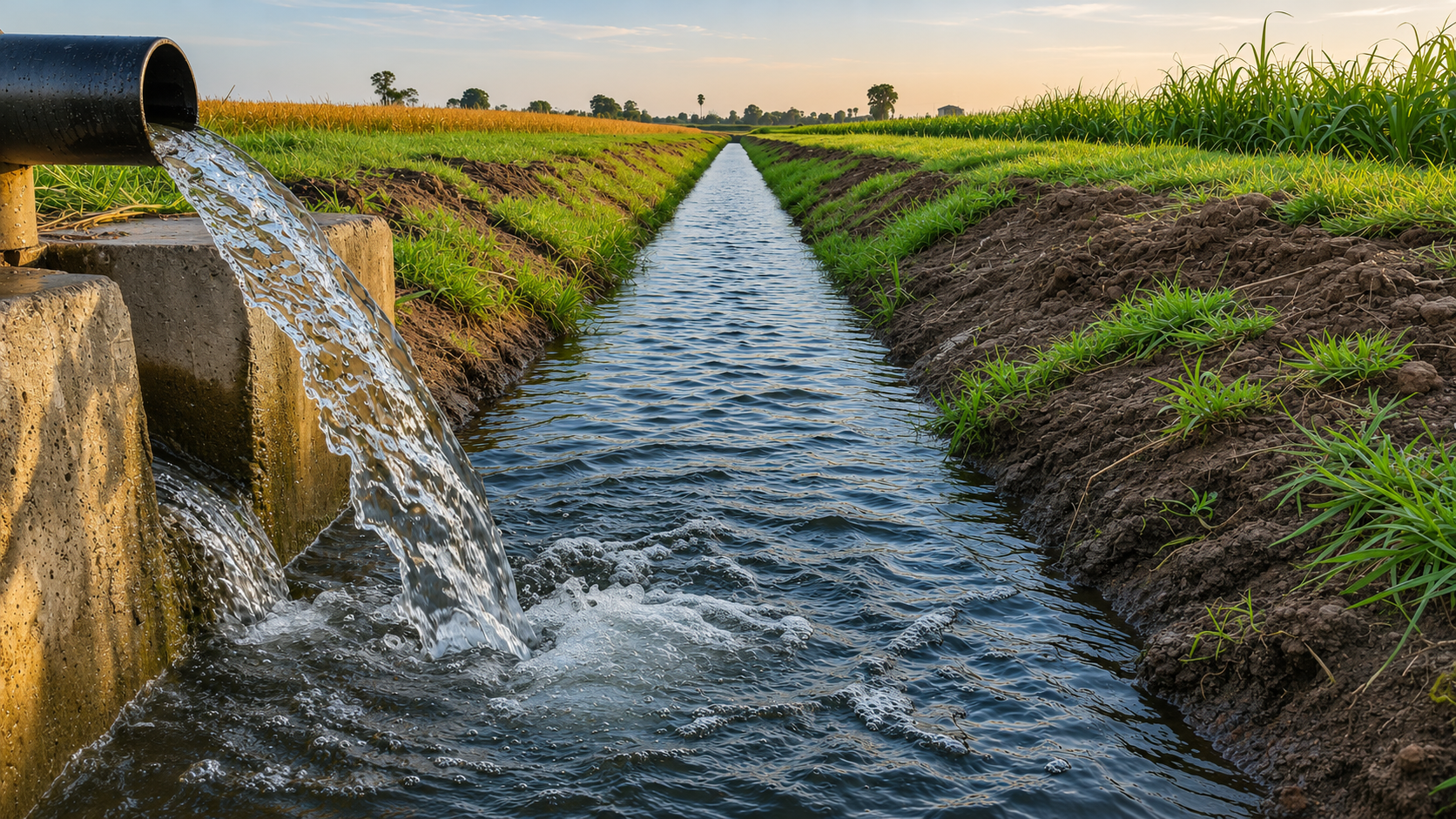
A $7.66 million federal investment will replace aging irrigation channels with enclosed pipes and upgrade farm watering systems in Malheur County, targeting water losses and agricultural runoff in a region where reliable irrigation supports thousands of acres of cropland.
The Owyhee Mid-Snake Irrigation Efficiency Project will combine improvements to the Owyhee Irrigation District’s delivery network with more efficient irrigation equipment on participating farms. The work is intended to stretch available water supplies during dry years while reducing sediment and nutrients carried into waterways.
Awarded through the U.S. Department of Agriculture’s Regional Conservation Partnership Program, the $7,666,203 will support improvements scheduled for implementation over five years. Oregon Senators Jeff Merkley and Ron Wyden announced the funding October 29.
Approximately 4.4 miles of open irrigation laterals, the channels that carry water through portions of the district’s distribution system, will be converted to enclosed piping. About 32 irrigation efficiency upgrades are also planned on local farms. Together, the improvements are projected to conserve 595 acre-feet of water annually, enough water to cover 595 acres to a depth of one foot.
The district’s irrigation network serves approximately 67,000 acres of farmland, including fields producing onions, alfalfa and sugar beets. Its roughly 375 miles of canals include infrastructure dating back about 90 years. The newly funded work will modernize selected portions of that network while addressing how water is applied after it reaches agricultural fields.
Enclosing open channels will reduce losses from seepage and evaporation along the upgraded sections. On more than 30 farms, the project calls for replacing older surface-flood irrigation methods with high-efficiency sprinkler systems. Coordinating those improvements allows the project to address water use both during delivery and within farm operations.
For agricultural communities facing recurring drought, the upgrades are intended to improve the reliability of existing supplies. The project focuses on conserving and managing water already available to the district, helping producers irrigate crops more efficiently when supplies are constrained.
Water quality improvements are another major component. The project is expected to prevent more than 5,500 tons of sediment from reaching local waterways each year. It also projects reductions of 13,556 pounds of phosphorus and 60,000 pounds of nitrogen entering local water systems, although the funding announcement does not specify a separate measurement period for those nutrient estimates.
Those figures represent anticipated results after improvements are implemented. They are not measurements of reductions already achieved.
Owyhee Irrigation District will lead the project in partnership with the Natural Resources Conservation Service, The Freshwater Trust and Farmers Conservation Alliance. The arrangement brings district infrastructure work and farm irrigation improvements into a coordinated conservation effort within Oregon’s Mid-Snake River Basin.
Approximately $3.9 million of the federal award will support The Freshwater Trust’s work modernizing irrigation on participating farms. That funding is included within the $7.66 million total.
The Regional Conservation Partnership Program, administered by the Natural Resources Conservation Service, supports partnerships addressing agricultural conservation needs. For the Owyhee project, the federal investment links water delivery improvements with efforts to reduce runoff and maintain agricultural production under recurring drought conditions.
The award adds to a broader effort to modernize the district’s aging infrastructure. Oregon Water Resources Department records document a separate 2024 proposal to improve operations at the district’s Dead Ox and Dunaway pumping plants, where older equipment limits the ability to adjust pumping output to changing demand.
That application sought $1.25 million toward a project estimated to cost approximately $2.83 million. Proposed improvements included variable-frequency drives and pump controls designed to reduce excess water pumped into canals, where it can contribute to operational spills, evaporation and sediment problems.
The pumping proposal estimated approximately 3,500 acre-feet of water conserved or left instream and electricity savings of about 560,000 kilowatt-hours. Those estimates belong to the separate pumping project. The state application record does not establish that the requested funding was awarded, and its projected benefits are separate from those associated with the October federal announcement.
For the newly funded project, detailed construction dates and the identities of participating farms have not been publicly specified in the available announcements. The five-year implementation period establishes the expected window for carrying out the canal and farm improvements.
Across the targeted sections of the Owyhee system, the investment will address two connected pressures on eastern Oregon agriculture: delivering limited water supplies more efficiently and reducing the soil and nutrients that irrigation runoff carries into surrounding waterways.