


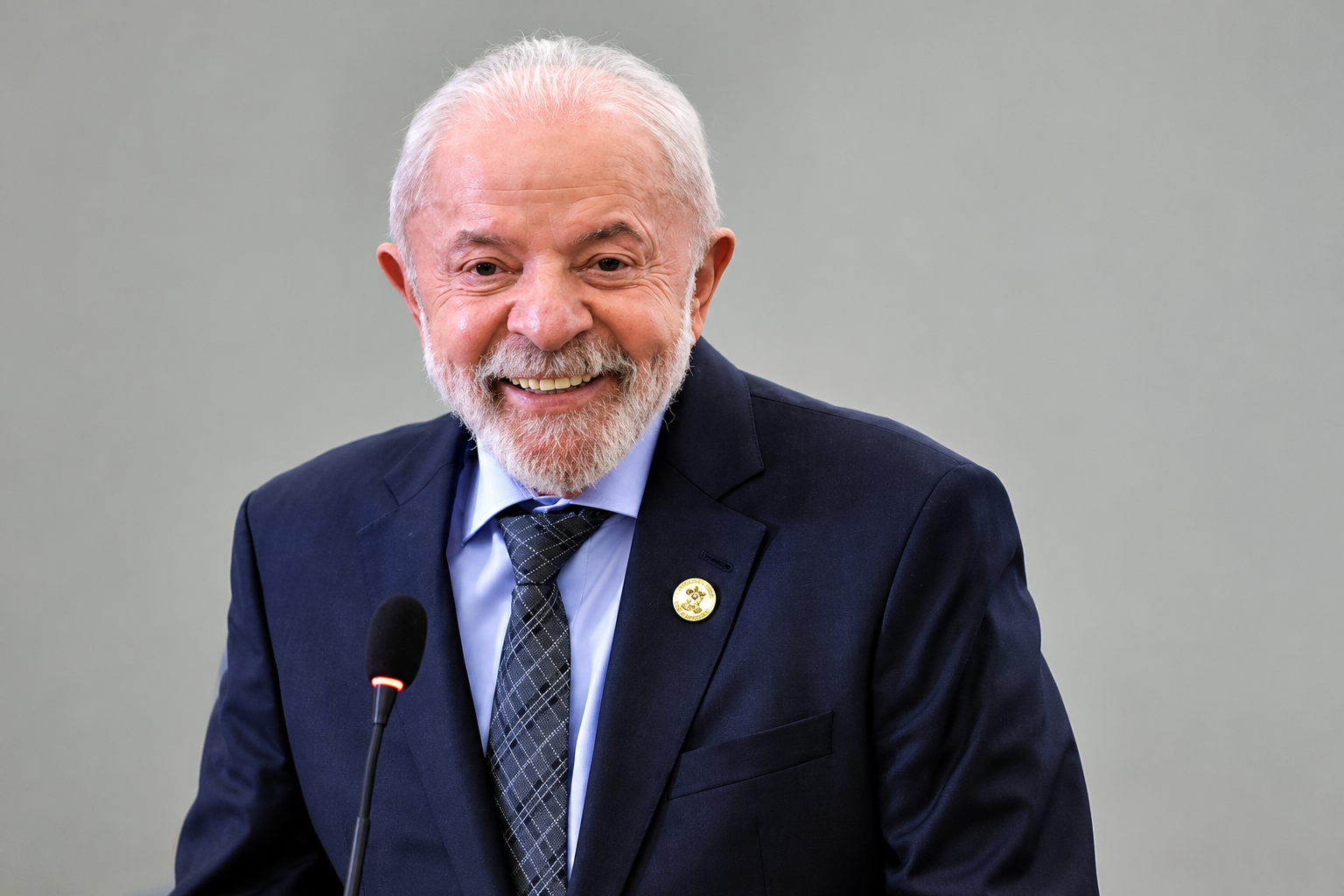
Brazilian President Luiz Inácio Lula da Silva secured an unprecedented fourth presidential term Sunday, October 25, defeating conservative Senator Flávio Bolsonaro in a closely contested election that reversed the results of the opening round, extended one of Latin America’s longest political careers and placed Brazil’s relationship with the United States at the center of a consequential new chapter in international diplomacy.
Lula, the 80-year-old leader of Brazil’s Workers’ Party, received approximately 51.8 percent of the valid votes, compared with 48.2 percent for Bolsonaro, according to results reported by Brazil’s Superior Electoral Court. The margin amounted to more than four million votes in a country of approximately 160 million registered voters. Electoral authorities confirmed the outcome Sunday evening, establishing Lula as the first Brazilian president elected to four terms through direct popular elections.
The victory followed an extraordinary three-week reversal in political fortunes. Bolsonaro, the son of former Brazilian President Jair Bolsonaro, entered the runoff after winning the October 4 opening round with 47.03 percent of the vote, compared with Lula’s 45.16 percent. No presidential candidate had previously overcome a first-round deficit to win the second round since Brazil restored direct presidential elections in 1989.
Lula’s reelection was accompanied by a contentious election day that included transportation disruptions, severe weather, an unprecedented judicial extension of voting hours and objections from Bolsonaro’s campaign. Although electoral authorities confirmed the president’s victory, Bolsonaro refused to concede and called for the results to be annulled, citing concerns surrounding the late judicial intervention.
The controversy developed shortly before polling stations were scheduled to close Sunday afternoon. Supreme Court Justice Cristiano Zanin ordered voting extended by two hours after both presidential campaigns raised concerns about conditions preventing voters from reaching polling locations. Lula’s representatives reported public transportation shortages in several regions, while Bolsonaro’s campaign cited heavy rainfall affecting communities in southern Brazil.
The ruling created confusion at polling stations, some of which had already closed before receiving notification. Polling locations that remained open were permitted to continue operating until 7 p.m., while those already closed were not reopened. Election officials temporarily interrupted the release of results before counting resumed after the extended voting period.
Zanin previously represented Lula as an attorney, a professional relationship that became a focus of criticism from Bolsonaro’s supporters. The opposition questioned the circumstances of the decision and its potential effect on the election. Brazilian judicial authorities nevertheless proceeded with the official count, and the reported results established Lula’s victory. The objections did not, by themselves, demonstrate that fraudulent ballots had been counted or that the announced result was invalid.
Voter participation also contributed to the historic outcome. Abstention declined from approximately 21.08 percent in the opening round to 19.21 percent in Sunday’s runoff. The reduction brought additional voters into an election already characterized by narrow margins, competing economic priorities and substantial disagreements over Brazil’s political direction.
The election represents another major chapter in Lula’s political career, which began in organized labor during the 1970s. A former metalworker and labor union leader, Lula helped establish the Workers’ Party in 1980 and became one of the country’s most prominent political figures during Brazil’s transition from military rule to democratic government.
After unsuccessful presidential campaigns in 1989, 1994 and 1998, Lula won the presidency in 2002 and secured reelection in 2006. His first two administrations emphasized poverty reduction, expanded social assistance and economic development during a period when Brazil benefited from strong international demand for agricultural products, minerals and other commodities.
His political career later encountered substantial legal and political difficulties. Corruption investigations resulted in criminal convictions and imprisonment, preventing him from participating in the 2018 presidential election. Brazil’s Supreme Court subsequently annulled his convictions, clearing the way for his return to electoral politics.
Lula defeated Jair Bolsonaro in the 2022 presidential election and returned to office in January 2023. His victory Sunday marks his fourth successful presidential campaign and his second consecutive electoral defeat of a member of the Bolsonaro family. He turns 81 on October 27 and is scheduled to begin his new four-year term on January 5, 2027.
The defeated candidate, Flávio Bolsonaro, entered the election as a senator representing Rio de Janeiro and the political successor to his father, whose presidency from 2019 through 2022 established a powerful conservative movement in Brazilian politics. Jair Bolsonaro was subsequently convicted in connection with efforts to overturn the results of the 2022 election and received a prison sentence of more than 27 years.
Flávio Bolsonaro’s campaign emphasized public security, reduced government spending, economic reforms and closer relations with the United States. He also advocated measures benefiting his father and supporters prosecuted in connection with the events surrounding the previous presidential election.
Lula campaigned on maintaining and expanding social assistance programs, strengthening worker protections and addressing economic pressures affecting lower-income households. His administration has promoted government investment, income assistance and public programs intended to improve access to essential services.
Economic conditions remained central to the election as Brazilian households confronted concerns over food prices, living expenses, public spending and employment opportunities. Despite improvements in several employment indicators, the cost of everyday necessities continued to influence voters across income groups.
Brazil’s economy, valued at approximately $2.6 trillion, is the largest in Latin America and among the largest internationally. The country is a major exporter of soybeans, beef, coffee, iron ore, petroleum and other commodities, making its economic policies consequential for international trade, global agricultural markets and foreign investment.
The presidential outcome carries particular significance for Washington, where President Donald Trump’s administration has pursued a substantially different approach to international trade and diplomatic relations than Lula’s government.
Lula has criticized American tariffs and advocated greater independence for Brazil in its relationships with major world powers. His foreign policy has emphasized multilateral cooperation, economic partnerships with developing countries and Brazil’s participation in international organizations, including the BRICS economic grouping.
Flávio Bolsonaro promoted stronger political and economic ties with the Trump administration and closer cooperation between conservative governments throughout the Western Hemisphere. His defeat leaves Lula responsible for managing relations with Washington during another four years in office, including negotiations involving trade restrictions, investment, agricultural exports and regional security.
Brazil and the United States maintain substantial commercial relationships involving manufactured products, energy, technology, agricultural commodities and industrial materials. Changes in tariffs, trade agreements or diplomatic cooperation between the two countries can influence American businesses and consumers as well as Brazilian producers and exporters.
The election also has implications for environmental policy. Brazil contains most of the Amazon rainforest, and its federal government plays a central role in international negotiations involving deforestation, biodiversity protection, agricultural development and climate commitments. Lula’s administration has supported stronger environmental enforcement and international cooperation, while conservative opponents have challenged aspects of those policies and advocated fewer restrictions on economic development.
Across Latin America, the election attracted attention from governments with differing political and economic priorities. Leaders in Mexico, Cuba and Bolivia were among those responding to Lula’s victory, reflecting Brazil’s influence in regional trade, diplomatic negotiations and international institutions.
At home, however, Lula’s fourth term will begin under political circumstances that could complicate his legislative agenda. Conservative parties strengthened their representation in Brazil’s Congress during the accompanying legislative elections, leaving the president facing substantial opposition over government spending, judicial affairs, economic reforms and executive policies.
Brazil’s presidential system requires negotiations with a multiparty Congress, where governing coalitions frequently depend on agreements among parties with competing regional and ideological interests. Lula’s ability to advance legislation will therefore depend in part on relationships with congressional leaders and political organizations outside his Workers’ Party.
The judiciary is another potential source of political conflict. Disputes involving the Supreme Court, investigations connected to the Bolsonaro movement and disagreements over judicial authority have remained prominent in Brazilian public life. The controversy surrounding Sunday’s voting extension adds another legal question to an already contentious relationship between political parties and the country’s highest courts.
For the Bolsonaro movement, the election establishes a new period of political uncertainty. Although Flávio Bolsonaro failed to win the presidency, his approximately 48 percent share of the runoff vote demonstrates the continued electoral strength of the conservative coalition associated with his family. Conservative leaders, including São Paulo Governor Tarcísio de Freitas, remain influential figures as political parties prepare for future elections.
For Lula, the victory provides another four-year mandate following a career that has included labor activism, two consecutive presidential terms, imprisonment, overturned criminal convictions and a return to the country’s highest elected office.
Sunday’s results also underscored the persistence of Brazil’s closely divided electorate. In 2022, Lula defeated Jair Bolsonaro by approximately 2.1 million votes. Four years later, the president defeated Bolsonaro’s son by a margin exceeding four million votes, but nearly half of participating voters supported the opposition candidate.
The immediate political calendar now includes the transition to Lula’s next administration, the organization of a new Congress and the possibility of legal proceedings arising from Bolsonaro’s objections to the election. Brazilian electoral authorities have recognized the result, while any formal challenges will proceed through the country’s established judicial processes.
With the presidential election concluded and a new term scheduled to begin in January, Brazil enters another period of political negotiations involving its economy, democratic institutions, foreign relationships and domestic priorities. Lula will remain at the head of Latin America’s largest nation and economy, extending a presidential career that began more than two decades ago and establishing a fourth term without precedent in Brazil’s modern electoral history.