


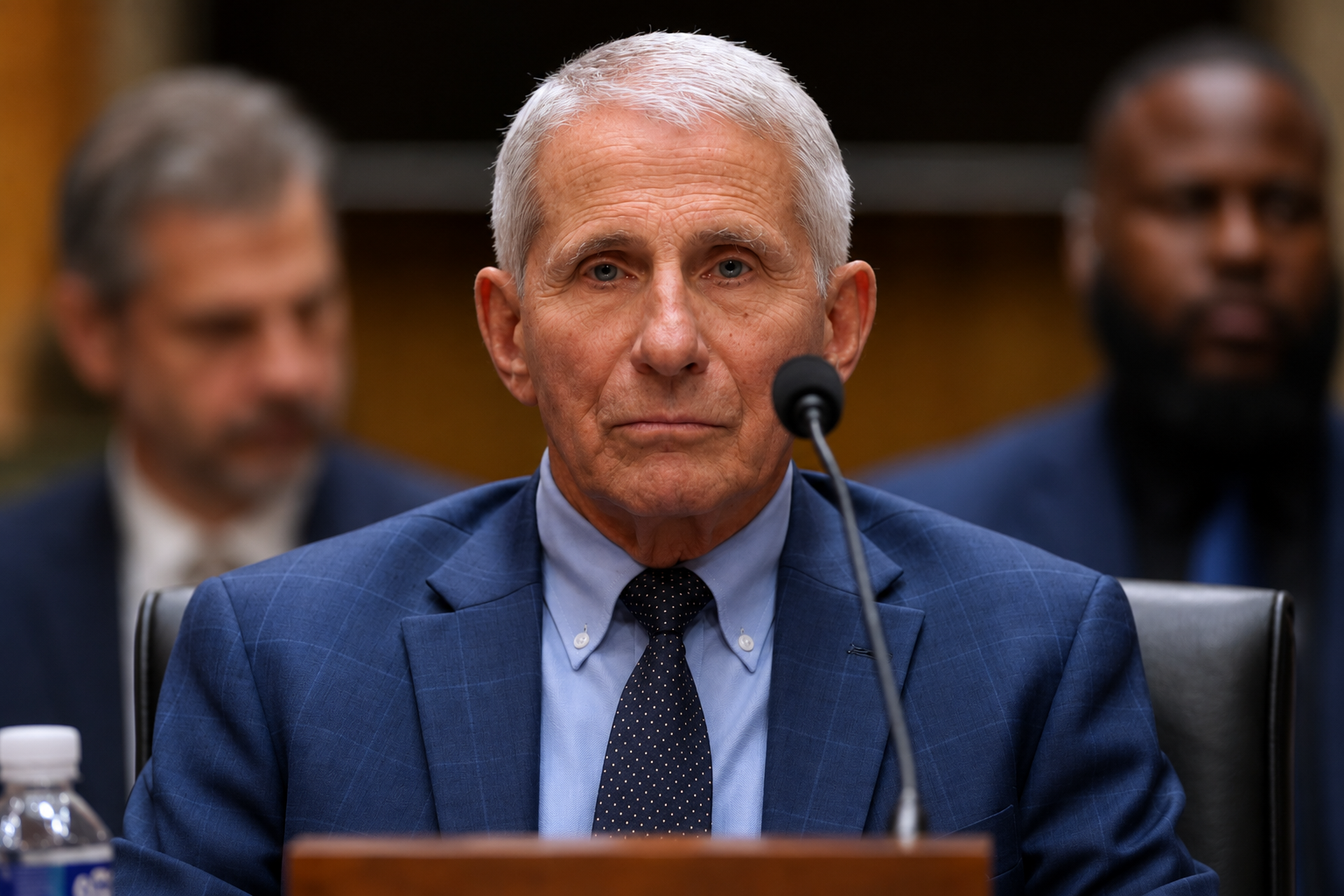
More than six years after the COVID 19 pandemic reshaped daily life across the United States, one of the nation’s most recognizable public health officials found himself back on Capitol Hill as congressional oversight of the federal pandemic response entered a new and highly scrutinized chapter.
Former National Institute of Allergy and Infectious Diseases Director Dr. Anthony Fauci appeared Wednesday before the Senate Homeland Security and Governmental Affairs Committee, where lawmakers examined decisions made during the federal government’s response to the pandemic, including questions surrounding scientific guidance, federal research funding and the continuing debate over the origins of COVID 19. The hearing marked one of the most closely watched political events in Washington this year and drew extensive national and international media coverage.
The hearing, chaired by Senator Rand Paul of Kentucky, represented the latest development in a years long congressional examination of pandemic era policies. Republicans on the committee focused much of their questioning on Fauci’s previous congressional testimony, National Institutes of Health research funding involving laboratories in China, and the government’s public messaging during the public health emergency. Democrats, meanwhile, argued that the hearing reflected continuing political disagreements over the nation’s response to an unprecedented global crisis and defended Fauci’s decades of public service.
Rather than responding to the committee’s questions, Fauci repeatedly invoked his constitutional right under the Fifth Amendment, declining to answer questions that he and his attorneys believed could potentially expose him to legal jeopardy. Reports indicated that he exercised the privilege more than one hundred times throughout the proceedings, effectively limiting substantive testimony on many of the committee’s central questions.
Invoking the Fifth Amendment is a constitutional protection available to individuals who believe truthful testimony could be used against them in a criminal proceeding. Legal scholars have long noted that exercising the privilege is neither an admission of guilt nor proof that criminal conduct occurred. It is a right guaranteed under the United States Constitution and has been used by witnesses in numerous congressional investigations throughout American history.
The decision nevertheless became the defining moment of the hearing, fueling immediate political reaction across Washington and prompting renewed debate over accountability for decisions made during one of the most disruptive public health emergencies in modern history.
Committee members questioned Fauci on a wide range of subjects, including federal funding of coronavirus research, scientific discussions concerning possible origins of the virus, internal communications among federal health officials, and public recommendations issued during the pandemic. Republicans argued that Congress continues to have a responsibility to examine decisions that affected millions of Americans, while Democrats maintained that many of the issues being revisited have already undergone years of public examination.
Another point of discussion involved more than one thousand pages of Fauci’s personal pandemic era diary entries that recently became public. Committee members referenced portions of those writings during questioning as they sought to compare private observations with public statements made during the pandemic. Fauci’s legal team has maintained that the diary entries do not contradict his previous testimony or scientific positions and reflect the uncertainty that existed while the virus was still emerging.
Although the hearing generated substantial political attention, no new criminal charges were announced against Fauci during the proceedings. Likewise, no new evidence establishing criminal wrongdoing was publicly presented during the hearing itself. Much of the discussion revisited longstanding disagreements over scientific assessments, evolving public health guidance, and differing interpretations of research conducted during the early stages of the pandemic.
As the hearing concluded, Senator Paul announced his intention to pursue a committee vote on holding Fauci in contempt of Congress following his refusal to answer questions. Whether such a recommendation ultimately advances beyond the committee remains uncertain, and any potential criminal referral would require separate consideration by the United States Department of Justice.
As of Wednesday afternoon, the Department of Justice had not announced any criminal investigation stemming from the hearing, had not filed charges related to Fauci’s testimony, and had not issued a formal public statement regarding the proceedings. Similarly, the White House had not released an official press statement addressing the hearing or indicating any executive branch action connected to the day’s events.
The hearing underscored how the political, scientific and legal questions surrounding the pandemic continue to influence public policy years after the emergency officially ended. Issues involving laboratory research, pandemic preparedness, vaccine policy, emergency health guidance and congressional oversight remain active areas of discussion in both Washington and the broader public arena.
For many Americans, Wednesday’s hearing represented more than testimony from a former government official. It reflected the nation’s continuing effort to evaluate one of the most consequential periods in recent history. While the immediate hearing concluded without new legal action or definitive resolutions, it reopened debates that have persisted since the earliest days of the pandemic and signaled that congressional examination of the federal COVID 19 response is far from over.