


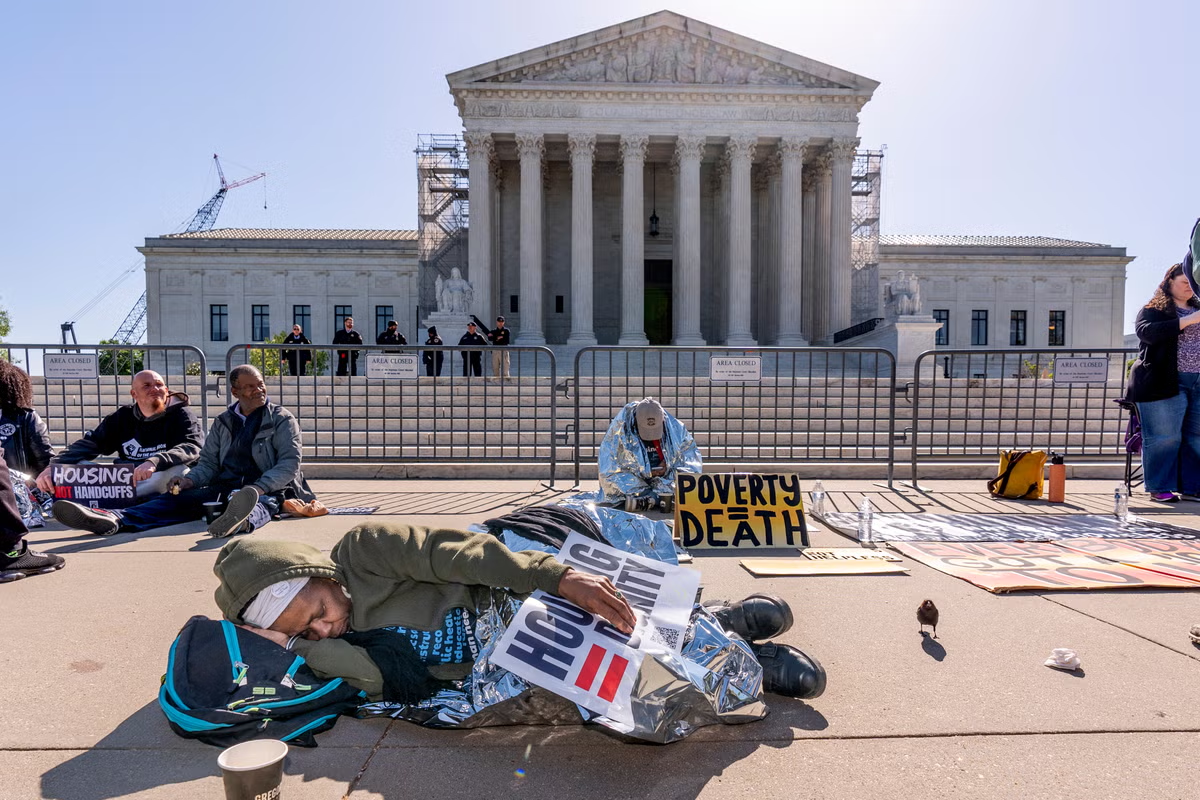
One year after the U.S. Supreme Court handed down its decision in City of Grants Pass v. Johnson, our city finds itself in an unexpected bind: while we technically won the case, enforcement remains on hold—and the crisis on our streets continues.
The June 2024 ruling made national headlines. In a 6–3 vote, the Court reversed a Ninth Circuit decision and declared that cities like Grants Pass have the constitutional right to ban camping on public property—even when there are no shelter beds available. This overturned the precedent set by Martin v. Boise, which had effectively tied the hands of cities for years when it came to removing homeless encampments unless alternative shelter could be provided.
The city had long argued it needed tools to maintain public safety and protect parks, sidewalks, and storefronts from becoming de facto campgrounds. After years of litigation and mounting frustration, the Supreme Court agreed—saying the city’s ordinances were aimed at conduct, not at criminalizing a person’s status as homeless.
But while that ruling gave the city legal clearance on the federal level, the local and state-level hurdles began piling up almost immediately.
In January 2025, advocacy groups filed suit against the city in Josephine County Circuit Court, citing violations of Oregon’s HB 3115. That state law, passed in 2021 and enacted in 2023, requires all camping bans to be “objectively reasonable” and accessible—especially for people with disabilities. The lawsuit argued that Grants Pass’s chosen alternative campsite lacked basic necessities like water, toilets, shade, and disability access. Days later, a judge issued a temporary restraining order blocking the city from enforcing its new camping ban.
That order has since evolved into a longer-term injunction. As of this week, the city still cannot legally cite or remove unhoused individuals from most public areas unless it provides safer, more accessible alternatives. Essentially, while the Supreme Court gave the city the green light, Oregon courts put up a red stop sign—and local leaders must now navigate both.
Meanwhile, the situation on the ground hasn’t improved. Tents continue to line major thoroughfares and parks. Trash and human waste are mounting concerns. Business owners are frustrated. Residents are worried about safety. And the unhoused community, many of whom are elderly or disabled, remains caught in a cycle of displacement, legal limbo, and inadequate shelter.
Local officials say they’re working to improve conditions at designated sites and exploring partnerships to expand services. But activists argue that throwing people in jail or handing out citations without giving them a real place to go only worsens the problem.
And so, one year later, Grants Pass remains at the center of a national conversation—but without a clear path forward. We won a fight in the highest court in the land, but we’re still grappling with what victory means in practice. Legal clarity hasn’t delivered practical solutions, and the humanitarian crisis unfolding on our streets isn’t waiting for another ruling.
If anything, the story of Grants Pass v. Johnson proves that court victories alone can’t solve complex problems like homelessness. Real progress will depend on what we do next—right here at home.