


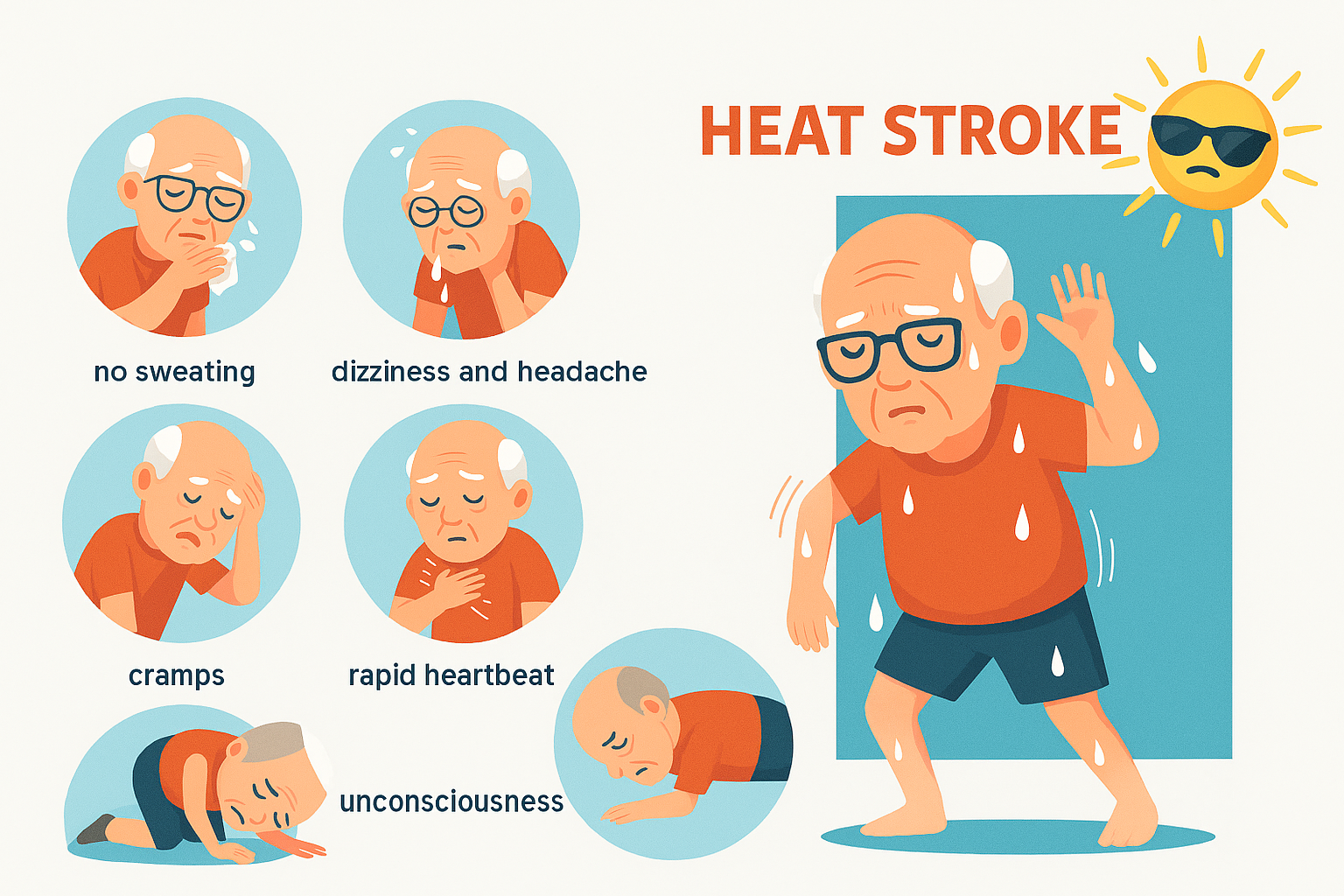
As high temperatures return to southern Oregon this week, it’s important to take proactive steps to prevent heat-related illnesses—especially heatstroke, the most serious and potentially life-threatening condition brought on by extreme heat. Whether you’re hitting the golf course, going for a run, or spending time outdoors with friends, knowing how to spot the warning signs and respond quickly could save a life.
Heatstroke occurs when the body overheats and loses the ability to regulate its internal temperature. Unlike heat exhaustion, which can usually be reversed with rest and hydration, heatstroke sets in when core body temperature climbs above 104°F and begins to affect the brain, muscles, and vital organs. Without immediate treatment, it can lead to permanent damage or even death.
Symptoms of heatstroke can appear suddenly and escalate quickly. Watch for signs such as confusion, disorientation, dizziness, headache, or nausea. Skin may feel hot and dry to the touch, even if the person has stopped sweating. In some cases, the pulse becomes rapid and strong, or the person may collapse without warning. These are red flags that require immediate medical attention.
If you suspect someone is suffering from heatstroke, call 911 right away. While waiting for emergency responders, move the person to a cooler environment—indoors or in the shade—and begin cooling their body. Loosen or remove unnecessary clothing, and apply cool, damp cloths to areas like the neck, armpits, and groin. You can also fan them or mist their skin with water to accelerate cooling. Avoid ice baths unless directed by a medical professional, as sudden temperature changes can cause complications.
Hydration is your first line of defense against heatstroke. During periods of high heat, it’s essential to drink water consistently throughout the day—even before you feel thirsty. If you’re engaging in physical activity, consider sports drinks to replenish electrolytes lost through sweat. Avoid alcohol and caffeine, which can contribute to dehydration and impair your body’s natural cooling process.
Timing your outdoor activities is another key to prevention. Aim to exercise or play sports early in the morning or later in the evening when temperatures are lower. Wear lightweight, breathable clothing and a wide-brimmed hat for sun protection. Always keep water on hand and take frequent breaks, especially if you’re with children, seniors, or anyone with underlying health conditions.
Staying alert to the people around you is just as important as monitoring your own health. If your golf partner or hiking buddy seems sluggish, unusually quiet, or unsteady, it may be time to take a break and rehydrate. Heatstroke can impair judgment and motor skills, making it difficult for the affected person to recognize their own symptoms.
As the mercury rises in southern Oregon, take extra care to protect yourself and those around you. Heatstroke can strike quickly, but with awareness, hydration, and timely intervention, it’s also highly preventable. Don’t wait until someone collapses—know the signs, take action, and enjoy the summer safely.