


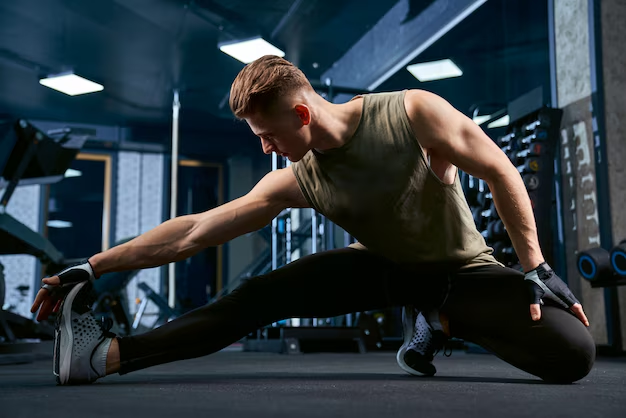
In gyms across the country, the clang of iron plates and the roar of effort echo with pride. Men and women sculpt their bodies like marble statues, building biceps, broadening shoulders, and chasing that perfect V-shaped torso. There’s no denying that muscle mass looks impressive—but muscles without flexibility are a bit like a Ferrari with a locked steering wheel: flashy, powerful, and fundamentally limited.
It’s an uncomfortable truth for many gym-goers: being strong doesn’t always mean being functional. A tight hamstring here, a rigid shoulder there—these are more than just minor inconveniences. They’re warning signs. When strength is prioritized at the expense of flexibility, mobility suffers, and so does overall performance.
Let’s talk range of motion. The more flexible a muscle is, the more it can be used to its full potential. A bigger chest might look good in a mirror, but if the shoulder joint can’t rotate freely or extend properly, that bulk can become a burden. Injuries become more likely, recovery time increases, and movements in everyday life—from reaching for something in the backseat to bending down to tie a shoe—suddenly become awkward or even painful.
You don’t see too many bulky martial artists for a reason. Martial arts emphasize fluid motion, quick reaction time, and full-body coordination. These athletes train not just for strength, but for agility, balance, and yes—flexibility. Their bodies are trained tools, not static displays. The same goes for dancers, gymnasts, and yogis. Their muscles are lean, responsive, and capable of moving through wide arcs with control and grace. And that control? It comes from years of stretching, lengthening, and mindfully engaging their muscles.
Boxers and bodybuilders, by contrast, often rely on short, repetitive movements—bench presses, curls, deadlifts. These are important, sure. But if stretching isn’t part of the routine, those muscles tighten. Over time, that tightness leads to a shortened range of motion, and ironically, reduced strength efficiency. You can only push or pull as far as your muscles and joints allow.
Enter yoga, martial arts, and dynamic mobility training—tools that serve as the perfect counterbalance to heavy lifting. Yoga teaches mindful breathing and controlled stretches that release muscle tension and increase elasticity. Martial arts build strength and flexibility simultaneously, making it a full-body discipline that benefits all types of athletes.
Flexibility isn’t about being able to do the splits or twisting into a pretzel. It’s about functionality. It’s about ensuring that the muscles you’ve built can actually move the way nature intended—smoothly, efficiently, and without injury.
So, the next time you’re in the gym chasing gains, remember this: the strongest person in the room isn’t always the biggest. Sometimes it’s the one who can bend without breaking, twist without tearing, and stretch without snapping. Flexibility isn’t an accessory to fitness—it’s an essential part of it.