


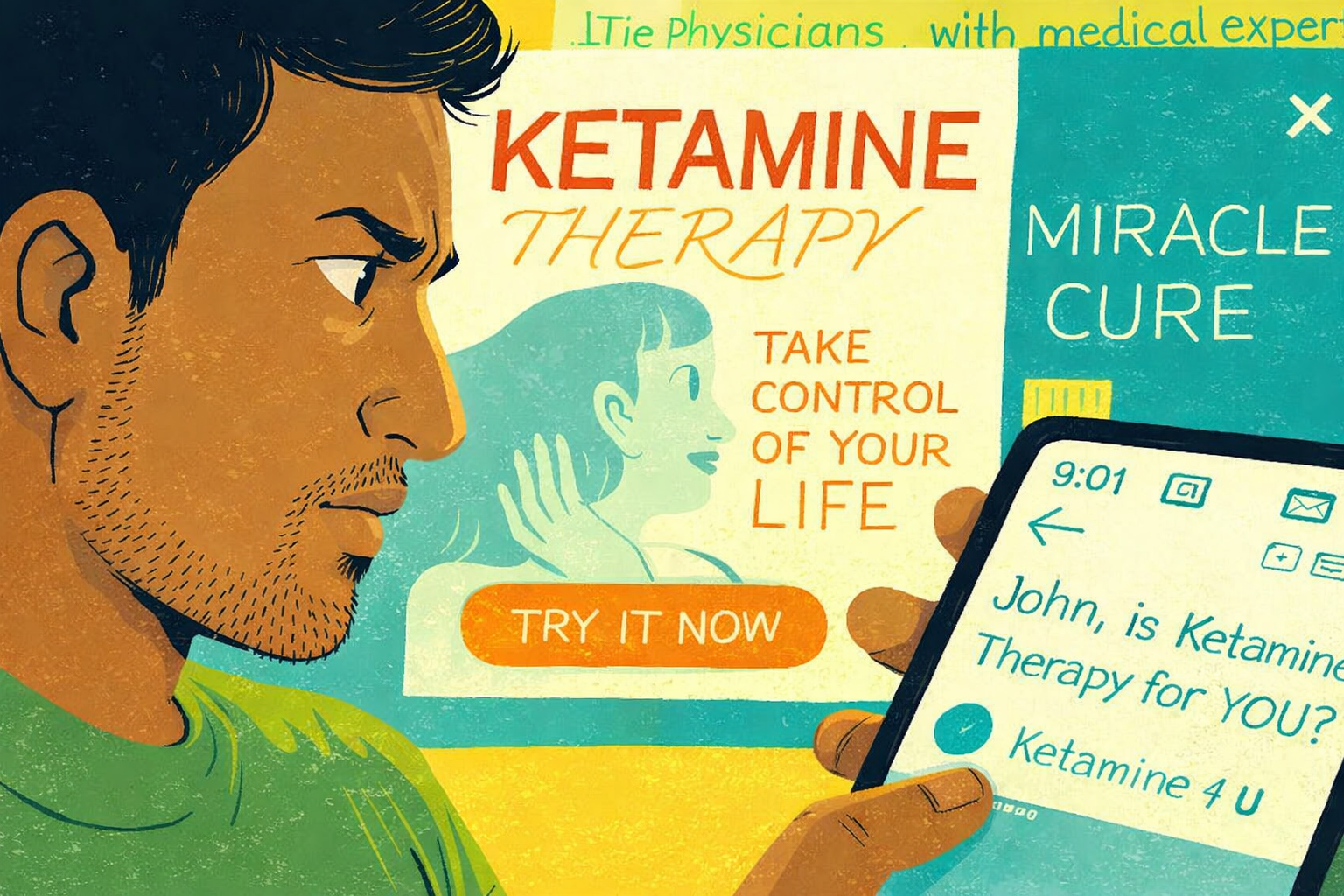
As interest grows in new and alternative approaches to mental health treatment, ketamine has increasingly entered public conversation. What was once known primarily as an anesthetic used in hospitals is now being discussed online as a quick fix for depression, anxiety, and emotional distress. This rise in visibility has also created fertile ground for misinformation, gimmicks, and outright scams, particularly across social media platforms and spam email campaigns. For consumers seeking relief, separating legitimate medical treatment from dangerous false claims has never been more important.
Ketamine is a federally regulated medication that can only be legally obtained through a licensed medical provider. It is sometimes prescribed in carefully controlled, low-dose therapeutic settings for specific conditions such as treatment-resistant depression or certain anxiety disorders. Even in those cases, ketamine use requires medical oversight, proper screening, and monitoring for side effects and interactions. There is no legal or medically accepted version of ketamine that can be casually purchased online, delivered through social media advertisements, or obtained without a prescription.
Despite this, many online posts and promotional emails falsely market products as ketamine or ketamine-like therapies. These messages often use vague language, wellness buzzwords, or claims of microdosing to give the impression of legitimacy. Some advertise powders, nasal sprays, gummies, or supplements that suggest ketamine effects without providing credible sourcing, clinical backing, or regulatory approval. In reality, these products are almost certainly not ketamine at all and may contain unregulated substances that pose serious health risks.
Social media has amplified these misleading claims by rewarding attention-grabbing content rather than accuracy. Influencers, sponsored posts, and anonymous accounts may promote unverified products as breakthroughs, while downplaying risks or legal restrictions. Spam emails frequently mimic medical language or imply doctor endorsement without any factual basis. For individuals experiencing depression or anxiety, this environment can be especially harmful, offering false hope while diverting people away from appropriate care.
It is also important to understand that ketamine is not a universal solution. Even when prescribed legally, it is not suitable for everyone and is not a first-line treatment. Medical providers assess a patient’s history, current medications, and overall health before considering ketamine therapy. Ongoing supervision is essential because side effects can include changes in blood pressure, dissociation, and potential for misuse if not properly managed.
For those struggling with symptoms of depression or anxiety, the safest and most effective path begins with a qualified healthcare professional. A doctor can evaluate symptoms, discuss evidence-based treatment options, and determine whether ketamine is appropriate or whether other therapies may be more beneficial. This process protects patients not only from medical harm but also from legal and financial exploitation.
In an era where health advice is often reduced to short videos and viral posts, caution is essential. Ketamine is a prescription medication, not a wellness trend, and certainly not a product to be trusted based on social media claims or unsolicited emails. When it comes to mental health, legitimate treatment comes from medical guidance, not from online gimmicks that promise fast results without accountability.