


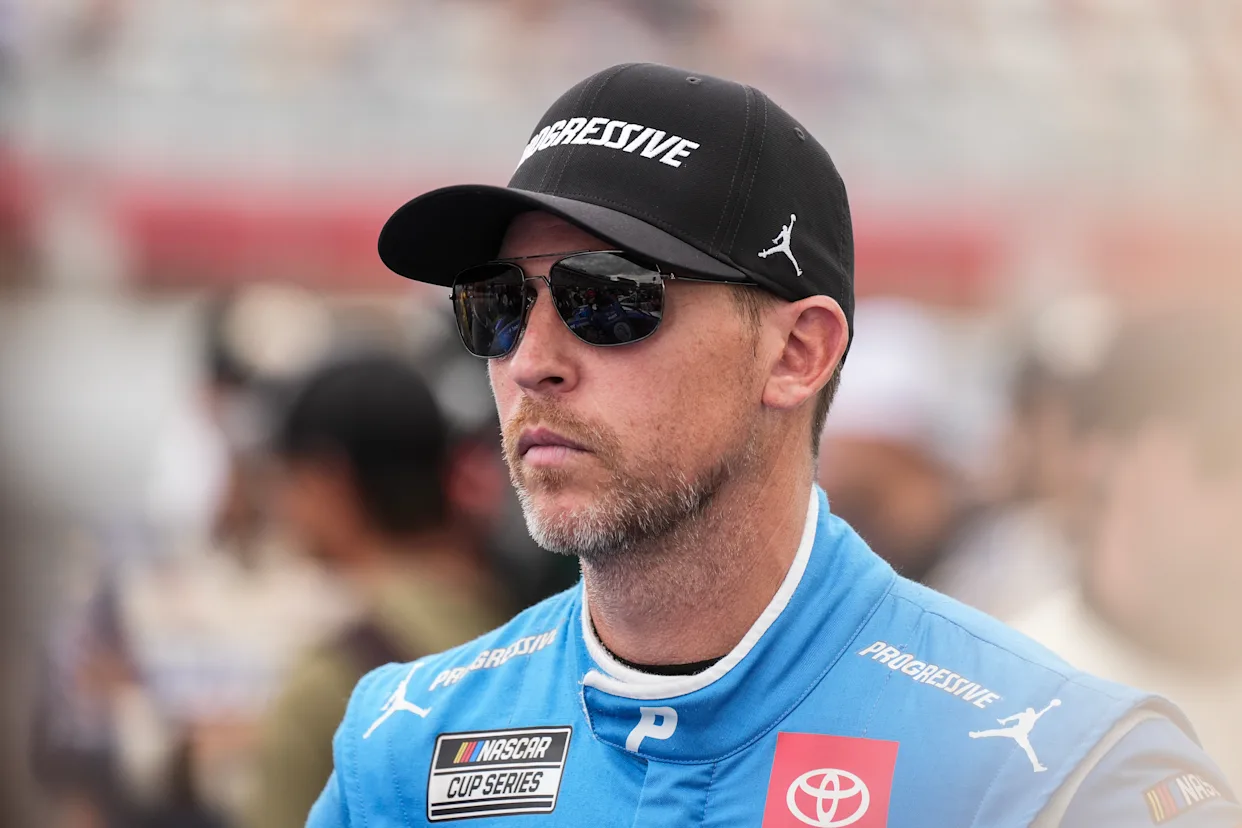
A deadly house fire in rural Gaston County has cast a somber shadow over the North Carolina racing community, marking the latest in a series of deeply personal tragedies connected to NASCAR families in the region.
Emergency crews were dispatched Sunday evening to a residence along Blacksnake Road near Stanley, where a two story home was already heavily involved in flames by the time firefighters arrived. The fire spread rapidly through the structure, ultimately overwhelming the building and leaving it a total loss. Despite a large multi agency response, suppression efforts were slowed by limited access to nearby water sources, a challenge common in more rural parts of the county.
Authorities later confirmed the victims as Dennis Hamlin, 75, and Mary Lou Hamlin, 69. Dennis Hamlin was found outside the home with severe injuries and was transported to a local hospital, where he later died. Mary Lou Hamlin escaped the burning structure but sustained critical injuries and was airlifted to the Atrium Health Wake Forest Baptist Burn Center for specialized treatment. Her condition remains serious as of the latest official updates.
The victims are the parents of Denny Hamlin, one of NASCAR’s most recognizable figures and a longtime competitor at the highest levels of the sport. The home, located outside the town limits of Stanley, was associated with a real estate holding connected to the Hamlin family. Investigators say the cause of the fire has not yet been determined, citing the extensive damage and structural collapse that complicate forensic analysis.
The loss has resonated far beyond Gaston County. NASCAR has deep roots in North Carolina, where many drivers, team members, and their families live away from the racetrack spotlight. For many in the racing world, the tragedy underscores how sudden and devastating emergencies can reach even the most well known names in the sport.
The incident follows closely on the heels of another recent tragedy involving a NASCAR family. Just the week before, the racing community was still absorbing news connected to Greg Biffle, whose family experienced a separate and unrelated loss in the same broader region of North Carolina. While the circumstances differed, the proximity in time and place has amplified the sense of collective grief among fans, teams, and local residents who view the sport as an extended family rather than a distant professional enterprise.
Fire officials in Gaston County noted that crews remained on scene for hours Sunday night, working not only to extinguish lingering hot spots but also to ensure nearby structures were protected. The area surrounding the home is lightly developed and wooded, conditions that can accelerate fire behavior once flames take hold. No firefighters were injured during the response.
As investigators continue their work, county officials have emphasized the importance of fire safety awareness, particularly in rural communities where response times and water access can differ significantly from urban settings. The tragedy has prompted renewed discussion among local emergency managers about infrastructure, preparedness, and the vulnerability of older homes to fast moving fires.
For the Hamlin family, the focus now remains on recovery and remembrance. Dennis Hamlin was transported from the scene alive, a detail that underscores both the intensity of the fire and the desperate efforts made to save him. Mary Lou Hamlin’s survival, though marked by serious injuries, stands as a testament to the narrow margin between life and death in such emergencies.
In a state where racing heritage runs deep, the loss of life and the suffering left in the wake of these recent events serve as a reminder that behind the helmets, trophies, and televised races are families who face the same sudden tragedies as any other community. As North Carolina mourns, the emphasis remains on facts, compassion, and respect for those enduring unimaginable loss.