


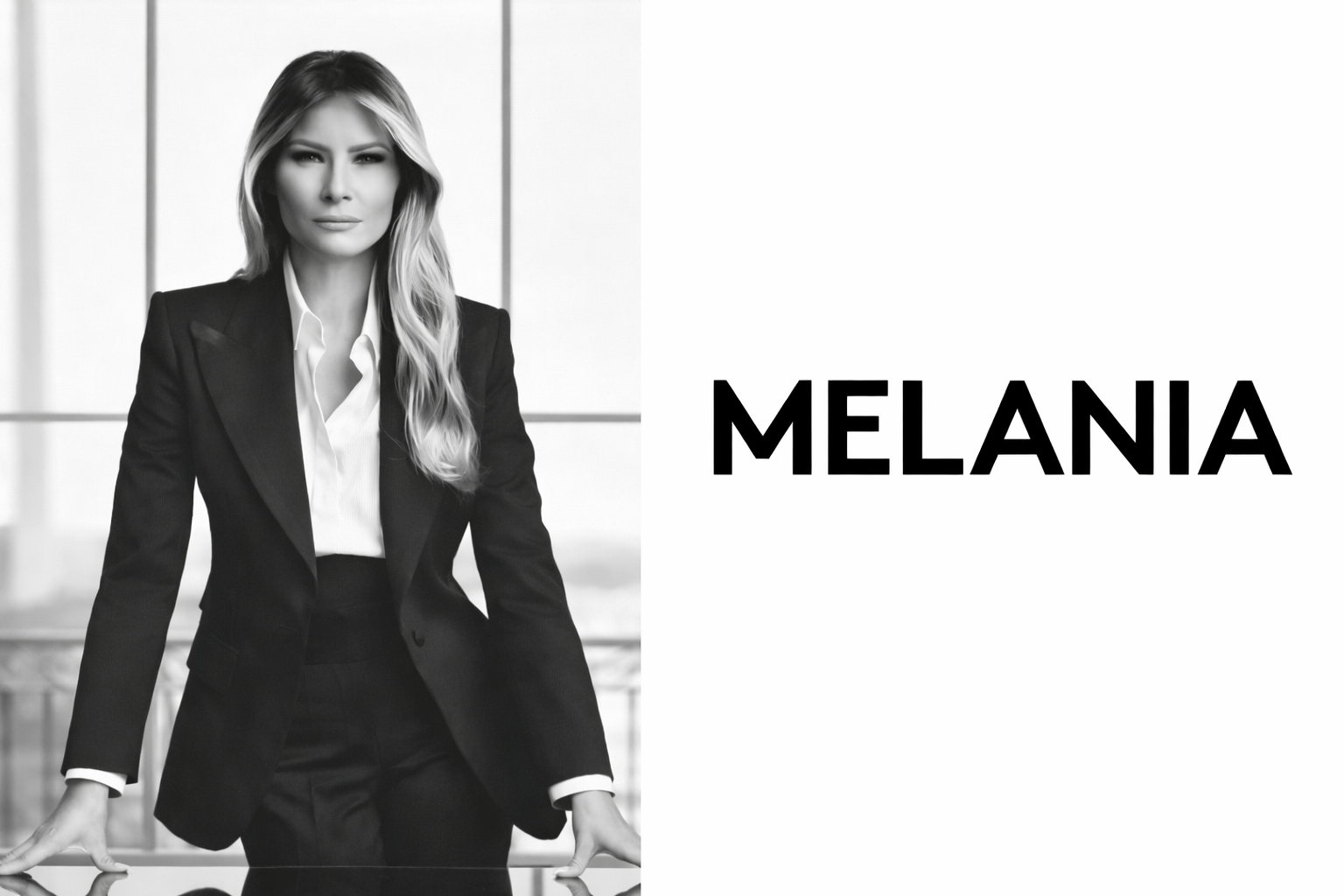
For most of American history, First Ladies have lived in a familiar contradiction, highly visible yet rarely heard on their own terms. When Hollywood has turned its attention to them, it has usually done so at a safe distance, with actors stepping into their lives years or decades later, interpreting moments already settled into history. Films like Jackie followed that model, offering reflection rather than immediacy. That is why the release of Melania feels different, not louder, not necessarily more important, but distinctly of this moment.
The documentary places Melania Trump on screen as herself, telling her own story without the filter of dramatization or the cushion of historical distance. That alone makes it unusual. No living First Lady has previously been the central subject of a feature-length documentary so close to active political life. The film arrives while the public conversation around the Trump presidency, and the political future of Donald Trump, remains unresolved, charged, and deeply divided.
This is not a film anyone was publicly asking for, yet it was delivered with the full polish of a major media release. Visually refined, carefully structured, and professionally marketed, it enters the cultural space less like a quiet personal reflection and more like a statement. For some viewers, that presentation reads as an attempt to reclaim control over a narrative long shaped by others. For others, it is simply a former First Lady choosing to speak in her own voice, on her own terms, after years of relative silence.
What complicates the reaction is the medium itself. Documentaries carry an implied promise of truth, or at least honesty, even though they are shaped by editing, access, and intent just as much as any other form of storytelling. This film does not exist outside politics, nor does it pretend to. It exists alongside campaign coverage, legal headlines, and a media environment where attention is currency. In that sense, it feels less like a standalone cultural event and more like another chapter in a long-running struggle over who gets to define the story.
There is also the practical question of money, one that lingers quietly beneath the surface. Like most commercial documentaries, the film is a business venture as well as a creative one. Proceeds typically flow first to production companies and distributors, covering costs and generating profit through ticket sales, streaming agreements, and licensing deals. The specifics of any financial arrangement involving Melania Trump have not been publicly disclosed. What is clear is that documentaries, regardless of tone or intent, are not neutral artifacts. They generate revenue, influence perception, and occupy space in the media economy.
Still, reducing the film to strategy alone misses something human. For all its polish, the documentary is also an attempt at self-definition. Melania Trump has often been treated as an accessory to politics rather than a participant in her own life story. This film appears to be her effort to step forward, to be seen as more than a silhouette beside power. Whether it succeeds is a personal judgment, one shaped as much by the viewer’s politics as by the film itself.
In the end, Melania says as much about the moment we live in as it does about its subject. Politics now arrives wrapped in cinematic language, and storytelling often doubles as positioning. The responsibility no longer rests solely with the filmmaker or the subject, but with the audience. In an age when films can feel like press releases and press releases can feel like entertainment, the task of separating narrative from reality has quietly shifted to the people watching.