


Almost six years after COVID-19 upended daily life across Oregon and the nation, many people have long since moved on from masks, testing lines, and quarantine guidelines. Yet for some residents, one of the pandemic’s most unusual symptoms never fully disappeared.
Loss of smell and taste became one of the defining hallmarks of COVID-19 infection during the early years of the pandemic. For many, the symptom lasted only a few weeks. Others spent months waiting for familiar scents and flavors to return. A smaller group entered a much longer chapter, living year after year with foods that tasted muted, meals that felt incomplete, and a world that seemed strangely absent of many of the smells that most people rarely stop to appreciate.
What researchers have learned in the years since is that recovery does not always follow a predictable schedule.
Medical studies tracking long COVID patients have found that while most people regain much or all of their smell and taste within the first year or two after infection, a percentage continue experiencing sensory changes for much longer. Some report partial recovery. Others describe distorted smells that make familiar scents seem unusual or unpleasant. A growing number have reported something else entirely: improvement arriving years after they believed recovery had stopped.
That finding is reshaping what physicians understand about post-viral smell loss.
The human sense of smell depends on specialized nerve cells located inside the nasal cavity. Unlike many other nerve cells throughout the body, these sensory receptors have the ability to regenerate. Researchers believe COVID-19 can disrupt this system in several ways, including inflammation, damage to supporting cells, and interference with communication between the nose and the brain. In some individuals, the repair process appears to take far longer than originally anticipated.
The result can be a recovery timeline measured not in weeks or months, but in years.
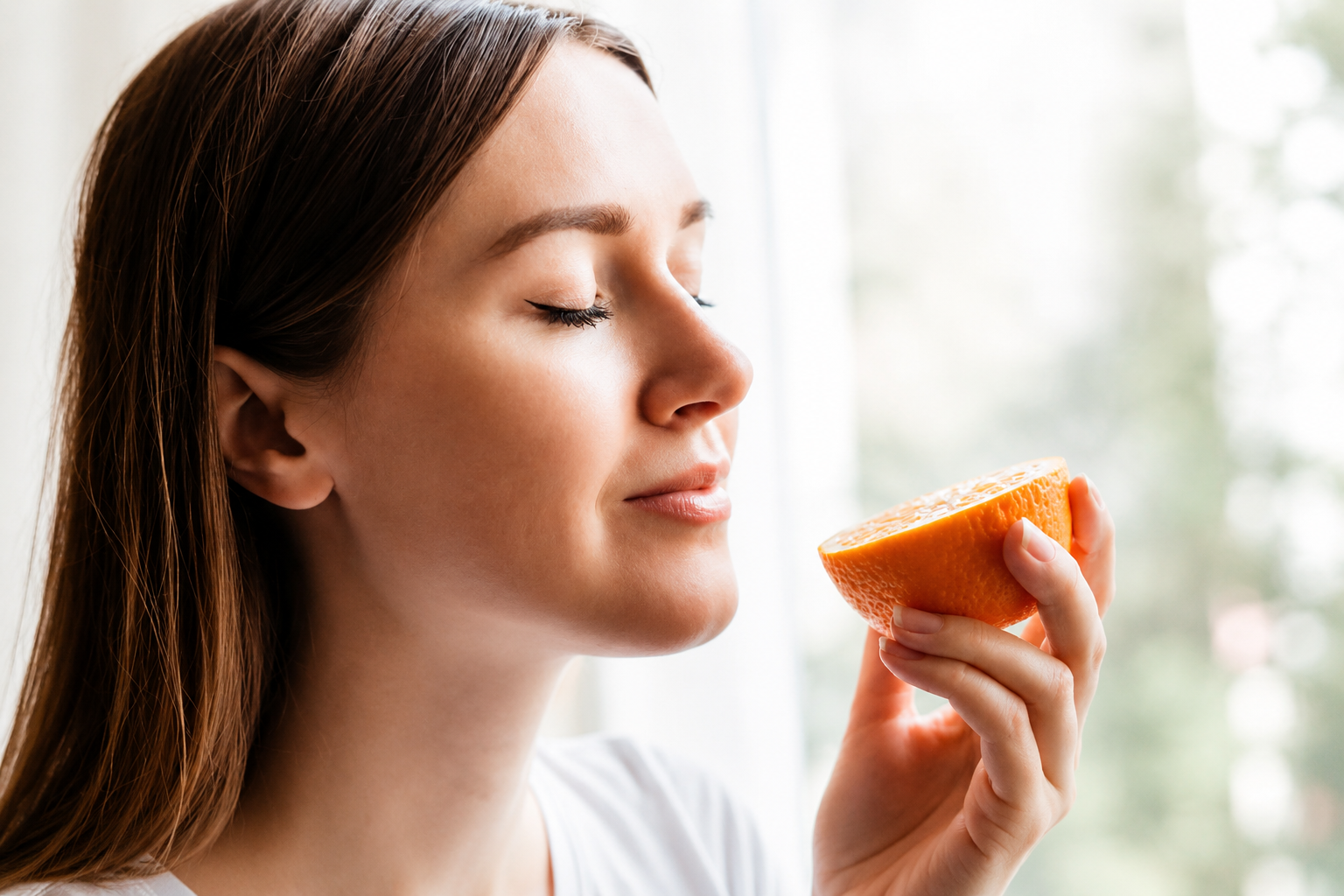
Because smell and taste are closely connected, many people notice the return of flavor before they fully recognize changes in smell. Foods begin tasting more complete. Coffee develops a stronger aroma. Fresh-cut grass becomes noticeable again. Garlic, onions, citrus fruits, flowers, smoke, and perfumes gradually become easier to detect. The changes are often subtle at first, arriving so slowly that they can be overlooked until a familiar scent suddenly stands out after years of absence.
For those who contracted COVID-19 more than once, the picture can become even more complicated. Multiple infections may affect individuals differently, making recovery timelines difficult to predict. Some people experience setbacks after a second illness, while others continue to improve despite repeated exposure.
Researchers caution that smell and taste recovery is rarely an all-or-nothing event. Improvement does not necessarily mean a return to pre-pandemic sensory function. Many long COVID patients report regaining portions of what was lost while still noticing differences compared with their abilities before infection. Others continue experiencing fluctuations, with some days better than others.
Health experts also note that reduced smell carries practical concerns beyond enjoyment of food. The ability to detect smoke, spoiled food, natural gas leaks, and chemical fumes remains an important safety function. Anyone living with diminished smell should continue taking appropriate precautions, including maintaining working smoke and carbon monoxide detectors.
As scientists continue studying long COVID, one lesson has become increasingly clear: recovery timelines are often longer and more individualized than early assumptions suggested.
For those who lost part of their sensory world during the pandemic and are only now beginning to notice small changes, their experience is not unique. While late improvement may not be the most common outcome, it has become an increasingly recognized part of the long COVID story.
The pandemic’s immediate crisis may be years behind us, but for some people, the body’s recovery process appears to still be underway.