


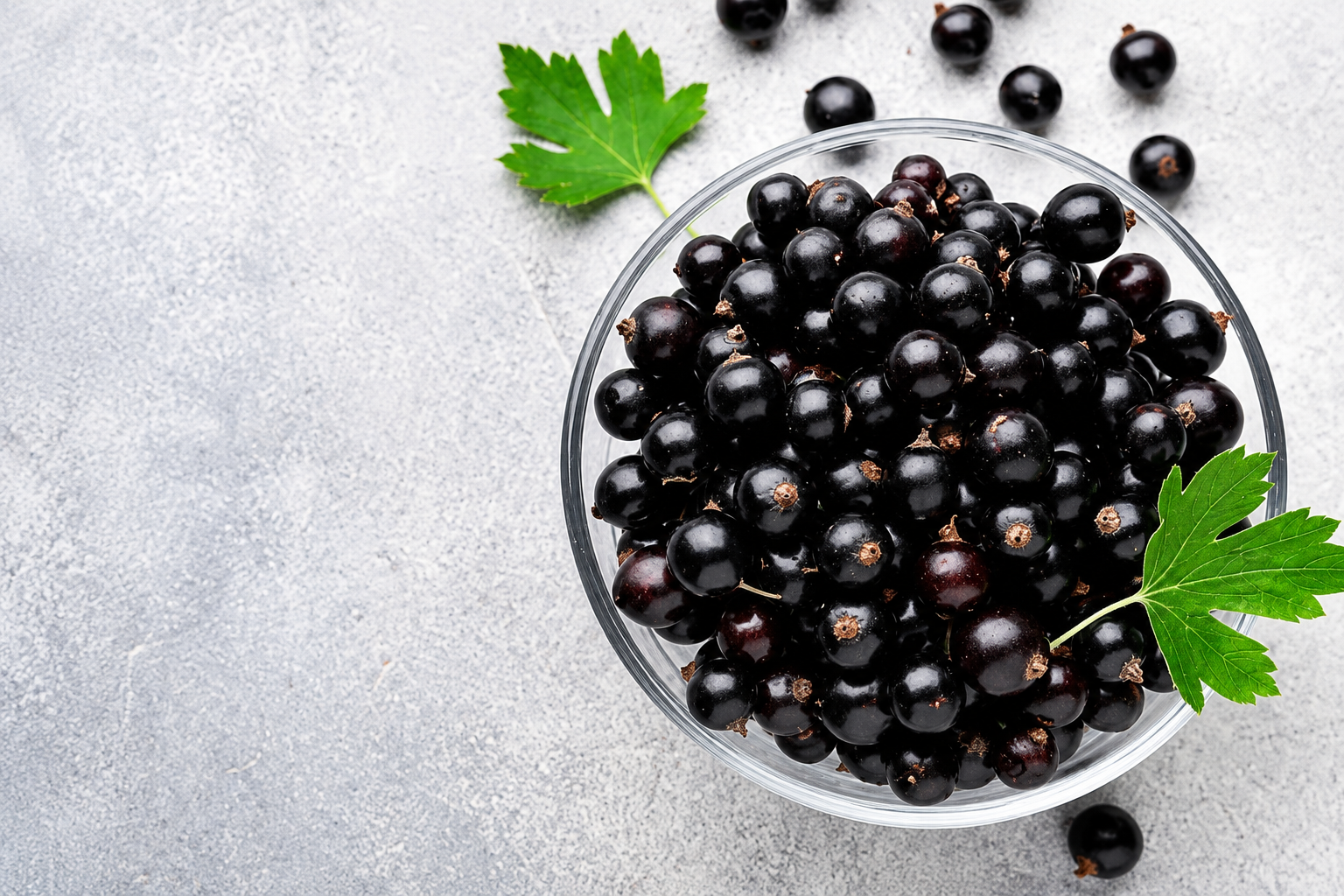
America banned it, history nearly erased it, and now science is catching up to what traditional healers recognized centuries ago: the black currant is among the most antioxidant-rich medicinal fruits ever studied.
For more than 50 years, black currants were largely prohibited in the United States after being associated with the spread of Cronartium ribicola, the fungus responsible for white pine blister rust. Shrubs were removed, nurseries were prohibited from selling them, and a fruit valued for generations in traditional medicine largely disappeared from American gardens and diets. Although later research clarified that the disease requires both susceptible white pines and Ribes species to complete its life cycle, and resistant pine varieties and modern management practices have since changed the landscape, black currants never fully regained their place in American food culture. A plant once regarded as both food and medicine quietly faded from public awareness, despite its long history throughout Europe and parts of Asia.
Long before modern scientific research began examining its chemical composition, herbal practitioners documented the black currant’s medicinal value. During the Renaissance, English herbalist John Gerard described the fruit and its traditional uses, while later herbalist Nicholas Culpeper wrote of its tonic and diuretic properties. In regions such as Kashmir, black currants were traditionally used to help relieve coughs, reduce inflammation, promote cooling properties, and support general health. Various Indigenous communities in North America also utilized native Ribes species for ailments including fever, edema, kidney discomfort, and digestive concerns. Long before laboratories existed, currants had become firmly established in numerous healing traditions.
What makes the black currant remarkable is that nearly every part of the plant has been used medicinally. The berries contain exceptionally high concentrations of polyphenols, tannins, anthocyanins, flavonoids, organic acids, and complex polysaccharides. The leaves, stems, bark, roots, and seeds have each been incorporated into traditional herbal preparations for centuries. In parts of Europe, the leaves were occasionally prepared much like leafy greens or brewed into herbal infusions, while also serving as ingredients in traditional remedies. Modern research continues to investigate many of these plant compounds for their biological activity and potential health-supporting properties.
The medicinal chemistry of the berry itself is particularly impressive. Black currants are among the richest natural sources of anthocyanins, the deep purple pigments responsible for their color. These compounds possess strong antioxidant activity and have been studied for their role in protecting blood vessels, supporting capillary strength, maintaining eye health, and reducing oxidative stress. The berries also contain proanthocyanidins, which have demonstrated anti-inflammatory, antimicrobial, and collagen-supporting properties in laboratory research. Their flavonols and phenolic acids contribute additional antioxidant effects while supporting normal cellular function. Black currant seed oil contains gamma-linolenic acid (GLA), an omega-6 fatty acid that has been investigated for its potential role in supporting skin health, hormonal balance, and healthy inflammatory responses.
The leaves possess their own distinctive profile of bioactive compounds. Their naturally occurring tannins exhibit astringent properties that have traditionally been used to support digestive health and soothe irritated tissues. Herbal medicine has long employed black currant leaves in preparations intended to support gastrointestinal function, sore throats, and minor inflammatory conditions. Their antioxidant and antimicrobial compounds continue to attract scientific interest as researchers explore their potential effects on gut health, immune function, and microbial balance.
The stems and bark also contain tannins, resins, and other phytochemicals that have historically been incorporated into herbal remedies. Traditional preparations frequently utilized these plant parts to support digestive comfort and general wellness. The roots, although not consumed as food, were commonly prepared as decoctions or external washes in various traditional healing systems, where they were valued for their concentrated medicinal compounds.
Black currants also continue to draw attention for their potential cardiovascular benefits. Laboratory and clinical research suggests that their antioxidant compounds may help reduce the oxidation of low-density lipoprotein (LDL) cholesterol, support healthy circulation, promote normal endothelial function, and reduce oxidative damage associated with aging. Their naturally occurring polysaccharides and diverse phytochemicals are also being studied for their potential influence on immune regulation and overall metabolic health. While research remains ongoing, the breadth of bioactive compounds found in black currants places them among the most extensively studied medicinal berries.
Modern lifestyles expose people to chronic inflammation, oxidative stress, environmental pollutants, dietary imbalances, and other factors that may contribute to long-term health challenges. As interest in preventive nutrition continues to grow, black currants are once again attracting attention from researchers investigating the relationship between plant-based compounds and human health. Once removed from much of the American landscape, this remarkable berry is gradually returning to gardens, farms, and scientific laboratories, where centuries of traditional knowledge are increasingly being examined through the lens of modern research.
Today, black currants represent more than a rediscovered fruit. They stand as an example of how traditional botanical knowledge and contemporary science can complement one another, revealing the remarkable complexity and potential of one of nature’s most nutrient-dense medicinal berries.