


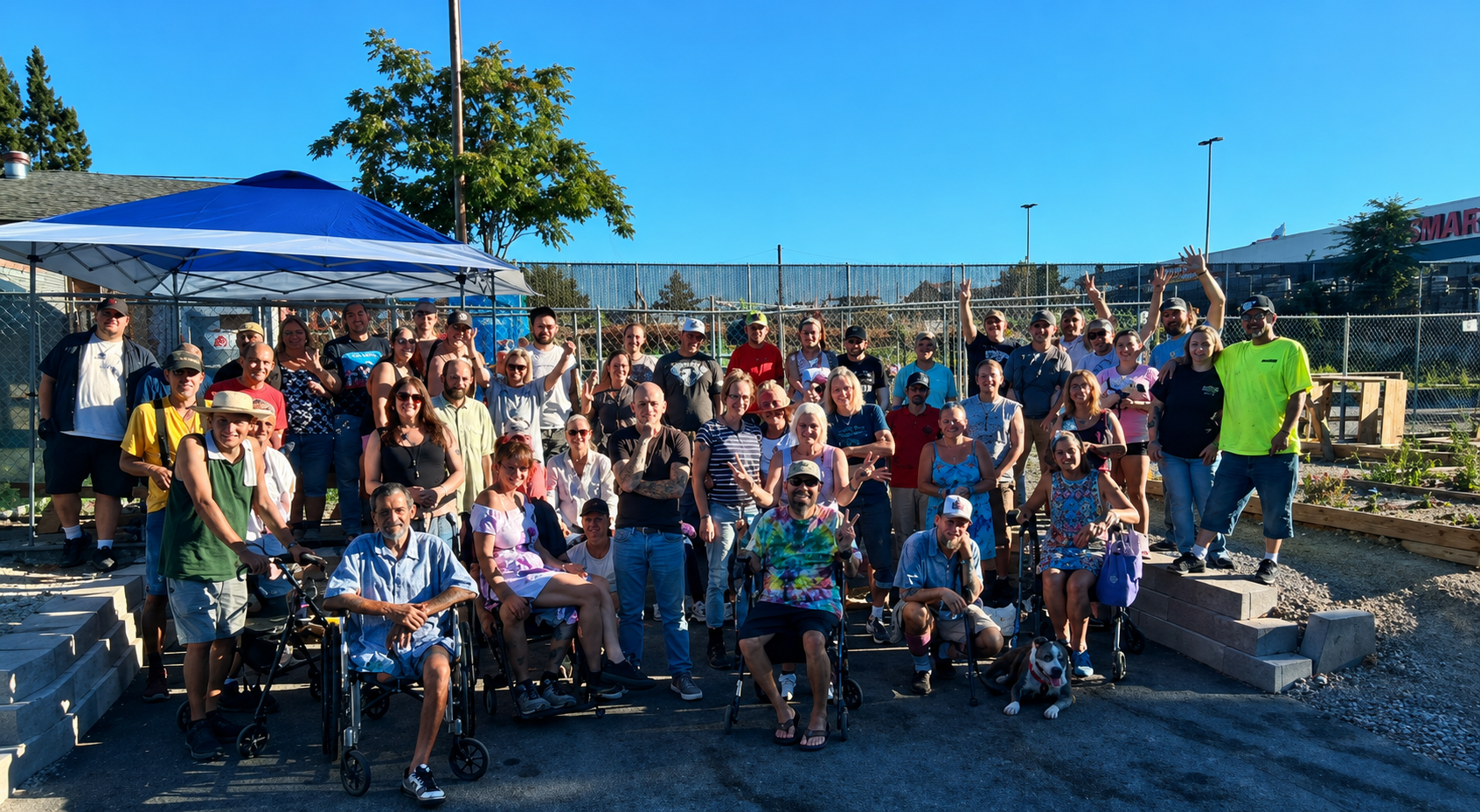
Parker’s Place Village has reached the milestone its organizers, city leaders and community partners have spent months working toward. With the final 26 beds receiving tentative approval and occupancy moving forward following completion of the remaining site requirement, the transitional shelter is now expected to operate at its full capacity of 150 beds, fulfilling the City of Grants Pass’ stated goal of providing 150 emergency shelter spaces for individuals experiencing homelessness.
The achievement represents the culmination of months of planning, construction, coordination and community involvement that transformed a vacant property into one of Southern Oregon’s largest organized transitional shelter communities. It also signals the beginning of a new chapter for the facility as its focus shifts from construction and expansion to long-term operations, resident services and continued collaboration with the surrounding community.
Project Director Bernie Woodard confirmed the final phase in a message announcing the milestone.
“We have tentative approval on the last 26 beds for PPV so I will be holding the last bulk signing in the morning at 9AM with intake agreements contingent upon final occupancy approval which I understand is just a garbage fence enclosure near our stormwater planter number 2 that will be built also in the morning. This will make our 150 beds and the city’s required 150 beds!”
That final occupancy step completed the last remaining requirement before the village reached its intended capacity, allowing organizers to welcome the final group of residents into the program.
Parker’s Place Village was developed through a partnership between the City of Grants Pass and Elk Island Trading Group as part of the community’s effort to expand emergency shelter options while providing a more structured environment for individuals seeking a path toward stability. Rather than functioning solely as overnight accommodations, the village was designed to combine shelter with expectations, accountability and access to services intended to help residents move toward permanent housing and greater independence.
The project did not appear overnight. Planning, permitting, infrastructure improvements and policy development required months of work before the first residents could move in. Throughout that process, organizers frequently emphasized that success would depend not only on constructing the physical village but also on creating operational policies capable of balancing the needs of residents with those of neighboring businesses and surrounding neighborhoods.
As construction progressed, Parker’s Place Village opened in carefully planned phases rather than all at once. Initial occupancy began with the first group of residents while additional sleeping units, utilities and infrastructure continued to be completed. Each successive expansion increased available shelter space and allowed organizers to refine intake procedures, operational protocols and resident services before additional beds were opened.
The village steadily grew from its initial occupancy to dozens of residents before reaching 124 occupied beds. That left only 26 spaces awaiting final approval, a milestone organizers anticipated for several weeks while remaining construction items and inspections were completed.
Throughout the expansion, organizers repeatedly stressed that the project represented more than simply adding beds. It also required establishing rules governing daily operations, resident expectations, safety procedures and community relations. Advisory panels made up of city representatives, community members and project leadership worked together behind the scenes to develop policies intended to provide both accountability and transparency as the village matured.
Residents entering Parker’s Place Village agree to structured intake procedures and community standards while gaining access to shelter, sanitation facilities and support services. The goal has consistently been to provide individuals experiencing homelessness with a safer environment than unsanctioned camps while helping connect them with resources that may eventually lead to permanent housing and self-sufficiency.
Reaching the 150-bed benchmark also fulfills one of the primary objectives established by the City of Grants Pass when the project was approved. The availability of 150 emergency shelter spaces has been viewed as an important component of the city’s broader response to homelessness, particularly as local officials continue balancing public safety concerns, court decisions and the need for accessible shelter options.
Although the village has now reached full capacity, organizers acknowledge that the work is far from complete. Operating a community of 150 residents requires ongoing management, maintenance, security, case coordination and continued cooperation among nonprofit organizations, volunteers, city officials and service providers. The emphasis now turns toward maintaining a safe, orderly and supportive environment while continuing to evaluate the program’s effectiveness over time.
The milestone also reflects the contributions of numerous volunteers, contractors, staff members and community partners who participated throughout the project’s development. From infrastructure improvements and utility installation to policy creation and resident intake, the village represents a collaborative effort involving public agencies, private organizations and local citizens working toward a shared objective.
As Parker’s Place Village enters full operation, its long-term success will likely be measured not only by maintaining 150 occupied beds but also by the outcomes experienced by the individuals who call the village home. The facility now stands as a significant part of Grants Pass’ homelessness response, providing shelter for 150 people while offering an opportunity for stability, support and a pathway toward a more secure future.
With the final residents now moving into place and the last occupancy requirements complete, Parker’s Place Village has reached the goal envisioned when the project first began. What started as an ambitious concept has grown into a fully operational transitional shelter community, marking a significant milestone for Grants Pass and opening a new chapter focused on helping residents move beyond homelessness through structure, opportunity and continued community support.