


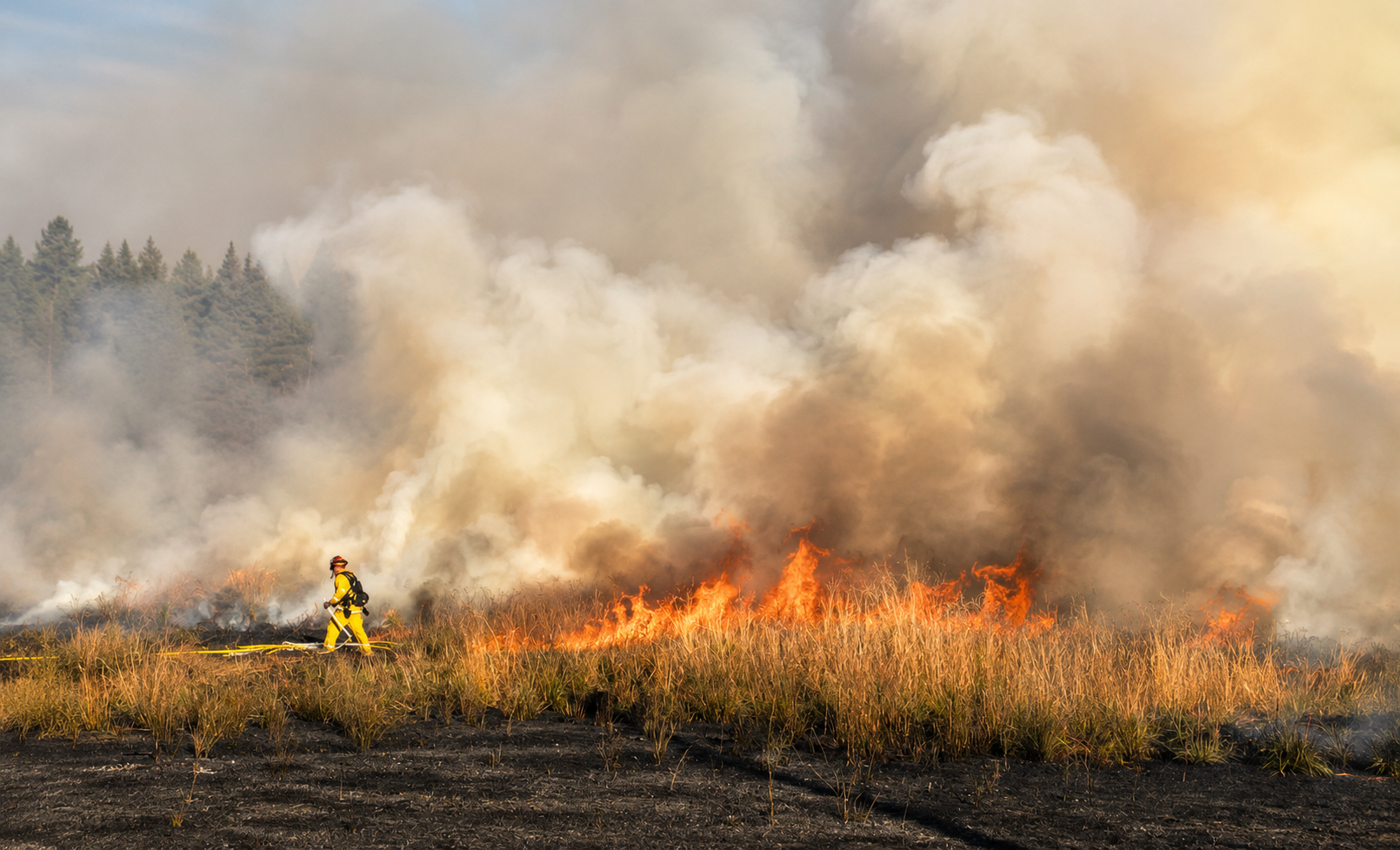
Southern Oregon residents waking up Saturday morning are once again being reminded to pay attention not only to the wildfires burning across the region, but also to what those fires may be putting into the air.
With the Fielder Mountain Fire burning near Rogue River and other wildfire activity continuing across Oregon and the West, periods of smoke and haze may affect portions of the Rogue Valley as winds and atmospheric conditions change. The Oregon Department of Environmental Quality maintains air-quality monitoring throughout the state, while the Oregon Department of Forestry and other agencies continue tracking wildfire activity that can contribute smoke to communities well beyond the immediate fire area.
The important health reminder this Saturday, August 15, is that wildfire smoke does not have to be thick, dark or particularly dramatic to affect air quality. Southern Oregon residents may notice a light haze across the valley, diminished visibility along surrounding mountains, unusual coloration around the sun or a faint smell of smoke. Fine particles can remain suspended in the air even when smoke is not especially obvious to the eye.
Among the primary concerns associated with wildfire smoke is PM2.5, the term for extremely small particulate matter measuring 2.5 micrometers or less in diameter. These particles are small enough to penetrate deeply into the lungs, which is why state and federal air-quality agencies use PM2.5 measurements as an important indicator during wildfire smoke events.
Air quality can also change considerably during the course of a day. Southern Oregon’s mountains and valleys influence how smoke moves and settles, while changing winds can carry smoke into one community and away from another. Conditions in Grants Pass, Rogue River, Gold Hill, Medford and surrounding areas therefore may not always be identical, even though the communities are relatively close together.
Residents are encouraged to check current air-quality readings before spending extended periods outdoors, particularly when haze or smoke is noticeable. The Oregon Department of Environmental Quality’s Air Quality Index ranges from Good and Moderate conditions to Unhealthy for Sensitive Groups, Unhealthy, Very Unhealthy and Hazardous. Those categories provide a much better indication of potential exposure than attempting to determine air quality simply by looking outside.
People with asthma, chronic obstructive pulmonary disease, cardiovascular disease and other heart or lung conditions should be particularly mindful during periods of wildfire smoke. Children, older adults and pregnant people can also be more susceptible to the effects of particulate pollution. Anyone who begins experiencing unusual coughing, wheezing, shortness of breath or other significant respiratory symptoms should reduce exposure and seek appropriate medical guidance when necessary.
People with COPD or another respiratory condition should follow the wildfire-smoke plan recommended by their health care provider. Those who have been advised to use respiratory protection during smoke events should have an appropriate respirator available. A properly fitted NIOSH-approved N95 respirator can filter fine airborne particles much more effectively than loose-fitting cloth or surgical face coverings. People with significant heart or lung conditions who are uncertain whether they should wear a respirator should consult their health care provider because breathing through a respirator can be more difficult for some individuals.
Indoor air deserves attention as well. When outdoor smoke increases, keeping windows and doors closed, operating air-conditioning systems on recirculation when appropriate and using portable air cleaners or effective HVAC filtration can help reduce the amount of particulate matter circulating inside a home.
Outdoor exercise and strenuous activity may also need to be adjusted when air quality deteriorates. Heavy physical activity increases breathing rates and the amount of air entering the lungs, which can increase exposure to wildfire particles. Moving exercise indoors or waiting until conditions improve may be appropriate when smoke levels rise.
For Southern Oregon, Saturday’s reminder is straightforward: check the air before planning the day. Wildfire smoke can move quickly, air quality can vary substantially from morning to evening, and the particles presenting the greatest concern are often too small to see.
The haze over the Rogue Valley may come and go as fire and weather conditions change, but during another active August wildfire period, keeping track of air quality should once again be part of the daily routine.