


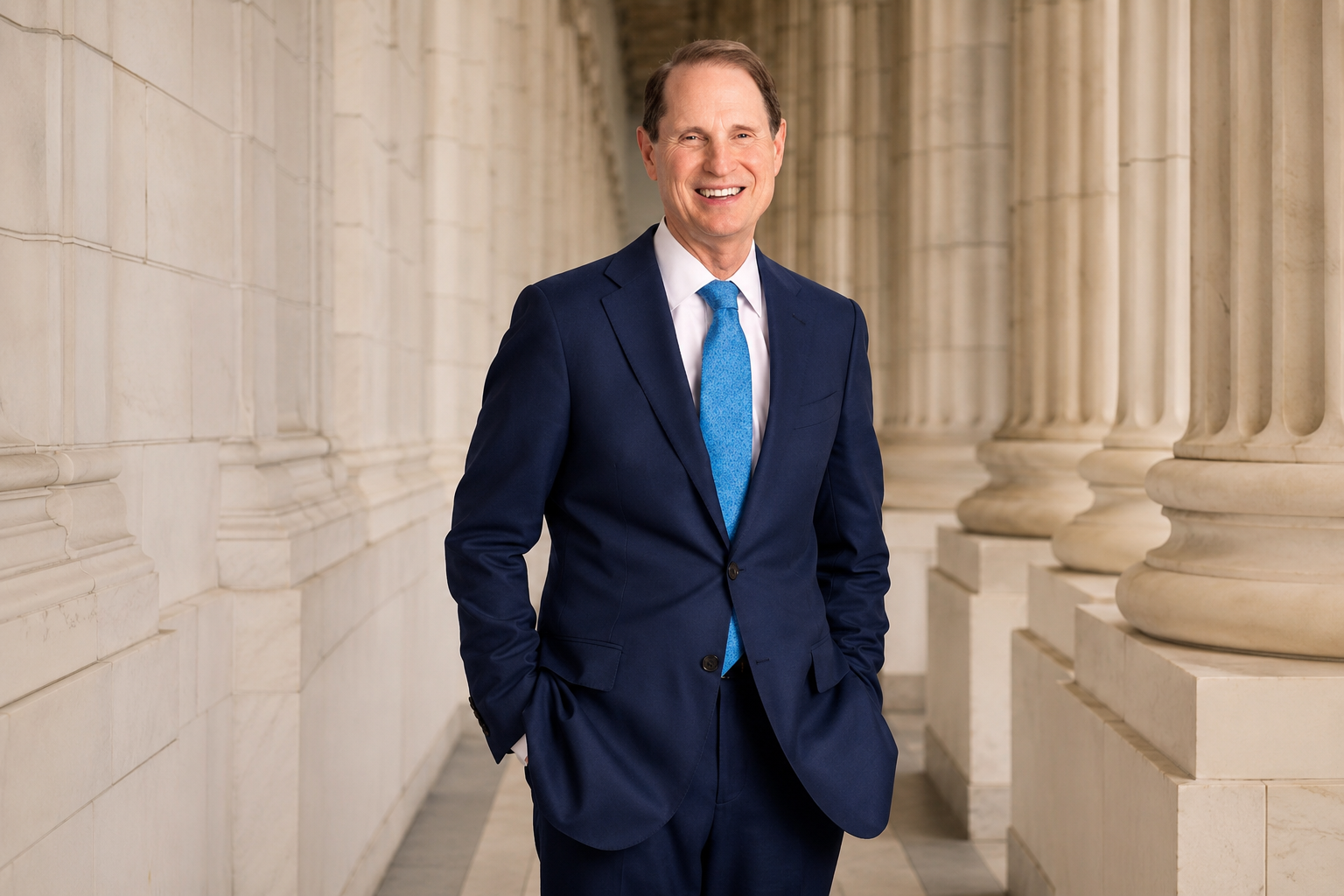
A $2 million business payment, an unannounced golf course project and a South Korean aluminum company fighting a federal trade determination have converged in Washington, prompting Oregon U.S. Senator Ron Wyden to demand answers from the Department of Commerce about what administration officials knew and whether the separate financial and government dealings ever intersected.
The payment came from Base Group, a South Korean company with years of commercial ties to the Trump family. According to President Donald Trump’s annual financial disclosure released in June 2026, Base Group paid $2 million during the previous year to the president’s holding company. The money was identified as a nonrefundable development fee associated with a golf course project that has not been publicly announced.
At roughly the same time, another branch of Base Group’s business was dealing with a consequential matter before the federal government. Its subsidiary, Korea Aluminium, has been involved in a Commerce Department trade proceeding concerning aluminum foil imports into the United States. Commerce officials determined that products associated with Korea Aluminium originated in China and were shipped through South Korea to circumvent existing antidumping duty orders. Duties were imposed, the matter remains under federal review and Korea Aluminium has challenged the department’s determination.
Wyden now wants the Commerce Department to account for what happened on the government side of that equation.
In a letter to Commerce Secretary Howard Lutnick, Wyden requested information about contacts and relationships involving administration officials, Korea Aluminium and Base Group. He is also seeking information about whether officials knew of the $2 million payment to Trump’s holding company and, if so, when they became aware of it. Wyden has given the department a September 1, 2026, deadline to respond.
“The circumstances surrounding Korea Aluminium’s trade dispute and its parent company’s financial relationship with the President raise significant concerns,” Wyden wrote. “The American public and U.S. businesses rely on the government to pursue trade policy in the public interest, rather than in the President’s personal financial interest.”
The sequence presents an unusual overlap of international business, presidential finances and federal trade enforcement, but the facts currently available stop short of establishing a connection between them. Nothing contained in the information released by Wyden demonstrates that Base Group’s $2 million payment influenced the Commerce Department, that a federal trade decision was changed because of the payment or that the transaction itself violated the law. Wyden’s demand is an attempt to obtain records that could establish whether the two tracks remained separate.
The relationship between Base Group and the Trump family reaches considerably further back than the current aluminum dispute. According to Wyden’s office, the company has exclusively sold Trump-branded wine in South Korea for nearly a decade. The business relationship was visible again in February 2026, when Eric Trump visited Base Group’s headquarters in Seoul for discussions that included ways to increase bilateral trade.
Those established commercial ties are part of what Wyden wants examined as the Commerce Department continues dealing with Korea Aluminium. Federal antidumping and anti-circumvention proceedings can carry substantial financial consequences. They are designed to determine whether foreign goods are entering the United States in ways that avoid duties intended to protect American markets from unfairly priced imports or attempts to route products through another country to escape existing trade orders.
In the Korea Aluminium case, the federal government determined that aluminum foil products were Chinese in origin and moved through South Korea in circumvention of antidumping requirements. Korea Aluminium disputes that finding and is challenging the determination, leaving the underlying trade disagreement unresolved.
For Oregon businesses and consumers, the machinery behind cases such as this can feel distant from everyday life, but the economic reach of federal trade policy is considerably wider than the companies named in a Commerce Department proceeding. Aluminum moves through construction, manufacturing, transportation, machinery, food and consumer packaging and numerous other industries. Duties placed on imported materials can influence costs at multiple points in a supply chain before those costs reach contractors, retailers, businesses or consumers.
There is no information released by Wyden tying Base Group, Korea Aluminium or the $2 million payment directly to Southern Oregon. The broader trade policies involved, however, operate nationally. Businesses in Josephine and Jackson counties purchasing building materials, machinery, equipment, packaging or manufactured products participate in markets where changes in aluminum prices and import costs can eventually be reflected in what companies pay.
Wyden, a Democrat representing Oregon in the U.S. Senate, is not asking the Commerce Department merely to explain its technical determination involving aluminum imports. His request reaches into communications surrounding the companies themselves, seeking an accounting of administration interactions with Base Group and Korea Aluminium and the extent of government knowledge about Base Group’s payment to a Trump business.
That places the next move with Commerce Secretary Lutnick and his department. A response to Wyden could provide a more complete timeline of contacts between administration officials and the South Korean companies, establish which officials knew about the payment and clarify whether the trade proceeding developed independently of Base Group’s business relationship with Trump.
For now, the public record contains two established sets of facts running alongside one another: Base Group paid $2 million to Trump’s holding company in connection with an unannounced golf development, while its subsidiary was involved in a federal aluminum trade dispute with the Commerce Department. Whether those circumstances remained entirely separate is the question Wyden has placed before the department, and the records he is seeking could determine whether there is more to the story than timing and overlapping business relationships.