


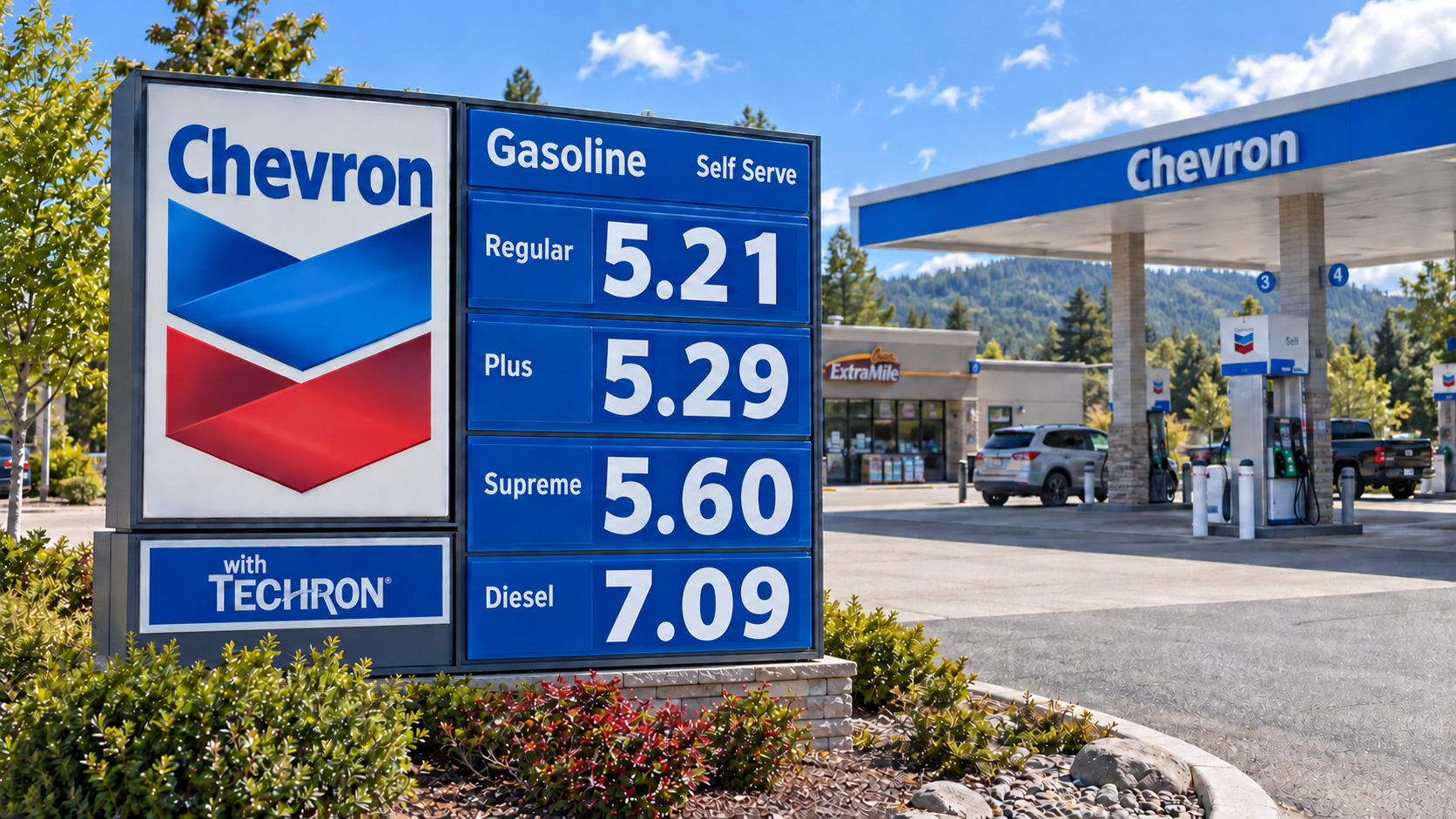
Diesel prices have broken records across Oregon, pushing commercial transportation costs into unfamiliar territory while gasoline remains near levels that many Southern Oregon households have not confronted in years. The latest escalation reaches beyond the service station, adding expense to nearly every stage of producing, transporting and selling the necessities residents purchase each day.
Oregon’s statewide diesel average reached $6.867 per gallon on September 20, the highest recorded statewide price. That represents an increase of $1.245 per gallon in one month and $2.375 from a year ago, a 53 percent annual rise. The national diesel average climbed to $6.505, also a record.
Southern Oregon is paying above the state average. Diesel reached $6.995 in the Medford-Ashland area, while Grants Pass averaged $7.092. Grants Pass briefly climbed to a record $7.108 on September 19, compared with $5.733 one month earlier and $4.525 a year ago. The local annual increase approaches 57 percent.
Regular gasoline has not surpassed Oregon’s all-time record, but that offers little comfort to motorists confronting prices above $5 per gallon. Oregon regular averaged $5.097 on September 20, approximately 34 cents higher than one month ago and 85 cents above last year. Grants Pass motorists were paying an average of $5.219, while Medford-Ashland stood at $5.118.
A 15-gallon purchase in Grants Pass now costs approximately $78.29. The same amount at last year’s average would have cost about $64.79. A household purchasing 60 gallons each month is spending roughly $54 more than it did a year ago, before accounting for higher food, housing, insurance, utility and medical expenses already competing for the same income.
Rural communities carry a particularly heavy exposure. Many Southern Oregon residents travel considerable distances for work, school, medical care, groceries and essential services. Public transportation remains limited outside larger population centers, making fuel less of a discretionary purchase than an unavoidable household expense.
The greater economic threat originates with diesel. Freight carriers move groceries, automobiles, lumber, construction materials, retail merchandise and industrial supplies throughout the region. Commercial trucks can consume hundreds of gallons each week, and an increase of $1.25 per gallon can add approximately $625 to the weekly fuel bill of a truck burning 500 gallons. A five-truck operation could encounter more than $3,000 in additional weekly expense.
Fuel surcharges allow some carriers to recover part of that cost, but reimbursement can trail pump prices by weeks or months. Independent drivers and small fleets must purchase fuel before they are paid for completing deliveries. When diesel rises rapidly, that delay can drain operating cash, reduce earnings and force carriers to increase freight rates or decline routes that no longer make financial sense.
Those expenses eventually move through the commercial system. Refrigerated food requires diesel to power both the truck and the equipment protecting perishable cargo. Building materials may travel through several warehouses before reaching a Southern Oregon job site. Automobiles, appliances and retail products accumulate transportation charges as they move from manufacturers to regional distribution centers and local businesses.
Agricultural producers face the increase from several directions. Diesel powers tractors, harvesters, irrigation equipment and farm trucks. Higher transportation costs also accompany deliveries of fertilizer, feed, seed and replacement parts. Crops and livestock products must then be moved to processors, storage facilities, rail terminals, ports and retailers. Producers may absorb part of the expense through smaller margins, while another portion may surface in wholesale and consumer prices.
The surge is being driven primarily by expensive crude oil and tight global supplies of diesel and other distillate fuels. International conflict, interruptions at Russian refineries, restrictions on fuel exports and constrained shipping through the Strait of Hormuz have reduced available supplies. U.S. diesel inventories have fallen 13 percent below their five-year average as crude-oil benchmarks moved above $100 per barrel.
State and federal taxes constitute a fixed portion of the pump price but did not cause the latest escalation. Oregon’s fuel tax has remained at 40 cents per gallon since 2024. Federal taxes add 18.4 cents to gasoline and 24.4 cents to diesel.
Gasoline prices have shown slight weekly easing in parts of Oregon, including Grants Pass, but remain sharply elevated over monthly and annual comparisons. Diesel offers even less relief, standing at record levels precisely when Southern Oregon households and businesses are already managing higher costs throughout the economy. The price displayed at the pump is no longer confined to the driver’s receipt; it is entering freight invoices, farm budgets, construction estimates and household expenses across the region.