


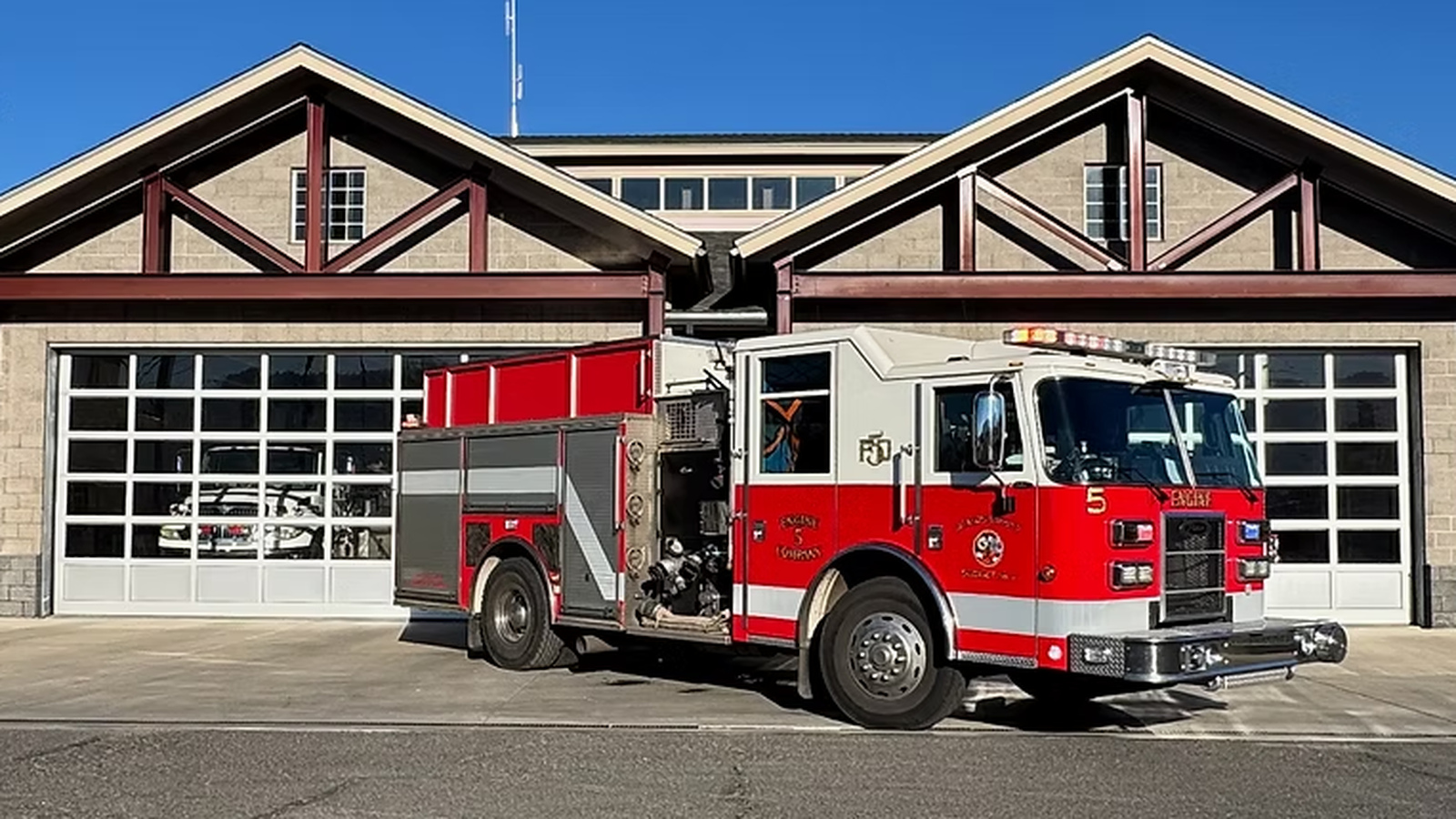
Jackson County Fire District 5 will transfer its employees, emergency operations and fire apparatus to Fire District 3 on January 1, 2027, under an agreement intended to rebuild staffing and stabilize service after financial and personnel problems strained the district serving Phoenix, Talent and rural communities near Ashland.
For residents, the most visible planned improvement will come several months after the operational transfer. Beginning in mid-May 2027, all three District 5 fire stations are scheduled to operate with staffing around the clock. The plan includes reopening Station 4 on Neil Creek Road near Ashland, with additional hiring and the graduation of firefighter academy recruits expected to support the expanded coverage.
The agreement, announced October 22, combines service delivery while preserving two separate public agencies. Each district will retain its elected board and legal identity. District 5 will pay District 3 for services provided within its boundaries and remain responsible for its outstanding debt.
The transition expands a management partnership approved in October 2024 and implemented January 1, 2025. Under that earlier arrangement, District 3 supplied executive leadership and administrative assistance to District 5. The new agreement extends that responsibility to emergency response, personnel, equipment and support services.
District 5 protects approximately 120 square miles and serves more than 23,000 people. Its responsibilities include structural and wildland firefighting, medical emergencies, rescues, hazardous materials incidents and vehicle extrication. District personnel responded to more than 3,110 calls during 2025.
District 3 serves more than 59,000 residents across approximately 171 square miles, including Central Point, White City, Eagle Point, Gold Hill, Sams Valley, Dodge Bridge and Agate Lake. Bringing the two workforces under one operating structure will give District 5 access to a substantially larger pool of personnel for scheduling, training and emergency assignments.
Fire Chief Mike Hussey, who leads both districts, has described the staffing change as access to more than 100 employees, compared with District 5’s previous workforce of 21. That broader staffing pool is expected to make it easier to fill shifts and maintain coverage across District 5’s three stations.
The districts also expect to reduce duplicated administrative work and combine resources more efficiently. Their plan directs those operating efficiencies toward service delivery, including additional staffing. The announcement does not establish a dollar amount for the anticipated savings or guarantee a specific reduction in emergency response times.
Financial problems remain a major reason for the expanded partnership, but the agreement does not eliminate District 5’s obligations.
Earlier this year, District 5 was reported to have approximately $8.2 million in debt, along with a separate $1.4 million Federal Emergency Management Agency Community Disaster Loan obtained following the Almeda Fire. Those figures describe the district’s previously reported financial position and have not been established as its exact outstanding balance at the time of the new agreement.
The FEMA obligation is one part of a broader financial problem that has also involved staffing shortages, leadership turnover, board resignations and litigation. Available information does not establish that FEMA required the districts to combine operations or that the federal loan alone prompted the agreement.
The loan nevertheless adds pressure to District 5’s effort to stabilize its finances. FEMA’s Community Disaster Loan program provides operating assistance to eligible local governments that experience substantial revenue losses following a major disaster. The money supports continued government services when disaster-related financial losses threaten an agency’s ability to meet operating expenses.
Loan cancellation depends on financial eligibility and federal review. Federal law provides for cancellation of qualifying amounts when revenues during the applicable period after a disaster are insufficient to meet operating expenses, including certain additional disaster-related costs. Receiving a disaster loan does not automatically establish that the entire amount will later be forgiven.
District 5’s financial audits are therefore important to determining the future of its federal obligation. As of late October, the district was awaiting results from an audit of its 2024 fiscal-year finances that would help address the FEMA loan. No final forgiveness decision or completed repayment arrangement has been established in the information available for this report.
The operational agreement assigns District 5’s remaining debt to District 5. Transferring employees and equipment to District 3 does not, under the announced terms, transfer those existing obligations to the neighboring district.
Hussey has reported improvement in District 5’s finances this year and outlined a goal of retiring all but its largest debt by the end of 2030. That remains a financial objective, with the district continuing to manage its obligations while preparing for the service transition.
For households within District 5, the agreement means emergency services will be delivered through District 3’s operating organization beginning in January, while local governance remains with District 5’s elected board. Existing mutual aid agreements will continue to support responses involving neighboring agencies. District officials say service within District 3’s current boundaries will remain unchanged.
Oregon law permits this type of cooperation through written intergovernmental agreements. The state framework allows one local government to perform services for another and provides for arrangements involving expenses, employee transfers, employment benefits and public property.
A full legal merger would be a separate action. Although Hussey has identified a merger as a possible future consideration, the current agreement preserves both districts.
The first scheduled change arrives January 1, when District 3 assumes District 5’s operations. The next major service commitment follows in mid-May, when additional personnel are expected to make continuous staffing possible at all three District 5 stations. Whether the partnership delivers its planned improvements will depend on completing that hiring and training, maintaining coverage and bringing operating costs into balance while District 5 continues paying its debt.