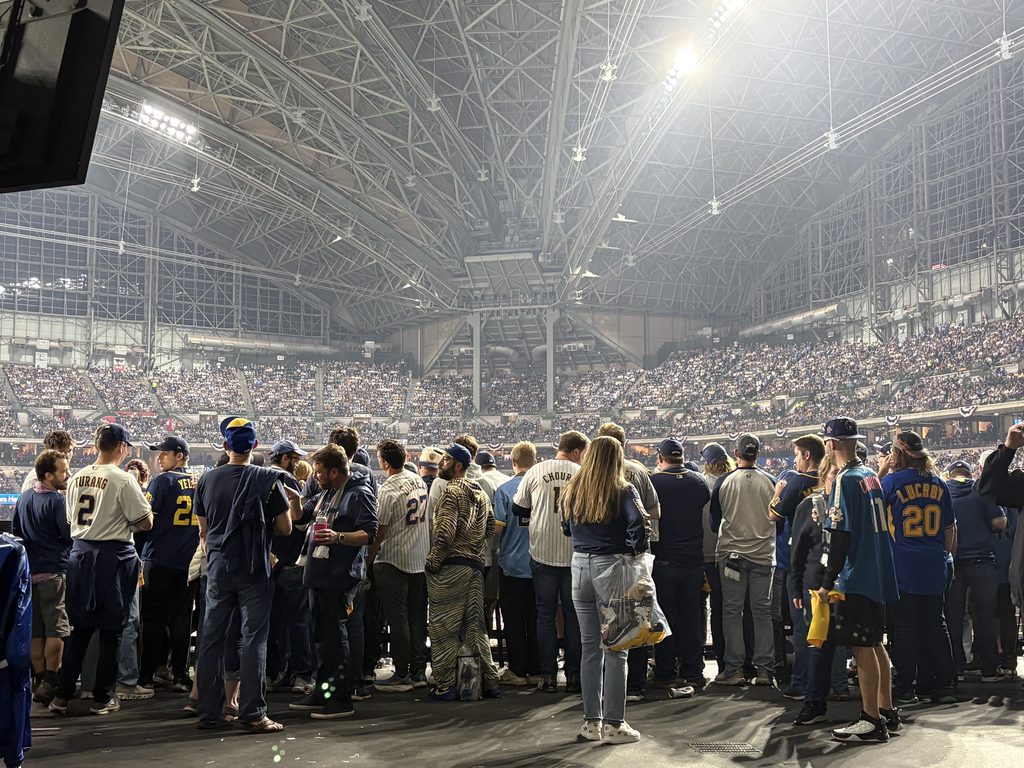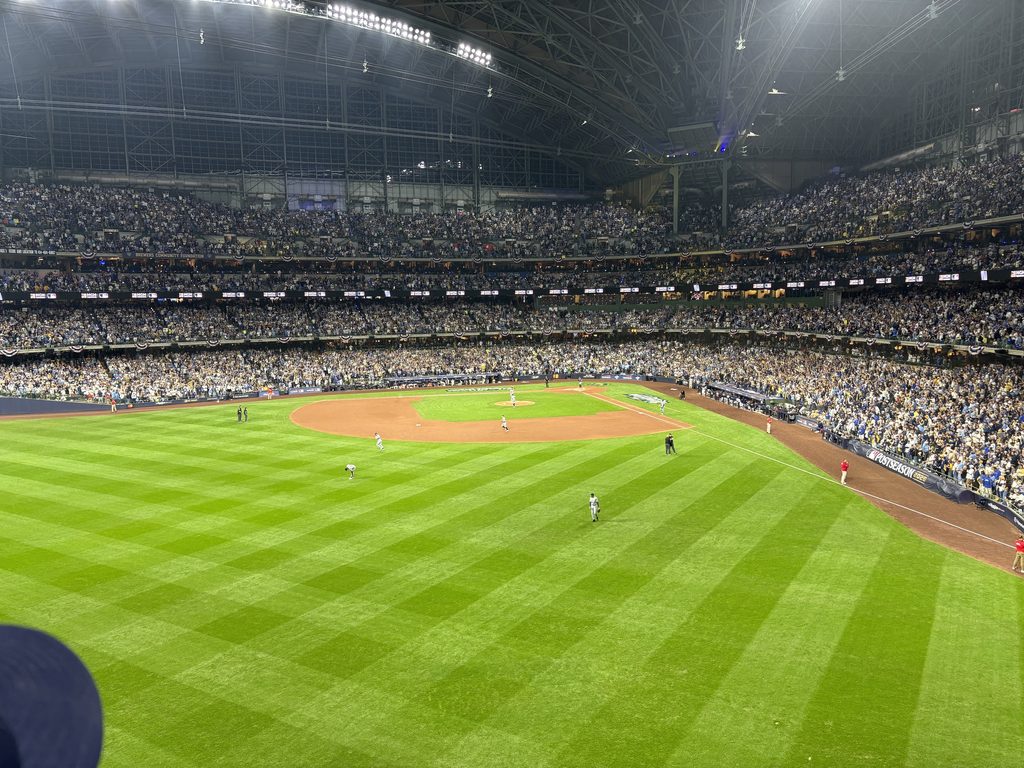
Milwaukee finally has its championship, and for those of us who grew up in Wisconsin following the Brewers, the final out Wednesday night carried memories that reach far beyond this October.
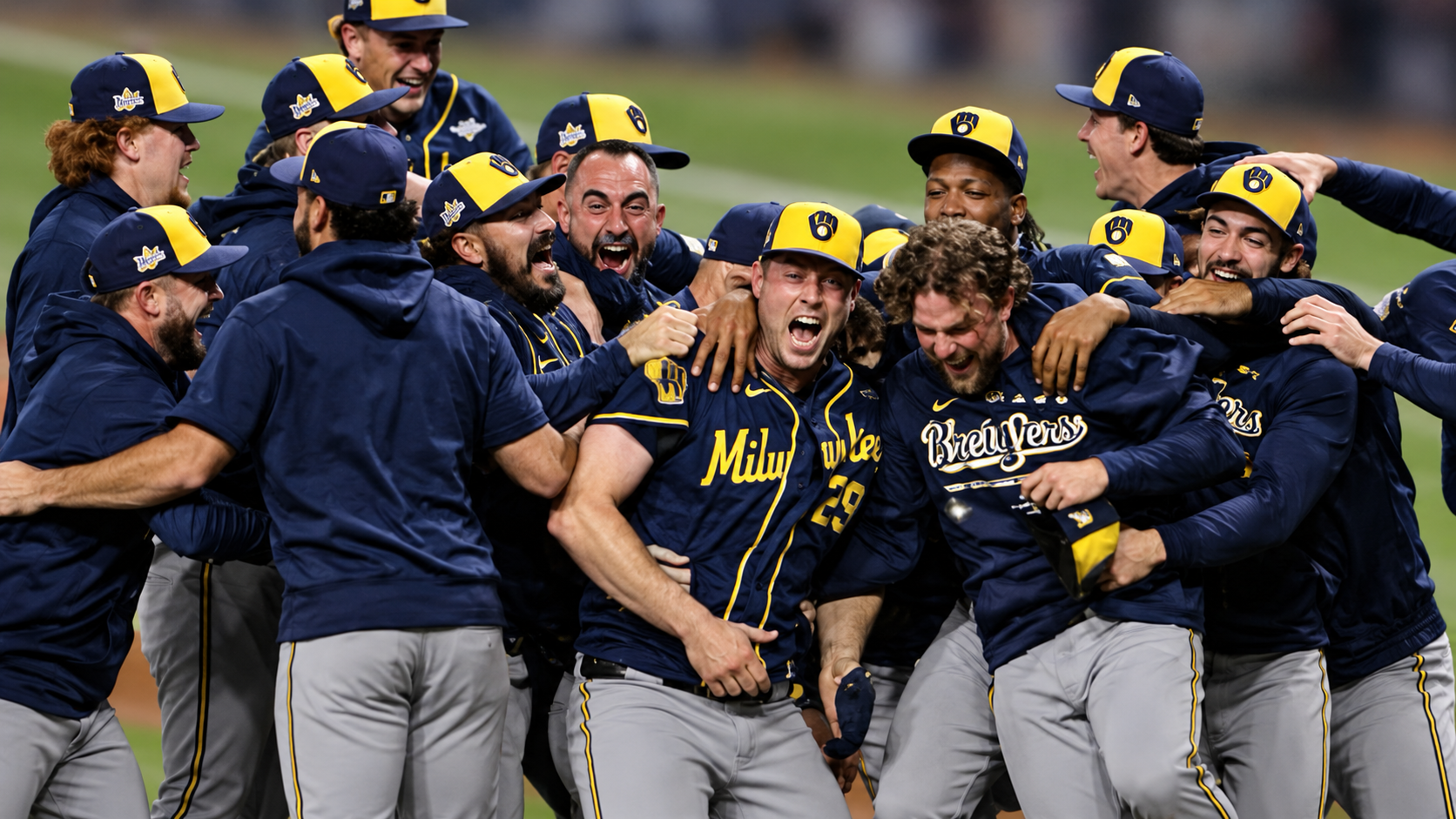
The Brewers defeated the Tampa Bay Rays 4–1 at Tropicana Field on October 28, completing a five-game World Series victory and securing the first championship in franchise history. Forty-four years after Milwaukee’s only previous appearance in the Fall Classic, a team that set a franchise record with 103 regular-season victories finished the postseason with 11 wins against two losses.
For those of us born and raised in Wisconsin who have followed the Brewers for more than 50 years, the championship carries a connection to 1982. I attended a World Series game at County Stadium with my uncle, who was then a television broadcaster, an experience made especially memorable by sharing it with him. I still have the pennant flags from that day, keepsakes from Milwaukee’s first World Series appearance, preserved through the 44-year wait for its return.
That wait ended when second baseman Brice Turang fielded Richie Palacios’ ground ball and threw to first baseman Jake Bauers. Closer Trevor Megill had secured the last out. Milwaukee, which had not celebrated a World Series winner since the Braves defeated the Yankees in 1957, belonged to the Brewers.
The championship arrived in the franchise’s 58th season, counting its inaugural year as the Seattle Pilots in 1969, and its 57th in Milwaukee. It followed a regular season in which the Brewers finished 103–59, leading the major leagues, and a postseason that included seven comeback victories.
Manager Pat Murphy’s club defeated the San Diego Padres three games to one in the National League Division Series before sweeping the Los Angeles Dodgers in the National League Championship Series. The sweep reversed the previous October’s result, when the Dodgers eliminated Milwaukee in four consecutive games.
Against Tampa Bay, the Brewers combined powerful pitching, persistent offense and contributions throughout the lineup. They won close games, recovered from an early four-run deficit and produced a historic sequence of hits before finishing the championship with a controlled pitching performance.
Young right-hander Jacob Misiorowski opened the Series by throwing a 103.5 mph fastball, the fastest recorded World Series pitch in the pitch-tracking era. Milwaukee won that first game 3–2, with Christian Yelich contributing a run-scoring triple and Megill protecting the lead through a tense ninth inning.
The following night, Tampa Bay scored four runs before Milwaukee came to bat. The Brewers answered gradually, tying the game on Sal Frelick’s sixth-inning home run before rookie shortstop Cooper Pratt delivered the deciding single in the seventh. The 5–4 victory sent Milwaukee to Florida with a two-game lead.
Game 3 became the offensive showcase of the Series. Milwaukee recorded seven consecutive hits during an eight-run fifth inning, establishing a postseason first on the way to a 10–1 victory.
Tampa Bay extended the Series with a 4–3 victory in 12 innings in Game 4. Milwaukee returned the next night and finished the job.
Misiorowski allowed two hits over 5⅔ scoreless innings in the clincher before leaving with a right calf cramp. Pratt drove in two runs, catcher William Contreras added an RBI double, and the Brewers built a four-run advantage. Tampa Bay scored once in the ninth before Megill closed the game.
Contreras earned World Series Most Valuable Player honors after batting .381, collecting eight hits in 21 at-bats and driving in four runs. His influence extended behind the plate, where he threw out four attempted base stealers and successfully overturned 10 of 13 challenged ball-and-strike calls through the automated challenge system.
He became the eighth catcher to win the award, joining a group that includes Darrell Porter, the St. Louis catcher who earned the honor against Milwaukee in 1982.
Pratt and Jackson Chourio supplied further evidence of the young talent behind the championship. Pratt finished the Series batting .421 and established a World Series rookie record by recording hits in six consecutive at-bats across Games 4 and 5.
Chourio collected 11 hits in 24 at-bats, a .458 average. His seventh-inning single in the clincher gave him 31 career postseason hits before his 23rd birthday, surpassing Andruw Jones’ previous mark. His 11 hits also tied for the second-most through the first five games of a World Series, behind Pepper Martin’s 12 in 1931.
Milwaukee finished with 114 victories across the regular season and postseason. Its combined 114–61 record ranks fourth by winning percentage among World Series champions in the wild-card era, behind the 1998 Yankees, 2018 Red Sox and 2022 Astros.
For longtime followers, those achievements now stand beside the accomplishments of the 1982 Brewers, whose place in Wisconsin baseball history endured despite their seven-game loss to St. Louis.
That team opened its World Series with a 10–0 victory behind Mike Caldwell’s three-hit shutout. Paul Molitor collected five singles, becoming the first player with five hits in a World Series game. Robin Yount added four hits, then produced another four-hit performance in Game 5, becoming the first player to accomplish that twice in the same Series.
Milwaukee won Game 5 at County Stadium, 6–4, and returned to St. Louis leading three games to two. The Cardinals won the final two games, overcoming Milwaukee’s 3–1 sixth-inning lead in Game 7 to claim the championship with a 6–3 victory.
Attending that Series with my uncle remains one of the defining experiences of my life as a baseball fan. The pennants I kept preserve the memory of being there, sharing the occasion with family and watching a team that gave Wisconsin a lasting connection to baseball.
The years afterward tested that connection. Milwaukee did not return to the postseason until 2008. The Brewers reached the National League Championship Series in 2011 and came within one victory of the World Series in 2018. Their move from the American League to the National League in 1998 meant the franchise’s two World Series appearances would eventually come as champions of different leagues.
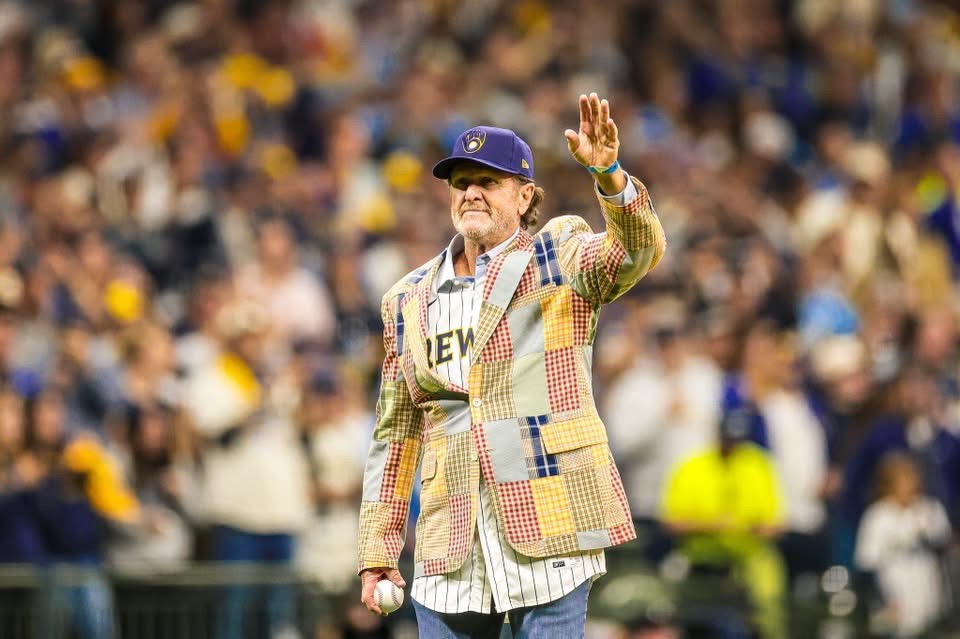
Yount attended this year’s Series, providing a visible connection between the generations. Another familiar presence was deeply missed. Bob Uecker, whose voice accompanied Brewers baseball for 54 seasons, died in January 2025. His memory remained part of the celebration, carried by players, staff and supporters who had spent years listening to him describe their team.
Milwaukee has scheduled its championship celebration for October 30, with a parade along Wisconsin Avenue, a rally and a fan festival.
Across Wisconsin and wherever its baseball followers now live, the Brewers’ first championship joins memories formed at County Stadium, beside radios and televisions, and during trips to the ballpark with family. For those who were there in 1982, the old pennants retain every bit of their meaning. There is finally a World Series championship to place beside them.