


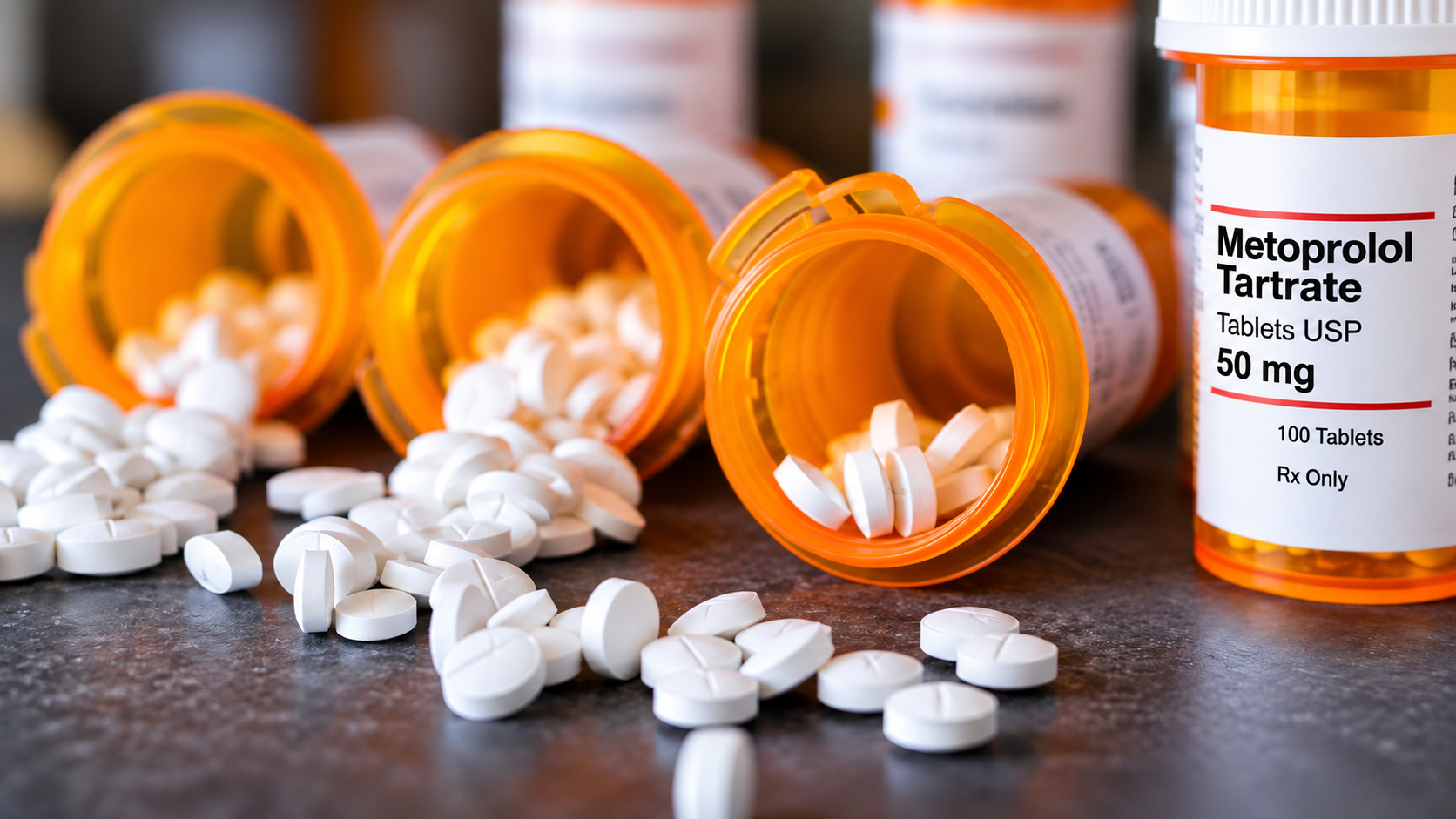
A nationwide pharmaceutical recall involving more than 3.6 million tablets of a commonly prescribed heart medication has raised concerns about prescription drug safety after the discovery that some bottles may contain unidentified tablets or capsules that do not belong in the medication’s packaging.
Advagen Pharma Limited, headquartered in East Windsor, New Jersey, has initiated a voluntary recall of 3,684 bottles of metoprolol tartrate, 50 milligrams, following concerns that foreign medications may have entered the product during manufacturing or packaging. Each affected bottle contains 1,000 tablets, bringing the total quantity subject to recall to approximately 3.68 million tablets distributed throughout the United States.
The recall began October 27, 2026, and received a Class II classification from the U.S. Food and Drug Administration on November 10. The affected medication carries lot number 2611C065A1, an expiration date of May 2028, and National Drug Code 72888-210-00.
Metoprolol tartrate is a widely prescribed cardiovascular medication used to treat high blood pressure, angina and certain other heart conditions. The drug belongs to a class of medications known as beta blockers, which reduce the workload on the heart by slowing the heart rate and lowering blood pressure. Consistent dosing is particularly important for patients whose cardiovascular conditions require continuous medical management.
The recall involves the potential presence of foreign tablets or capsules inside containers intended exclusively for metoprolol tartrate. The identity of those foreign medications has not been publicly established, leaving unanswered questions about their composition, intended medical use and possible effects if accidentally consumed.
The concern extends beyond the possibility of patients swallowing an unintended medication. If an incorrect tablet replaces a prescribed dose of metoprolol, a patient could also experience an interruption in cardiovascular treatment. Depending on the unidentified substance involved, accidental ingestion could introduce additional medical risks, including unexpected drug interactions or adverse reactions.
Federal regulators have classified the recall as Class II, a designation covering products that may cause temporary or medically reversible adverse health consequences, with the probability of serious adverse health consequences considered remote.
The recall nevertheless represents a substantial pharmaceutical distribution action because of the volume of medication involved and the widespread use of metoprolol among patients managing cardiovascular disease.
The affected medication was distributed nationwide, placing pharmacies, pharmaceutical distributors and healthcare facilities across the country within the potential distribution network. Specific states, pharmacy chains, hospitals and individual dispensing locations receiving the affected lot have not been publicly identified.
The packaging involved adds another dimension to the recall. The affected product was supplied in bottles containing 1,000 tablets, a quantity commonly associated with pharmacy inventory rather than individual patient prescriptions. Pharmacies frequently dispense medication from larger manufacturer containers into smaller prescription bottles according to the quantity ordered by a physician.
Consequently, patients who received metoprolol tartrate in standard pharmacy prescription containers may not have access to the original manufacturer’s lot number or packaging information. Determining whether an individual prescription originated from the recalled inventory may require verification through the dispensing pharmacy and its purchasing or inventory records.
The recall also places responsibility on pharmaceutical distributors and dispensing facilities to identify affected inventory, prevent additional distribution and follow applicable recall procedures. Medication already transferred into smaller prescription containers may require additional tracing to determine whether it originated from the affected manufacturing lot.
Rubicon Research Limited, based in Thane, India, is identified in the medication’s labeling as the manufacturer, while Advagen Pharma Limited serves as its United States distributor. The publicly available recall information has not established where the foreign tablets entered the product or whether the problem originated during manufacturing, packaging or another stage of pharmaceutical handling.
The precise number of bottles containing foreign tablets remains unknown. Federal recall information identifies the quantity of product subject to the recall but does not establish how many individual containers have been confirmed to contain an incorrect medication.
The identities of the foreign tablets or capsules have also not been disclosed, and the available information does not establish whether the contamination involves a single unidentified medication or multiple pharmaceutical products.
No confirmed injuries associated with the recall have been identified in the available public recall summaries. The absence of publicly documented injuries, however, does not establish that all affected medication has been located or removed from circulation.
For patients currently prescribed metoprolol tartrate, the recall presents an important medication-management concern. Abrupt discontinuation of metoprolol can create additional cardiovascular risks, particularly among patients with coronary artery disease. Sudden withdrawal may worsen chest pain and, in certain circumstances, contribute to a heart attack.
Patients who believe their prescription may be affected should contact their dispensing pharmacy or prescribing healthcare professional to verify the medication’s manufacturer and lot number and arrange an appropriate replacement when necessary. Tablets or capsules that appear inconsistent with the prescribed medication should be examined by a pharmacist before use.
The nationwide distribution includes the possibility that affected inventory reached Oregon, although no specific Oregon pharmacy, medical facility or patient has been publicly identified as receiving medication from the recalled lot. Residents throughout Southern Oregon, including those obtaining prescriptions in Grants Pass, Medford, Ashland, Roseburg and Klamath Falls, may need assistance from their pharmacies to determine whether their prescriptions originated from the affected supply.
The recall comes as prescription medication safety remains dependent on accurate manufacturing, packaging, distribution and dispensing procedures. Even when the number of confirmed defective products is limited, uncertainty surrounding the contents of a medication container can require the removal of an entire manufacturing lot from circulation.
Advagen’s recall is identified under FDA enforcement event number 100234 and recall number D-0182-2027. The affected product is metoprolol tartrate tablets, USP, 50 milligrams, packaged in 1,000-count bottles bearing lot number 2611C065A1 and an expiration date of May 2028.
The full extent of the packaging problem, the identity of the foreign medication and the number of prescriptions dispensed from the affected inventory remain undetermined. Until those questions are resolved and the recalled supply is accounted for, pharmacies and healthcare providers face the task of identifying potentially affected medication while maintaining uninterrupted treatment for patients who depend on it.