


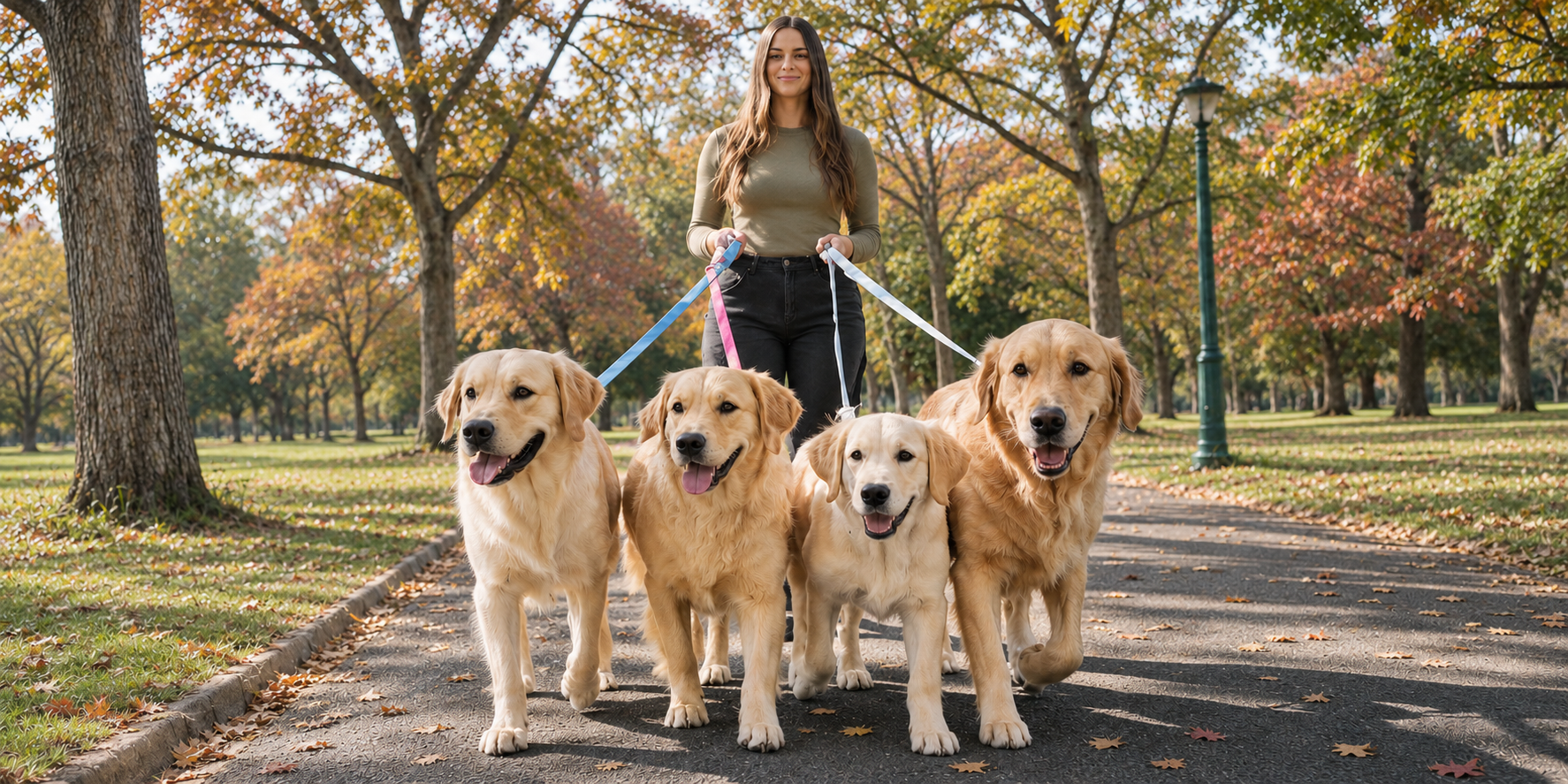
At Tom Pearce Park, a dog walking along the Rogue River has to be on a leash no longer than six feet. A few miles away at Dollar Mountain, Grants Pass allows up to eight feet. At Cathedral Hills, the federal rule for developed recreation sites brings the limit back to six. Three popular places to walk a dog on a cool fall afternoon, and the rules can change with the trailhead.
As the leaves turn and cooler weather draws people back to local trails, dog walkers share some of the same narrow stretches with cyclists, horseback riders and other dogs. For residents and visitors alike, a Grants Pass address alone tells them little about the leash rule. That depends on whether the park or trail is managed by the county, a city, the state or a federal agency.
Josephine County’s six-foot limit covers Indian Mary, Lake Selmac, Griffin, Whitehorse, Fish Hatchery and the rest of the county park system, including campsites. County day-use areas generally open at sunrise and close at sunset unless posted otherwise. The leash requirement applies throughout the day and continues for overnight campers. It applies on an empty trail or picnic lawn, even when a dog reliably comes when called.
Schroeder Park, at 605 Schroeder Lane, has a designated off-leash area with separate sections for small and large dogs. Owners must stay with their dogs and keep them under control inside. Once a dog leaves the enclosure, it goes back on a leash of six feet or less for the walk to the car, campsite or any other part of the park.
In Grants Pass, the city’s eight-foot maximum applies at Riverside, Reinhart Volunteer and Baker parks and on the Dollar Mountain trails. The city has fenced off-leash areas at Gilbert Creek Park, Redwood Park and Greenwood Dog Park. They’re open from 7 a.m. to dusk and close weekly for maintenance. Dogs must be leashed on the way in and out and remain under voice control inside. The city limits each visitor to two dogs and requires them to be licensed and vaccinated, with tags displayed. A dog showing aggression must be leashed and removed. The city can also approve organized off-leash activities in advance.
At Cathedral Hills, the Bureau of Land Management identifies the Espey and Sky Crest trailhead facilities as developed recreation sites. Federal rules require dogs to be physically restrained at those sites, with a six-foot maximum when a leash is used. BLM’s public trail information does not spell out how that rule applies to Walker Trailhead or every route in the system, and it lists no designated off-leash area. A six-foot leash is the practical choice for the whole walk, particularly where hikers, mountain bikers and horseback riders use the same trail.
Farther south, a dog walker can encounter three different sets of rules in the Illinois Valley. At Jubilee Park in Cave Junction, the city requires dogs and other pets to be leashed or kept in a vehicle. The ordinance gives no maximum leash length. At Illinois River Forks State Park, pets must stay leashed, with a six-foot maximum. At Oregon Caves National Monument and Preserve, a six-foot leash is also the limit, but ordinary pets are generally restricted to paved roads and parking areas. Hiking trails and public buildings are closed to ordinary pets. Separate access rules apply to service animals.
The county park ordinance also covers what happens after the dog is leashed. Owners must pick up waste immediately and put it in a trash container. They can’t leave a pet unattended in a vehicle or at a campsite, tie it to a tree, shrub, building or other structure, or let it chase wildlife or threaten or alarm visitors. County park buildings, including restrooms and showers, are generally closed to pets, with an exception for service animals. Only designated pet-friendly yurts and their surrounding sites allow pets, with a limit of two. County Parks can issue a notice of violation for an off-leash dog or for failing to clean up after one.
Beyond the county park system, the six-foot provision does not automatically extend to every road, river access or tract of public land in unincorporated Josephine County. Separate county and state animal-control provisions address loose dogs on public property, trespassing, chasing people or vehicles, and property damage. At a river access or trailhead outside the county system, the managing agency and any posted restrictions determine the leash rule.
A leash can be within the legal length and still give a dog too much room at a blind corner. Drawing it in before passing leaves space for a cyclist, gives a horse and rider room to get by, and keeps two unfamiliar dogs from meeting nose to nose on a narrow path. A keeper can be held responsible when a dog causes injury or damages property, and the dog can be injured in the same encounter. On a shared trail, a few feet of space can be enough for everyone to pass and get on with the walk.