


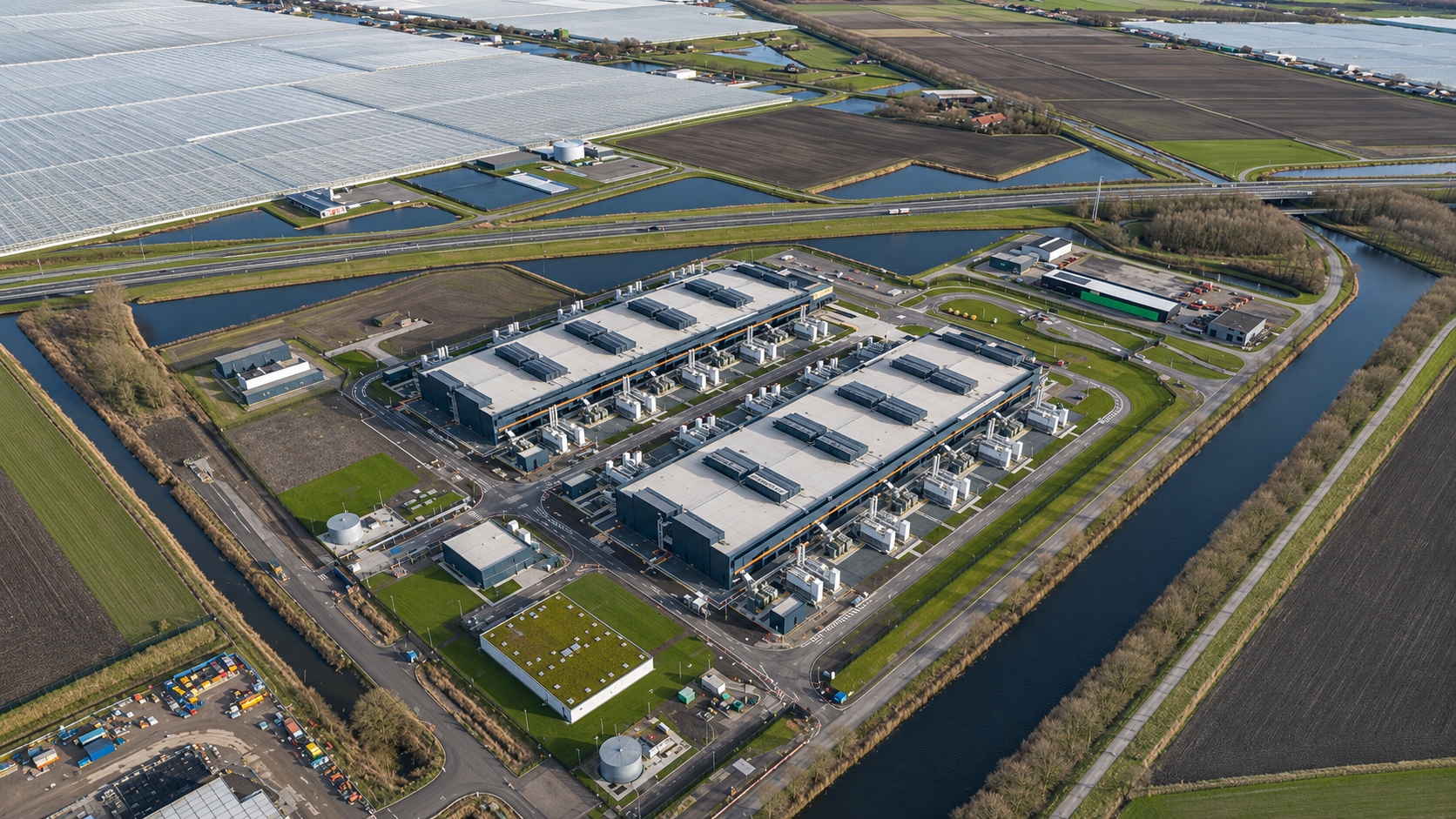
Oregon’s debate over data center development has reached Congress with a proposal to prohibit construction on federally managed public lands, extending a political fight already shaping state property decisions and electricity policy.
U.S. Rep. Maxine Dexter introduced the Protecting Our Public Lands from Data Centers Act on November 11. The proposal would prohibit data center construction on National Forest System land and property managed by the Department of the Interior, including the Bureau of Land Management. It would apply nationwide.
The measure remains proposed legislation. Its introduction creates no immediate restriction on construction or federal land approvals.
Dexter’s proposal comes as the Trump administration pursues faster development of computing facilities and supporting energy infrastructure. A July 2025 executive order directs federal agencies to accelerate permitting and make suitable federal sites available, consistent with applicable law. The administration has framed that expansion as necessary for technological leadership, economic growth and national security.
The legislation would establish a prohibition on covered federal property and impose conditions on future land transfers. Property conveyed after enactment would have to include a provision returning it to federal ownership if used for a data center, unless Congress specifically authorized that use.
The bill excludes reservation lands and specified tribal trust and restricted lands. Its posted text does not separately define associated infrastructure, although Dexter’s announcement describes the proposal as addressing that infrastructure alongside data centers.
Oregon has a direct connection to the federal development debate near Hermiston. Dexter’s legislative summary identifies a proposed campus involving 106 acres there, among at least 17 proposed campuses across six Western states. The summary does not establish that the Hermiston-area proposal has received construction approval.
Sen. Ron Wyden introduced related legislation on September 30, seeking to prevent federal public lands from being developed or transferred for new data centers. His effort to obtain expedited Senate passage was blocked that day.
The congressional proposals would address federal property, while Oregon has already restricted certain pending transactions involving state-owned land.
On September 8, Gov. Tina Kotek directed state agencies to pause unapproved requests for easements, rights-of-way, leases, rentals, land-use permits, and sales or transfers of state property for data center projects. The directive runs through July 1, 2027, unless subsequent statewide action changes it.
That decision followed the cancellation of a planned sale of approximately 32 acres at the Mill Creek Corporate Center in southeast Salem for a proposed data center. The statewide directive provides time to evaluate demands on infrastructure, water and energy, along with employment and environmental effects.
The pause applies to state property decisions. It does not establish a statewide ban on data center construction.
Electricity costs are already subject to a separate Oregon law. The Protecting Oregonians With Energy Responsibility Act, enacted in 2025 as House Bill 3546, requires a distinct electricity service classification for qualifying large energy users and measures intended to prevent their costs from being shifted to other customers.
The law covers specified computing infrastructure, data processing, hosting and related operations capable of using at least 20 megawatts. It requires utilities subject to its provisions to use service contracts that meet established conditions, including terms of at least 10 years.
For Portland General Electric customers, the Oregon Public Utility Commission approved Schedule 96 to assign costs associated with serving large data centers and establish requirements for future service agreements.
Those provisions address the financial consequences when a customer does not use infrastructure built to serve it. They also require sufficient clean energy resources before a large customer begins taking service.
Facilities with at least 100 megawatts of allocated system capacity face an additional one-cent-per-kilowatt-hour surcharge under that schedule. Revenue supports programs intended to offset residential customer costs, including assistance for low-income households. Those provisions apply within PGE’s service structure and do not establish identical rates across Oregon utilities.
The Oregon Data Center Advisory Committee is developing recommendations for a broader state approach. Its public comment period closed October 24, and the committee is reviewing submissions as it prepares recommendations expected by the end of the year. That work is intended to inform legislation for the 2027 session.
For Southern Oregon, Dexter’s proposal concerns the future use of federal lands across a region that includes BLM holdings in Josephine, Jackson, Douglas and Klamath counties, along with national forests. The legislative materials identify the Hermiston-area proposal but do not identify a corresponding project in those four Southern Oregon counties.
Conservation organizations supporting Dexter’s bill include Oregon Wild, WaterWatch of Oregon, Bark and Columbia Riverkeeper, alongside national groups. Their support centers on protecting water, wildlife habitat and public access as federal officials consider industrial uses of public property.
The decisions ahead span three separate areas of authority: Congress is being asked to restrict development on federal lands, Oregon is withholding certain state-property approvals, and utility regulators are implementing requirements governing who pays for expanding electricity demand. Dexter’s bill would add a federal construction prohibition if enacted, while Oregon’s existing property directive and energy law continue on their own schedules.