


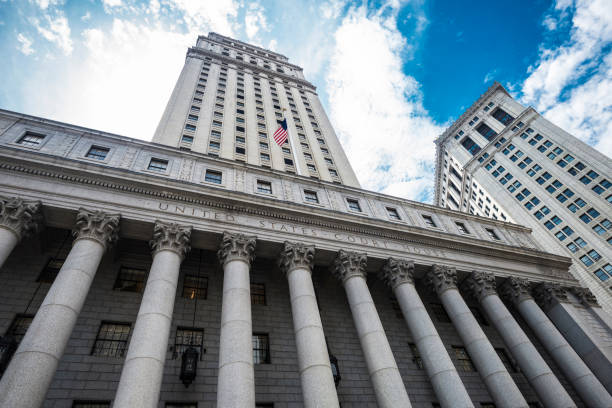
NEW YORK — A federal court has dealt a major blow to President Donald Trump’s controversial plan to impose broad tariffs on imported goods from nearly every country around the globe. On Wednesday, a three-judge panel from the U.S. Court of International Trade ruled that Trump exceeded the limits of his presidential authority in his use of emergency powers to justify sweeping economic measures.
The court’s decision centers around Trump’s application of the 1977 International Emergency Economic Powers Act (IEEPA), a law intended to give the president the ability to respond swiftly to extraordinary threats to national security. Trump had attempted to invoke the law to declare a national economic emergency and introduce a new global tariff policy that would have affected imports from nearly all U.S. trading partners.
According to the court, the IEEPA was not designed to serve as a blanket justification for broad, indefinite economic restructuring through tariffs. In its decision, the panel ruled that Trump’s use of the act in this context “exceeded the authority granted by Congress” and failed to demonstrate a specific and imminent national security threat that would warrant such expansive action.
The ruling is the latest legal setback for the former president’s long-standing efforts to reshape international trade policy. During his administration, Trump frequently imposed tariffs on steel, aluminum, and other goods—particularly targeting China and the European Union—citing economic threats and national security concerns. His administration argued that these actions were necessary to protect American industries and reduce trade deficits.
In this most recent case, however, the court found that Trump’s attempt to use the IEEPA to levy tariffs on nearly all imports lacked the necessary statutory foundation. The law, as interpreted by the court, requires that any economic emergency declared must be linked to a clearly defined foreign threat. The panel concluded that Trump’s justification did not meet that threshold and that his order represented an improper expansion of presidential power in matters of trade.
Legal analysts suggest the ruling reaffirms the balance of power between the executive and legislative branches, especially in the realm of economic policy. Congress, which holds the constitutional authority to regulate foreign commerce, has delegated some powers to the president through laws like the IEEPA. However, the court’s decision reinforces the idea that such delegations are not without limits.
While it is unclear whether Trump or his legal team will appeal the decision to a higher court, Wednesday’s ruling sends a strong message about the limits of executive action in economic matters. It may also shape how future presidents approach the use of emergency powers when pursuing trade and tariff policies.
The blocked tariffs, had they been implemented, would have likely led to increased prices on a wide range of consumer goods, potentially straining international trade relations and prompting retaliation from foreign governments. The court’s ruling thus averts immediate disruption to global supply chains and offers temporary relief to industries and consumers concerned about the rising cost of imports.
As of now, Trump has not issued a formal public response to the decision.