


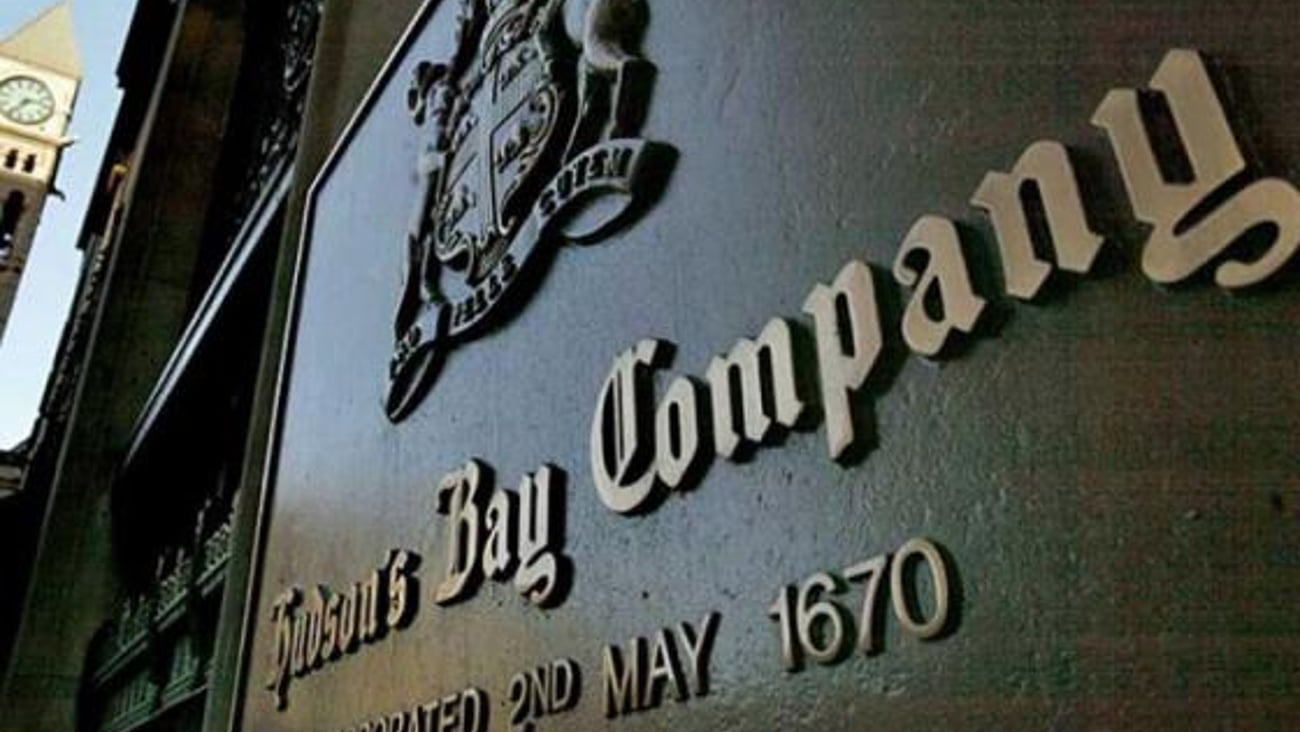
After more than three and a half centuries of continuous operation, the Hudson’s Bay Company has filed for bankruptcy, marking the end of one of the most enduring institutions in global commercial history. The declaration closes a remarkable 355-year journey that began in 1670, when the British Crown granted a royal charter to a trading venture that would become synonymous with fur, exploration, and retail in North America.
Originally established to control trade routes and exploit the vast natural resources surrounding the Hudson Bay watershed, the company was at the forefront of European expansion into what is now Canada. For generations, it played a central role in shaping the political and economic landscape of the continent. Hudson’s Bay posts—part trading hub, part settlement—laid the groundwork for many towns and cities across modern-day Canada. The company’s early influence was so significant that it once governed vast swaths of land, functioning almost as a government in itself.
In the centuries that followed, Hudson’s Bay transitioned from a fur-trading monopoly to a dominant retail force. As global demand for fur waned, the company reinvented itself as a department store empire, particularly in Canada, where its retail operations became household names. The iconic HBC logo and striped point blankets became cultural touchstones, while its flagship stores in cities like Toronto and Vancouver stood as symbols of commercial prosperity.
However, the retail environment has changed dramatically in the 21st century. The rise of online shopping, coupled with increased competition from big-box stores and e-commerce giants, eroded the company’s market share. Despite numerous attempts at modernization, cost-cutting, and real estate restructuring, HBC struggled to maintain profitability. A series of ownership changes and private equity maneuvers failed to stem the financial decline.
The bankruptcy filing reflects broader challenges within the traditional retail sector, which has seen a wave of closures and bankruptcies over the last decade. Hudson’s Bay had already shuttered or scaled down many of its locations, particularly in the United States, where it once owned Saks Fifth Avenue and Lord & Taylor. Despite efforts to pivot toward digital platforms and luxury branding, the company was unable to overcome mounting debt, declining foot traffic, and shifting consumer habits.
The loss is deeply symbolic, particularly for Canada, where HBC holds historical significance not only as a commercial entity but as a foundational piece of national identity. The bankruptcy may also trigger complex legal and financial processes involving real estate holdings, pension obligations, and brand licensing agreements that still span multiple continents.
While some elements of the Hudson’s Bay brand may survive through acquisition or restructuring, the bankruptcy marks the end of its legacy as an independent force in global trade and retail. What began as a venture seeking beaver pelts and territorial dominance ends as a casualty of modern capitalism—a reminder that even the oldest institutions are not immune to the forces of economic transformation.