


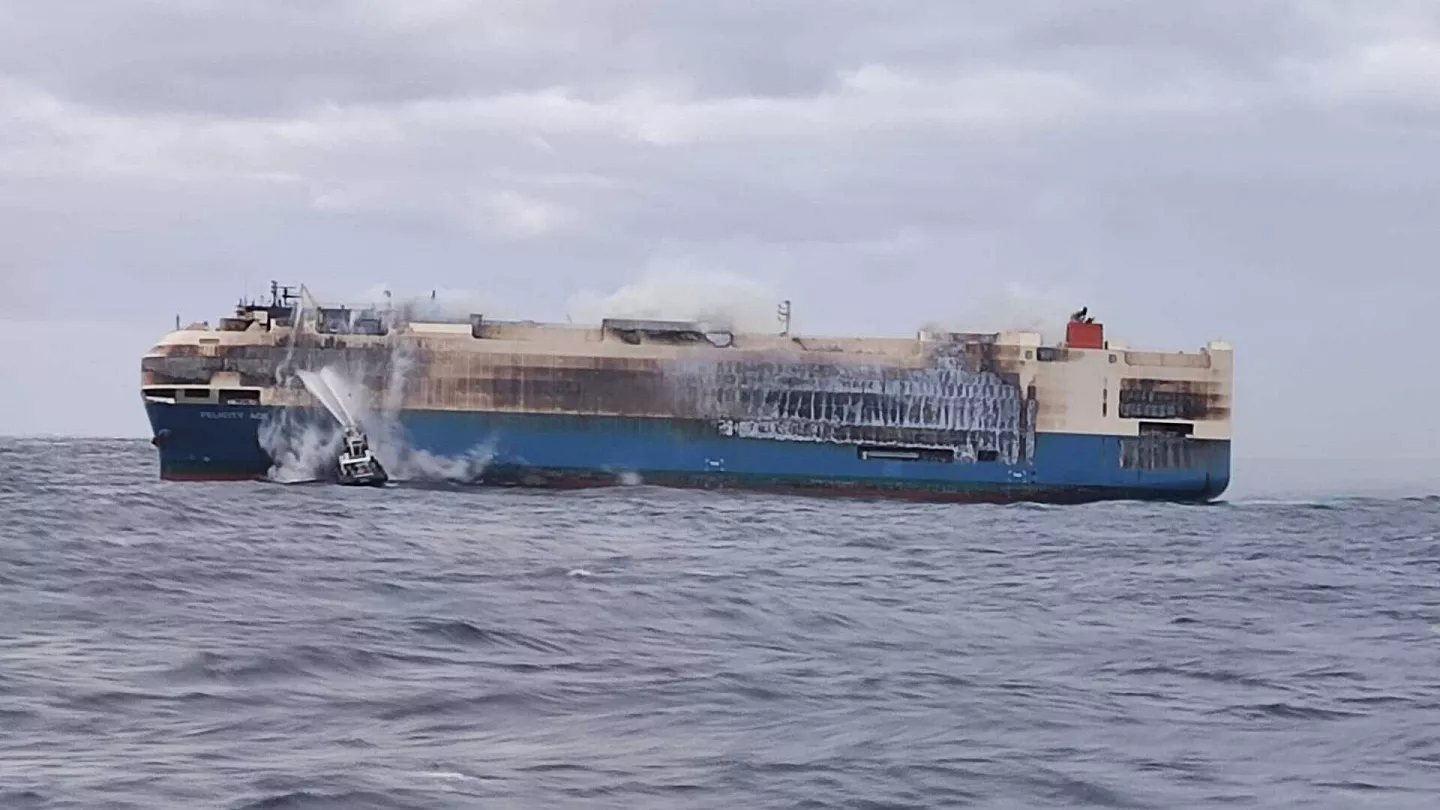
In a harrowing scene off the rugged Aleutian Islands of Alaska this week, the crew of a massive cargo ship was forced to abandon their vessel after a fierce fire broke out aboard the ship carrying thousands of vehicles—including hundreds of electric models bound for Mexico.
The drama unfolded Tuesday when the Morning Midas, a Panama-flagged roll-on/roll-off cargo ship, found itself battling an out-of-control fire while navigating one of the world’s most remote and treacherous maritime regions. The 653-foot vessel was transporting approximately 3,000 vehicles, including 800 electric vehicles (EVs), when the blaze erupted.
According to a statement released Wednesday by Zodiac Maritime, the London-based firm that manages the vessel, a thick plume of smoke was first spotted pouring from the ship’s stern. The smoke appeared to originate from one of the decks densely packed with electric vehicles—a troubling detail given the well-documented challenges of extinguishing fires fueled by lithium-ion batteries.
Photos taken by the U.S. Coast Guard, which responded swiftly to the unfolding emergency, show the stern of the ship shrouded in black smoke, towering over the icy waters below. Despite frantic efforts by the crew to contain the blaze, the fire soon overwhelmed onboard suppression systems.
Recognizing the growing peril and the risk of catastrophic failure, the captain made the call to abandon ship. All 22 crew members safely evacuated the Morning Midas and were later rescued by Coast Guard assets dispatched to the scene. No injuries have been reported among the crew, a fortunate outcome in an otherwise alarming incident.
The U.S. Coast Guard has since launched an investigation to determine the cause of the fire. Early reports suggest that the section of the ship housing the electric vehicles may have been the ignition point, though officials caution that it is too soon to draw definitive conclusions. Fires involving lithium-ion batteries are notoriously difficult to combat, as they can reignite even after appearing to be extinguished and require specialized firefighting techniques.
This incident adds to a growing list of maritime fires linked to EV cargoes. As global demand for electric vehicles soars, more of these battery-laden cars are being shipped across the world’s oceans, raising fresh concerns about the adequacy of fire suppression capabilities on traditional cargo ships.
In fact, just last year, several similar incidents involving EVs in transit prompted calls from international shipping bodies to reevaluate safety protocols and consider new design standards for vessels transporting such cargo. The lithium-ion batteries that power EVs are both energy-dense and flammable under certain conditions, particularly if damaged or exposed to extreme heat.
While modern roll-on/roll-off ships are equipped with fire detection and suppression systems, many experts argue that these systems were never designed to handle the unique hazards posed by mass shipments of electric vehicles. Tuesday’s fire aboard the Morning Midas appears to underscore that point.
As of Thursday, the Morning Midas remained adrift in the remote North Pacific, with a dedicated salvage team now en route to assess the condition of the vessel and explore options for fire containment and recovery. Environmental groups are also monitoring the situation closely, concerned about the potential release of hazardous materials should the ship succumb to the blaze and sink.
The Aleutian Islands, known for their unforgiving weather and strong currents, present additional logistical challenges for the salvage operation. The isolated nature of the region means response teams must be entirely self-sufficient and prepared for adverse conditions.
For now, the safe rescue of the crew stands as a rare bright spot in an otherwise troubling event. But the maritime world will no doubt be watching closely as investigators work to unravel what happened aboard the Morning Midas—and what lessons the shipping industry must urgently learn before the next EV-related fire breaks out at sea.