


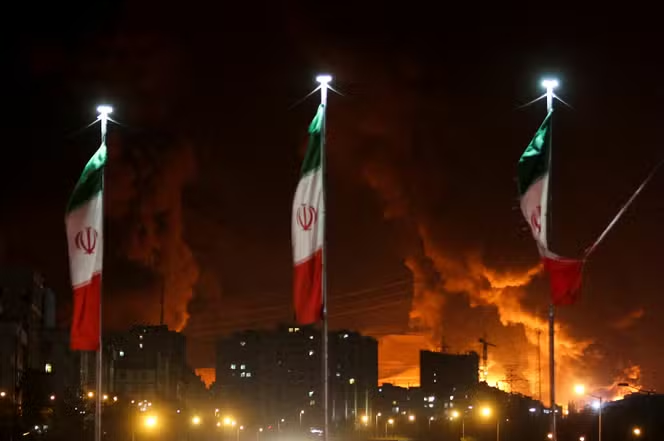
As the military conflict between Israel and Iran enters its seventh day, the situation remains tense, rapidly evolving, and increasingly volatile. What began as retaliatory strikes has now become a sustained and intense exchange involving strategic infrastructure, civilian casualties, and growing international concern.
Iran launched another wave of ballistic missiles into southern Israel early Wednesday morning, targeting Beersheba and severely damaging the Soroka Medical Center. While dozens of people were injured, officials reported no fatalities at this time. The attack marks the most direct hit on Israeli medical infrastructure since the conflict began.
In response, Israeli forces conducted a series of coordinated airstrikes deep inside Iranian territory, including confirmed strikes on the Arak heavy-water reactor and Iran’s operational nuclear facility in Bushehr. Israeli military officials claimed the targeted facilities were evacuated beforehand to minimize civilian casualties, and no radiation leaks have been reported. However, the psychological and geopolitical impact of striking active nuclear sites has intensified global scrutiny.
Over the past week, Iran has suffered significant human and structural losses. Though Iranian state media has acknowledged 224 deaths, unofficial estimates suggest the death toll could be closer to 600, including civilians caught in the crossfire. Israel has also sustained casualties, with 24 reported deaths and many more injured due to Iranian missile and drone attacks. Several strikes on key Israeli infrastructure, including hospitals and power grids, have heightened concern over long-term civilian impacts.
In both countries, political rhetoric has hardened. Israeli Prime Minister Benjamin Netanyahu has vowed to hold Iran accountable and has accused its leadership of sponsoring terrorism and endangering regional peace. Israeli Defense Minister Yoav Gallant went further, declaring that Iran’s Supreme Leader Ayatollah Ali Khamenei “can no longer be allowed to exist,” signaling a possible shift toward leadership-targeted operations.
Iran’s response has been no less defiant. Khamenei has promised continued resistance and warned that direct U.S. involvement would lead to “irreversible consequences.” Tehran continues to frame the conflict as a defensive struggle against what it calls Western-backed aggression, aiming to rally domestic and regional support.
Meanwhile, the United States has increased its military presence in the region. President Donald Trump has approved contingency plans for potential airstrikes on Iranian military and nuclear targets but has not issued a final order for engagement. A second U.S. carrier strike group has arrived in the Arabian Sea, and an additional destroyer has been stationed in the eastern Mediterranean, officially described as a “defensive deterrent.”
Diplomatic channels are strained but active. European nations and the United Nations are urging de-escalation, proposing emergency talks in Geneva. China and Russia have issued formal statements encouraging restraint and warning of global economic and security repercussions if the conflict continues to intensify.
Energy markets are already feeling the ripple effects. Brent crude oil prices climbed to over $77 per barrel amid fears of a broader regional war disrupting key shipping routes, including the Strait of Hormuz. Some countries have begun evacuation efforts for foreign nationals in Iran, including India’s “Operation Sindhu,” which safely airlifted more than 100 citizens.
The broader strategy behind Israel’s campaign appears to be twofold: to degrade Iran’s long-range missile capability and to disrupt its nuclear infrastructure without causing a regional nuclear incident. Analysts suggest that Israel may be coordinating its efforts with cyber and intelligence assets to minimize collateral damage while delivering maximum strategic impact.
This is the first sustained, direct military confrontation between the two nations after decades of proxy conflicts and shadow operations. With each side vowing not to back down, the risk of escalation remains high. Key observers warn that any misstep could draw in other regional players, particularly Hezbollah in Lebanon or the Houthis in Yemen, further widening the conflict zone.
As the strikes continue and diplomatic pressure builds, the world watches closely. What happens over the next 48 to 72 hours could determine whether the region edges closer to a broader war or finds a path toward containment.