


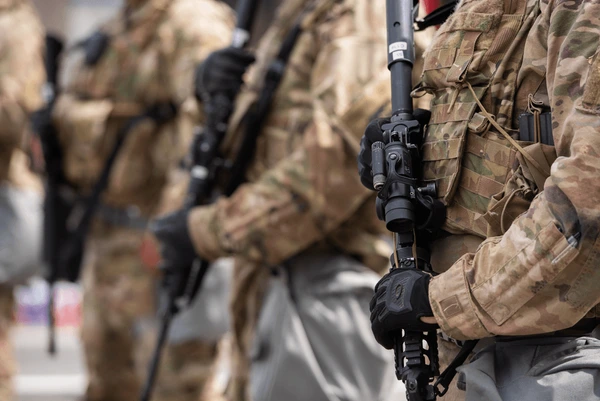
The Ninth Circuit Court of Appeals has granted former President Donald Trump’s request to temporarily reinstate federal control over thousands of California National Guard troops, reversing a lower court ruling that had challenged the legality of the deployment.
Earlier this month, Trump ordered the federal activation of National Guard units to assist with security operations in Los Angeles amid widespread protests over his administration’s immigration policies. The move drew swift criticism from California state officials and civil rights groups, who argued the action overstepped constitutional boundaries and interfered with state authority over the Guard.
A federal district court subsequently ruled that the federalization may have violated constitutional provisions by asserting presidential authority without sufficient justification or coordination with state leadership. However, that decision has now been paused, pending a full appeal, allowing the troops to remain under federal command for the time being.
The Trump legal team argued that the president acted within the bounds of federal law—specifically under Title 10 of the U.S. Code—which authorizes the president to assume control of National Guard forces during times of civil disturbance or national emergency. According to the filing, the deployment was necessary to protect federal assets and assist with maintaining public order during what the administration described as escalating unrest.
Opponents of the deployment have maintained that the protests in Los Angeles, while large and occasionally disruptive, were largely peaceful and did not warrant military involvement. They contend that Trump’s use of the Guard represented a politically motivated overreach and a misuse of federal authority to suppress dissent. State officials also noted that no formal request for federal intervention had been made by local law enforcement or the governor’s office.
The Ninth Circuit’s temporary stay does not resolve the underlying legal dispute but allows the federal deployment to continue while the case proceeds. A full hearing before the appellate court is expected in the coming weeks, where both sides will present arguments concerning the limits of executive power and the legal framework surrounding state-federal jurisdiction over the National Guard.
Legal analysts suggest the case could set an important precedent regarding the scope of presidential authority in domestic military deployments, particularly in situations involving civil demonstrations. Depending on the outcome at the appellate level, the matter could ultimately be reviewed by the U.S. Supreme Court.
In the meantime, National Guard personnel will remain stationed in the Los Angeles area under federal command. Officials have stated that their presence is focused on infrastructure protection, logistical support, and crowd control in coordination with local agencies. While the situation on the ground has largely de-escalated, the broader legal and political debate surrounding the deployment continues to unfold.