


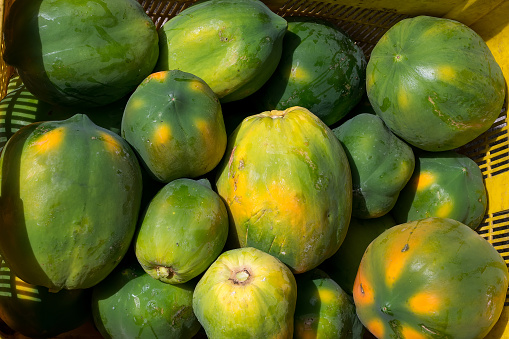
(Pharr, Texas) — In a major narcotics interception, U.S. Customs and Border Protection officers seized more than a ton of methamphetamine concealed within a shipment of papayas entering the United States from Mexico. The seizure occurred on July 6, 2025, at the Pharr International Bridge cargo facility, a commercial crossing point in South Texas near the U.S.-Mexico border.
According to Customs, the illicit drugs were discovered during a routine inspection of a commercial tractor-trailer transporting produce. The vehicle had declared a load of fresh papayas, but further examination led officers to uncover 384 packages of suspected methamphetamine hidden within the cargo. The total weight of the narcotics was reported as 2,571.69 pounds.
Federal authorities estimate the street value of the seized methamphetamine to be approximately $23.6 million.
Custom officers at the Pharr cargo facility utilized a multi-layered enforcement approach, including non-intrusive imaging systems and canine inspection teams, to detect the hidden contraband. Upon identifying irregularities during the screening process, agents conducted a thorough search of the trailer, ultimately uncovering the concealed narcotics.
While Customs did not immediately disclose the identity of the driver or whether any arrests were made, the case remains under investigation by Homeland Security Investigations (HSI), the investigative arm of U.S. Immigration and Customs Enforcement. It is standard practice for HSI to take the lead in cases involving international drug trafficking.
The Pharr-Reynosa International Bridge is a busy commercial port of entry that processes thousands of trucks daily. Its proximity to agricultural exporters and manufacturers across the Mexican border has made it a critical point for trade — and a potential target for drug traffickers seeking to exploit commercial shipping routes.
Methamphetamine remains one of the most commonly trafficked narcotics across the southern border. Its high potency and profitability continue to make it attractive to transnational criminal organizations. According to the Drug Enforcement Administration (DEA), most of the meth entering the U.S. is produced in clandestine laboratories in Mexico and smuggled into the country using increasingly sophisticated concealment methods.
U.S. Custom officials emphasized the importance of continued vigilance in the face of evolving smuggling tactics. Interdictions like the one in Pharr reflect the agency’s ongoing efforts to combat the flow of dangerous drugs into the United States and disrupt the operations of international trafficking networks.
This seizure marks one of the largest methamphetamine busts at the Pharr cargo facility in recent months and underscores the role of border officers in safeguarding national security through inspection and enforcement.
The investigation into the origin, destination, and individuals responsible for the shipment is ongoing. Authorities have not released further details at this time.