


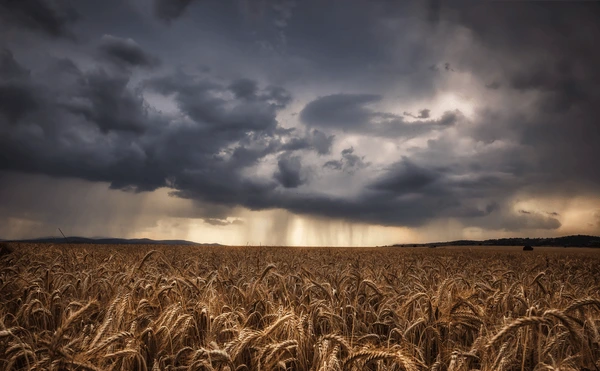
On July 3, 2025, severe flooding struck central Texas, causing more than 120 fatalities and widespread damage across multiple counties. In the aftermath, questions were raised about the potential role of cloud seeding, a weather modification process used in several U.S. states, including Texas. The speculation prompted renewed examination of the science behind cloud seeding, its effectiveness, safety, and regulatory framework.
Cloud seeding is a form of weather modification that aims to increase precipitation by dispersing substances into clouds to encourage rainfall. Most commonly, aircraft release silver iodide, potassium chloride, or dry ice into the atmosphere. These particles serve as nuclei that help supercooled water droplets in clouds condense into larger droplets or ice crystals, which may fall as rain or snow. The process requires existing cloud systems with sufficient moisture and vertical development.
The technology has been in development since the 1940s, with early experiments conducted by General Electric scientists Vincent Schaefer and Irving Langmuir. Since then, state governments, water districts, and private firms have used cloud seeding in targeted efforts to enhance water supplies, reduce hail damage, or increase snowpack in mountainous regions.
In Texas, cloud seeding operations are regulated by the Texas Department of Licensing and Regulation. Operators must obtain a license, file public notices of intent, and submit post-operation reports. According to the agency, no cloud seeding was conducted in the immediate area or timeframe of the central Texas flooding event. The only known seeding activity occurred on July 2, over 100 miles from the flood zone, involving approximately 70 grams of silver iodide.
Meteorologists from the National Weather Service attributed the flooding to a convergence of natural atmospheric conditions, including high moisture content, stalled weather patterns, and strong convective activity. Weather records show that the storm system was driven by large-scale meteorological forces rather than any artificial influence.
Scientific studies have produced mixed results on the effectiveness of cloud seeding. Some field experiments and statistical analyses suggest precipitation increases of between 3% and 20% under favorable conditions. However, findings are often inconsistent due to the complex variables involved in cloud formation and precipitation. A 2003 report by the National Research Council concluded that the scientific basis for cloud seeding remains uncertain, and that further peer-reviewed research is needed to confirm its effectiveness.
Environmental assessments of cloud seeding generally find minimal risk. Silver iodide, the most commonly used seeding agent, is used in small quantities and has low solubility in water. Studies conducted in the United States and other countries have not found evidence of harmful accumulation in soil, vegetation, or water systems. Human exposure is considered negligible due to the limited volume used and dispersion at high altitudes.
Nonetheless, some scientists call for long-term monitoring in areas where repeated cloud seeding occurs, to track possible ecological impacts over time. There is currently no national database of cumulative environmental assessments, and environmental regulations vary by state.
In terms of safety, no verified incidents have linked cloud seeding operations to weather disasters such as floods, hurricanes, or tornadoes. The process cannot generate storms on its own; it can only enhance precipitation in already-formed clouds with the right atmospheric structure. Large-scale storm systems, such as the one that caused the July 2025 Texas floods, develop through interactions between atmospheric pressure, temperature gradients, moisture levels, and other meteorological factors beyond the influence of cloud seeding.
In response to online speculation about the Texas event, several agencies, including the Texas Division of Emergency Management and the National Oceanic and Atmospheric Administration, reviewed data from cloud seeding operators and weather radar archives. They found no evidence of a connection between cloud seeding activities and the flooding.
Despite this, conspiracy theories continue to circulate online. Some social media users have accused state agencies of engineering the weather, and several elected officials have called for broader investigations into weather modification practices.
Cloud seeding is currently in use in at least eight western states, primarily to support water resource management. In Nevada, Utah, and Colorado, for example, winter cloud seeding operations aim to increase snowfall to boost spring water runoff into reservoirs. In North Dakota and parts of Texas, summer seeding is sometimes used to reduce hail size, based on research that suggests early ice formation can prevent large hailstones from developing.
At present, cloud seeding remains a regulated but limited tool. Scientific uncertainty remains regarding its overall effectiveness, and data collection varies widely across programs. Most experts agree that further research and consistent public reporting are necessary to better understand its capabilities and long-term impacts.
Cloud seeding is an established and regulated practice in the United States, primarily used to enhance precipitation in specific conditions. Scientific data to date does not support any link between cloud seeding and large-scale weather events such as the recent Texas flood. While preliminary research indicates that the method may have limited applications in water resource management, its overall effectiveness and potential environmental impacts remain subjects of ongoing scientific evaluation.