


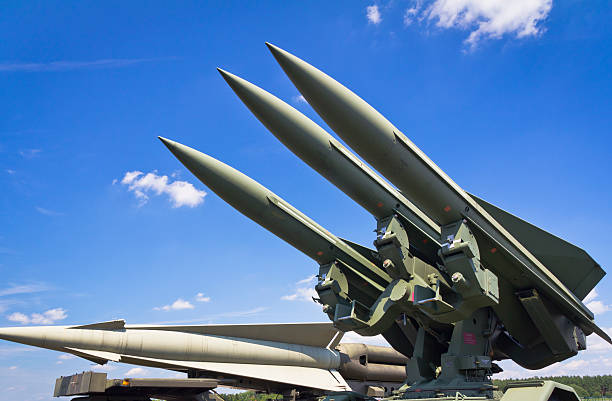
The United States has confirmed that it will not allow Ukraine to launch long-range missile strikes deep into Russian territory, a move that underscores Washington’s cautious approach in managing the ongoing war in Eastern Europe. The decision comes only days after President Donald Trump remarked that Ukraine could not realistically win the war without striking Moscow directly, a statement that sparked renewed debate over military strategy and the risks of escalation.
Officials in Washington clarified that U.S.-supplied long-range weapons systems, particularly those capable of reaching targets hundreds of miles away, are to be used strictly for defensive purposes and operations within Ukrainian territory. This position has been consistent since the beginning of U.S. military aid to Kyiv, but the timing of the reaffirmation highlights how sensitive the issue has become.
The concern among American and NATO leaders is that any Ukrainian strike into Russia proper—especially near Moscow—could trigger a dangerous escalation, possibly even drawing the alliance into direct confrontation with Russian forces. While Ukraine has repeatedly argued that its survival depends on being able to disrupt Russia’s military capabilities far beyond the frontlines, Western allies remain reluctant to cross what they view as a potential red line.
Ukraine, now entering its third year of full-scale war, continues to struggle with depleted resources, stretched manpower, and an enemy with access to deep reserves of weapons and troops. Its officials argue that Russia’s ability to launch attacks from secure positions across the border gives Moscow a decisive advantage. Without striking those positions, Ukrainian commanders say they are forced into a reactive posture, constantly defending against missile and drone barrages that originate on Russian soil.
Trump’s comments, delivered at a public event last week, added a political layer to the debate. His suggestion that Ukraine “cannot possibly win” without hitting Moscow resonated with some critics who believe the West’s incremental support has left Kyiv in a no-win situation. Others, however, countered that direct attacks on Moscow could shift the war from a regional conflict into a broader confrontation with unpredictable consequences.
The Trump administration has carefully balanced support for Ukraine with the imperative of avoiding escalation. Billions of dollars in military assistance, including advanced artillery, air defense systems, and now F-16 fighter jets pledged by European allies, have strengthened Ukraine’s defensive capacity. Yet Washington has consistently drawn a line at enabling strikes inside Russia itself. Officials emphasize that such restrictions are necessary to maintain unity among NATO members, many of whom are wary of being pulled into a wider war.
Meanwhile, Ukraine has turned to developing its own long-range drones and missiles, some of which have struck oil depots and military sites inside Russia. These domestically produced systems operate outside the framework of Western restrictions, though they remain limited in range and effectiveness compared to U.S. technology.
As the war drags on, the divide between Ukraine’s strategic needs and its allies’ caution is becoming more pronounced. For Kyiv, the ability to hit targets deep within Russia represents a potential path to altering the balance of power. For Washington, it is a risk that could spark escalation on a scale that NATO is determined to prevent.
The debate is likely to intensify as Ukraine presses for more autonomy in using Western weapons, while U.S. leaders continue to navigate the fine line between robust support and avoiding a direct clash with Russia.