


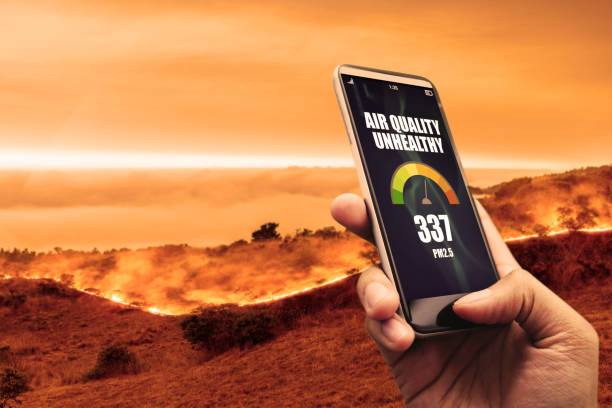
Grants Pass and much of Josephine County are once again blanketed in a smoky haze as nearby wildfires continue to spread their impact beyond the flames. The Air Quality Index for the area has been holding in the moderate range, a level that is not considered dangerous for the general population but one that can cause discomfort and potential health problems for sensitive groups such as children, older adults, and people with respiratory or cardiovascular conditions. The haze has reduced visibility across town and added an unmistakable heaviness to the air, a reminder that even when fires burn miles away, the effects are felt close to home.
The smoke comes from multiple blazes burning across southern Oregon and northern California, with shifting winds determining how much of that pollution settles over Josephine County each day. In the mornings and evenings, the concentration of fine particles known as PM2.5 often increases, creating more noticeable irritation for those who step outside. These particles are particularly concerning because of their size. Small enough to travel deep into the lungs and even into the bloodstream, they can worsen asthma, trigger coughing or throat irritation, and in more serious cases, increase the risk of heart complications. Even healthy residents have reported shortness of breath, headaches, and fatigue after spending extended time outdoors during smoky periods.
Public health officials outside Josephine County have consistently urged people to remain indoors when possible on days when smoke levels are high, but staying inside is not always practical. For those who must go about their routines, there are still ways to reduce exposure and protect themselves. Closing windows and doors helps limit smoke infiltration, while using an air purifier with a high-quality filter can make indoor air noticeably cleaner. In households without a purifier, some residents have turned to simple solutions such as attaching a furnace filter to a box fan, which can still capture a significant portion of airborne particles. Avoiding activities that add pollutants indoors, like burning candles or frying food, also reduces irritation when outside air quality is already poor.
For people who cannot avoid outdoor activity, wearing a properly fitted N95 or KN95 mask can reduce the amount of smoke inhaled, though it is not a complete solution. Planning errands or yard work during times when the air is clearer, often earlier in the day, can also lessen the impact. Doctors advise staying hydrated and pacing physical exertion, as smoke places additional strain on the lungs and heart. Even small measures such as keeping indoor humidity at comfortable levels can make breathing easier during extended smoky periods.
The outlook for the coming days remains uncertain, with smoke levels fluctuating depending on wind direction, fire behavior, and regional weather patterns. Local residents are encouraged to monitor daily air quality updates through state and county resources, which provide real-time information on changing conditions. As fire season continues, the haze that now hangs over Grants Pass serves as both an inconvenience and a warning. It highlights the ongoing challenges that communities in southern Oregon face each year and underscores the importance of preparation, awareness, and simple health-conscious habits when smoke fills the air.