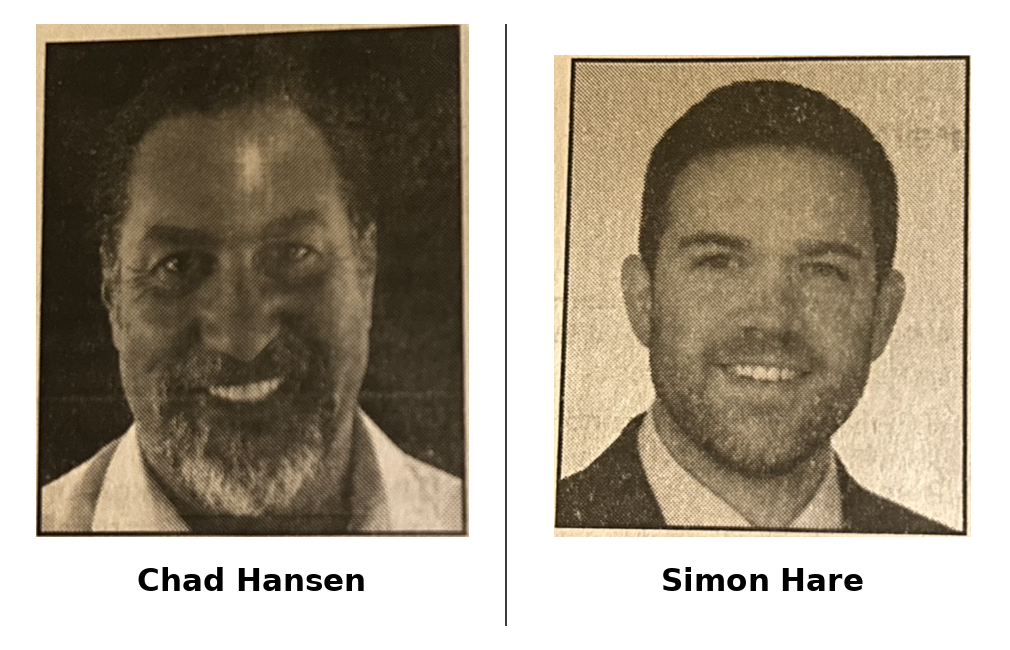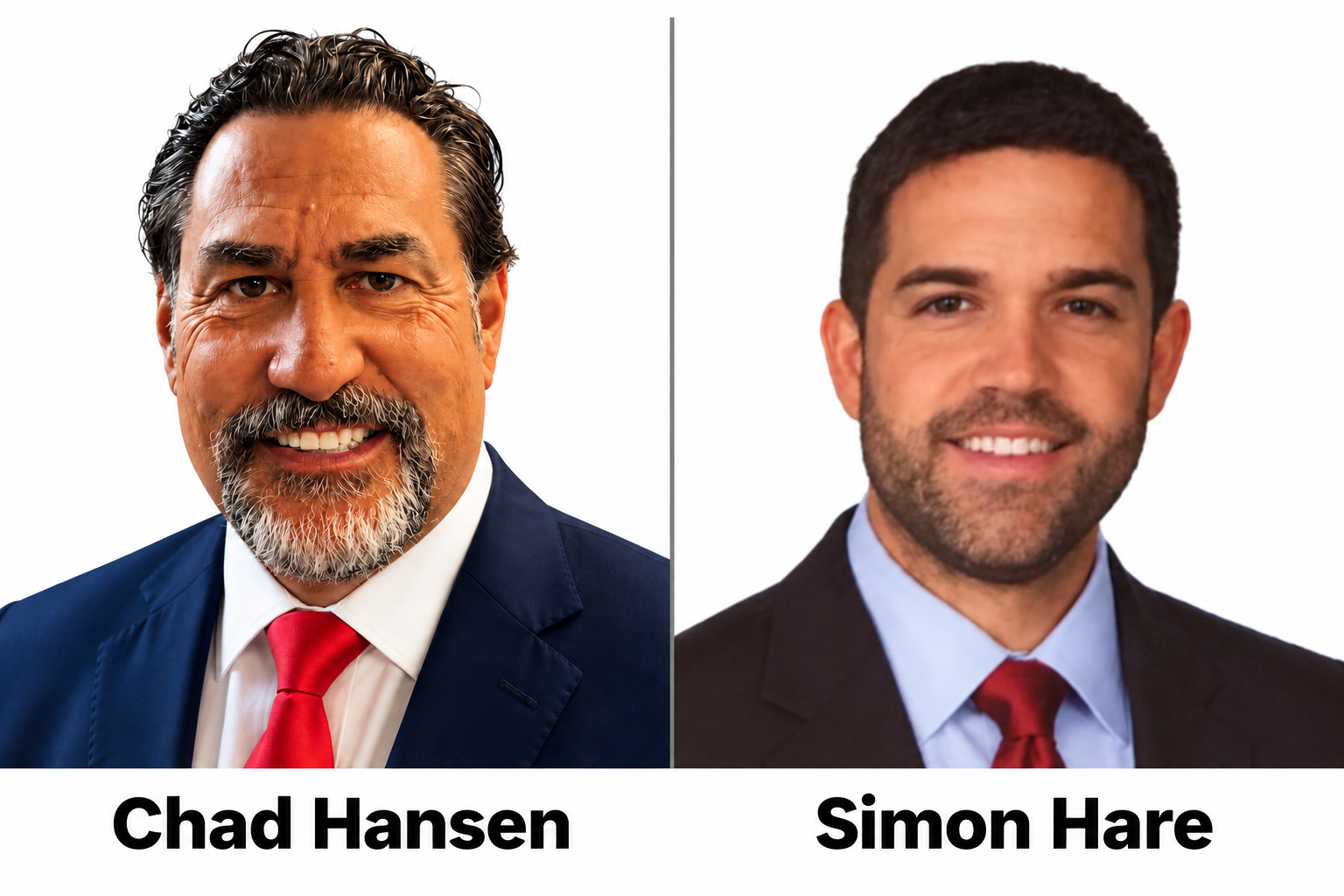
Josephine County candidates Chad Hansen and Simon Hare have not answered repeated requests to explain photographs used in their campaign literature, including whether the images were digitally manipulated and required disclosures under Oregon election law.
The Grants Pass Tribune requested original photographs and written explanations from Hansen, a candidate for County Commissioner Position 2, and Hare, a candidate for county treasurer, after identifying campaign images that appear artificially generated or substantially altered. Neither candidate had responded by publication.
The unanswered requests come as a political committee opposing Multnomah County chair candidate Julia Brim-Edwards faces a formal complaint over an allegedly altered photograph. That case places Oregon’s disclosure requirement before state election officials during the closing weeks of the November election.
The Tribune asked Hansen and Hare to identify who produced their campaign images, what alterations were made and who approved their distribution. The newspaper also requested complete copies of any disclosures accompanying the photographs or an explanation of why the campaigns believed disclosures were unnecessary.
Neither campaign has supplied original images, described the production process or addressed the apparent absence of manipulation notices. No violation by either candidate has been established.
Oregon adopted its synthetic media disclosure law in 2024. Under ORS 260.268, campaign communications must disclose manipulated imagery when it meets the statute’s definition: a realistic but false depiction, intentionally created through artificial intelligence or similar digital technology, that materially changes a reasonable viewer’s understanding or impression of the original.
The requirement reaches campaign materials promoting a candidate’s own election as well as advertisements targeting an opponent. It does not automatically apply to every retouched photograph; the nature and effect of the alteration determine whether an image meets the legal threshold.
In Portland, the Don’t Rank Julia political committee distributed a photograph of Brim-Edwards on its website and Instagram account without identifying it as manipulated. Bobbie Regan, a political consultant and former Portland school board member who supports Brim-Edwards, filed an election complaint October 19 alleging that the image changed the candidate’s expression and made her appear substantially older.
The photograph resembled imagery from a 2023 television interview, but differences in Brim-Edwards’ face and the background prompted questions about its origin. OPB reported that the image’s metadata indicated Google AI involvement.
Committee donor Diane Goodwin said the volunteer who designed the website described the photograph as edited in Photoshop. The committee removed it from its website after receiving questions, although it remained on Instagram as of October 21.
The Secretary of State’s office had not decided whether to investigate, according to the October 21 report. The complaint had produced no finding of a violation.
The competing accounts of how that photograph was created leave a question that also runs through the Tribune’s requests to Hansen and Hare: whether digital changes produced a materially different depiction requiring disclosure. Oregon’s statute covers AI and similar digital technology, so identifying a particular editing program does not resolve whether the finished image falls under the law.
The Tribune’s written inquiry gave both Josephine County candidates an opportunity to document their photographs’ authenticity. If the images were not materially manipulated, the newspaper requested the originals and available information establishing their origin. If alterations were made, it requested an account of those changes and the campaigns’ positions on disclosure.
Last week each candidate was asked to respond separately within 24 hours or identify when supporting records would become available. The inquiry also asked whether the campaigns would continue distributing the materials, add disclosures or replace the photographs.
Neither candidate has answered those questions. Their lack of response has prevented the newspaper from reporting their explanations or examining the underlying files.
Oregon’s law authorizes the Secretary of State to seek court orders stopping violations. Upon proof of a violation, a court must impose a civil penalty of up to $10,000. The statute also provides reasonable attorney fees to the prevailing party.
The obligation applies to disclosures accompanying qualifying campaign communications. It does not establish a general requirement to separately report every AI-assisted photograph to the state.
As the November 3 election approaches, the photographs distributed by Hansen and Hare remain the subject of unanswered newspaper inquiries. Neither campaign has provided the records requested to establish how the images were created or explained why its campaign materials comply with Oregon’s disclosure requirements.
If candidates refuse to follow election rules, why should voters trust them to follow the rules once in office?