


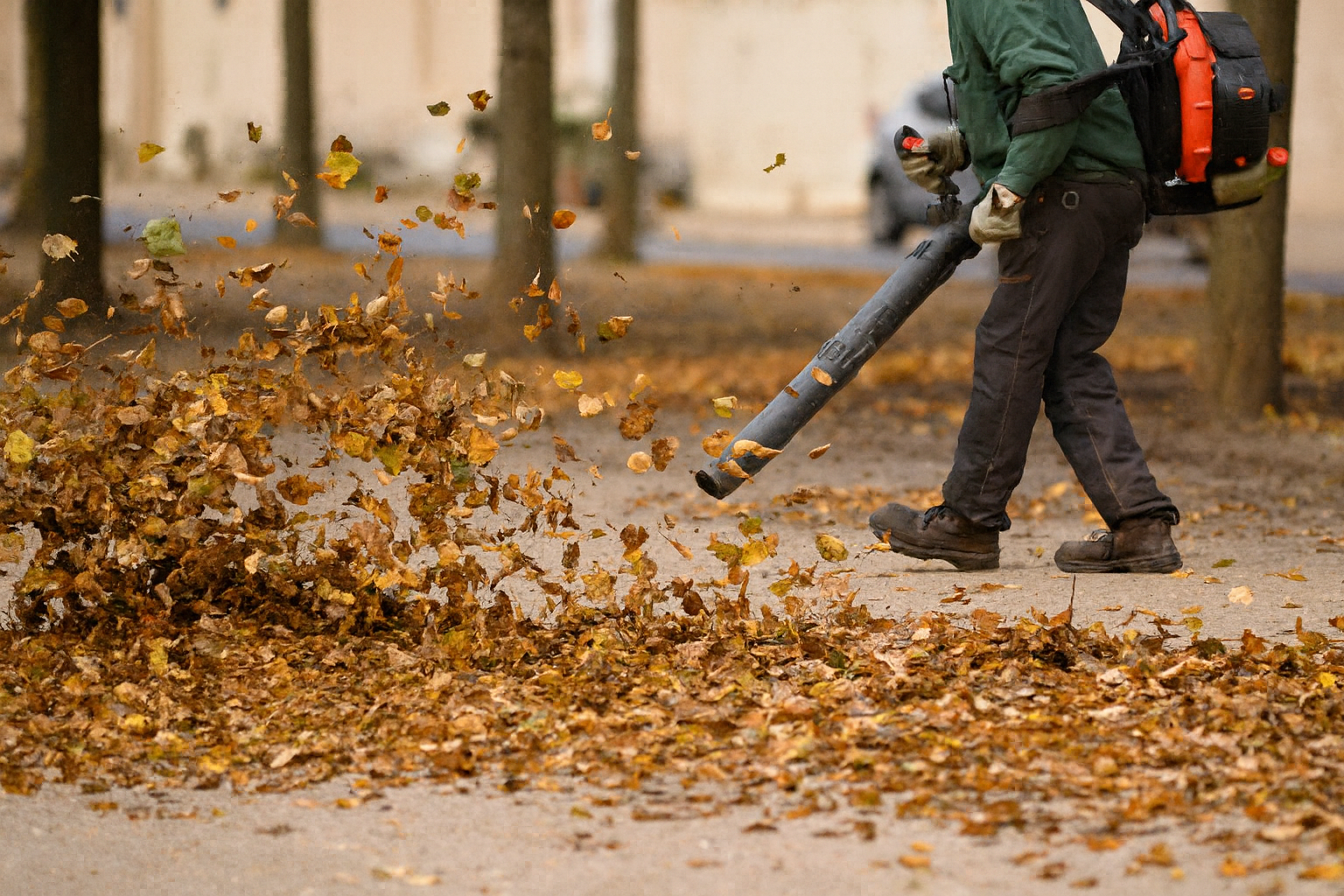
City officials are urging residents to keep leaves out of the roadway and off the public right of way. While it may seem convenient to sweep or blow yard debris into the street for the next pass of the street sweeper, doing so creates hazards, undermines maintenance, and violates City Municipal Code 5.36.030. Crews have emphasized that sweepers will not collect leaf piles left by property owners; in fact, operators will bypass blocks where accumulated leaves line the curb, delaying service and compounding the mess for everyone else on the route.
The directive is part of a broader effort to protect the stormwater system at the time of year when it is most vulnerable. Leaves that gather along gutters and crosswalks can wash into storm drains during the season’s first heavy rains. Once inside the system, organic debris mats together and reduces flow, which can push water back into streets and intersections. Even a brief downpour can overwhelm a clogged inlet, creating localized flooding that endangers drivers, pedestrians, and cyclists and forces public works crews to divert from scheduled work to clear emergency blockages. The result is slower progress on routine street sweeping and a higher risk of repeat flooding when storms stack up.
The city’s enforcement posture is also clear. Pushing leaves into the street constitutes a code violation under Municipal Code 5.36.030, and properties found dumping yard waste into the public right of way may be referred to code enforcement. The city encourages neighbors to report locations where leaf buildup is obstructing travel lanes, bike routes, sidewalks, or drain inlets. Reports submitted through the city’s service portal help crews and code enforcement prioritize problem areas and follow up with property owners whose practices are contributing to blockages.
Residents have several compliant options for fall leaf disposal. Households with green yard debris service should place leaves in their provided carts or in approved leaf bags and set them out on the regular collection day for their refuse hauler. This keeps organic material within the solid waste stream designed to handle it and prevents windblown piles from scattering back into the street. For households that do not subscribe to yard debris service, leaves should be gathered into appropriate bags or containers and hauled to a local transfer station for disposal. Using these channels ensures leaves are managed safely and reduces the likelihood of neighborhood flooding.
City staff note that keeping curbs clear also improves overall street safety and maintenance. Leaf piles conceal potholes and debris, create slick surfaces for bikes and motorcycles, and can trap parked vehicle tires, making it difficult to pull away from the curb cleanly. When residents keep the gutter line open, street sweepers can complete full passes, storm drains remain accessible for routine checks, and emergency crews are less likely to be rerouted to clear preventable obstructions during storms.
With more wet weather ahead, the city is asking every household to do its part: manage leaves on private property, use approved disposal methods, and alert officials when leaf buildup is impairing the public right of way. These small steps keep water moving, protect streets from flood damage, and help maintenance teams stay on schedule through the fall season.