


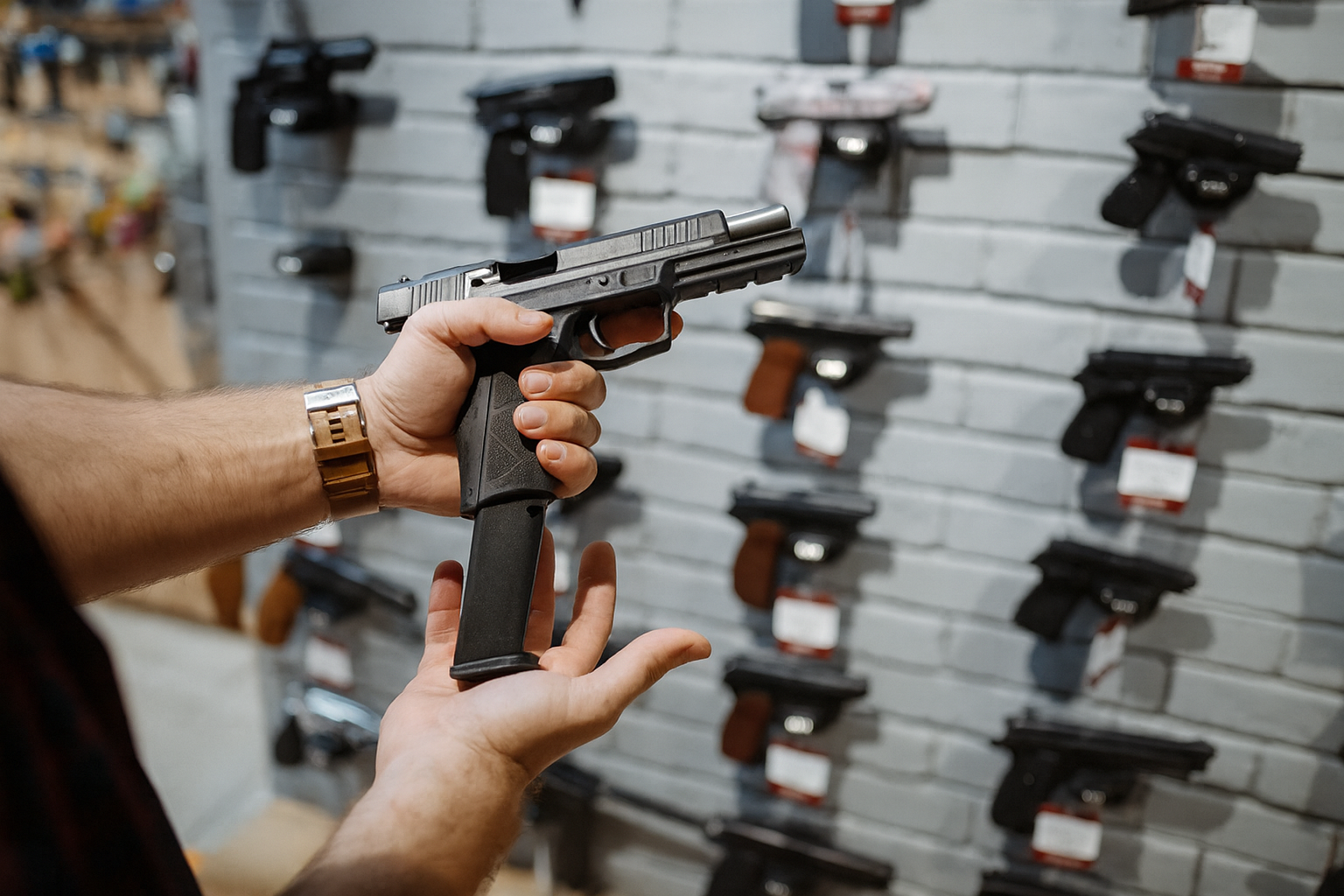
The U.S. Supreme Court has agreed to take up a case that could reshape the intersection of gun rights and drug laws, deciding whether the federal government has the authority to prohibit individuals who use illegal drugs from possessing firearms. The decision to hear the case adds another major Second Amendment issue to the Court’s docket this term, signaling continued scrutiny of federal gun restrictions in the wake of recent landmark rulings.
The case stems from the prosecution of Ali Danial Hemani, a Texas resident and dual U.S.–Pakistani citizen who was charged under a federal statute that makes it a crime for anyone considered an “unlawful user of or addicted to any controlled substance” to own or possess a firearm. Federal agents found a handgun along with marijuana and cocaine during a search of Hemani’s home, and he admitted to regularly using both substances. His defense argues that the statute violates the Second Amendment by imposing a broad and indefinite ban on gun ownership for drug users, regardless of whether they are under the influence at the time of possession.
A panel of the U.S. Court of Appeals for the Fifth Circuit sided with Hemani, ruling that the federal law fails to meet the constitutional standards set forth by the Supreme Court’s 2022 decision in New York State Rifle & Pistol Association v. Bruen. In that case, the Court established that firearm restrictions must be consistent with the nation’s historical tradition of gun regulation. The Fifth Circuit found no comparable historical precedent for permanently disarming individuals merely because of illegal drug use, particularly when that use may be occasional or unrelated to firearm activity.
The Department of Justice petitioned the Supreme Court to review the case, arguing that the law targets a specific class of individuals who pose an increased risk to public safety. Federal attorneys assert that the restriction is neither permanent nor arbitrary, as individuals who stop using controlled substances can lawfully regain their gun rights. They contend that the rule fits within a longstanding tradition of restricting firearm access for those considered dangerous or incapable of safely handling a weapon.
Opponents of the law maintain that it is too sweeping and lacks sufficient historical justification. They argue that the provision has been used to prosecute individuals for minor or infrequent drug use and that it unfairly equates substance use with a loss of constitutional rights. Advocates for reform also note that the law disproportionately affects people who use marijuana, which remains illegal at the federal level despite legalization in most U.S. states.
The Court’s decision to hear the case marks the second major gun rights challenge on its current docket. The justices are already considering a separate case involving restrictions on carrying firearms on private property, reflecting an ongoing debate over the limits of government authority to regulate gun ownership.
Oral arguments are expected in early 2026, with a ruling likely by the end of the Court’s term in June. The outcome could have far-reaching consequences for federal gun enforcement and for thousands of Americans who use marijuana or other controlled substances while exercising what they view as their Second Amendment rights.