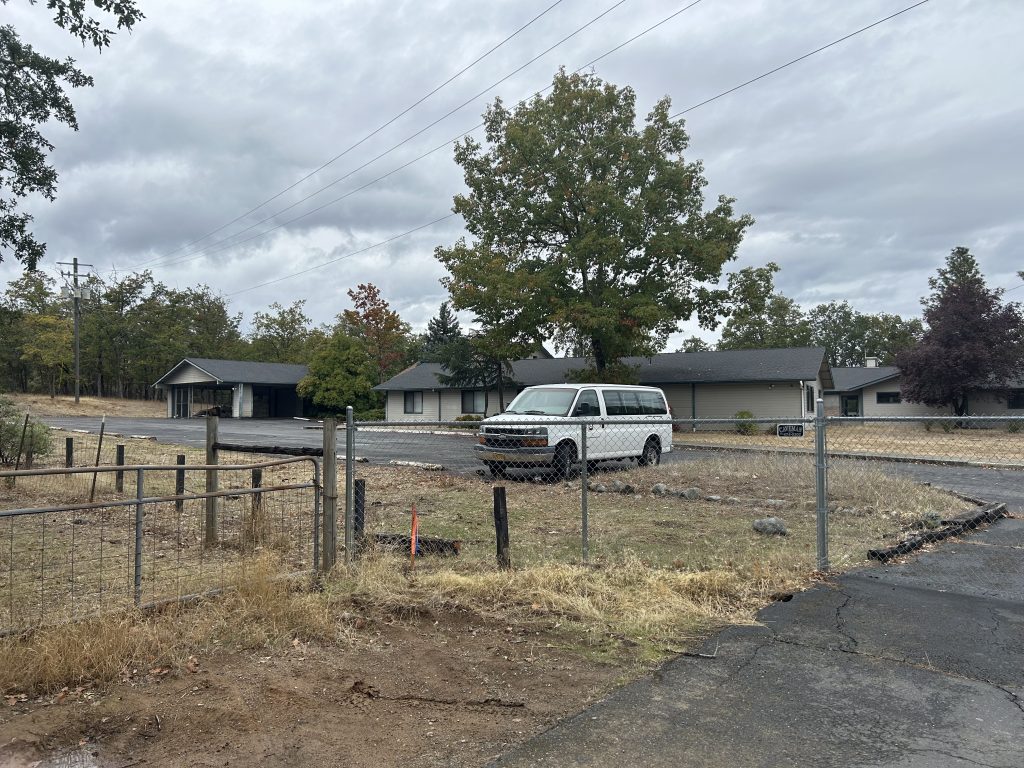
The continued investigation on handling of the county-owned property at 210 Tacoma Street has emerged as a focal point for public concern in Josephine County, not because of political disagreement, but because of unresolved questions surrounding transparency, ethics, and stewardship of public assets. The issue centers on how a valuable county-owned parcel has been subsidized, repositioned, and advanced toward a potential sale, while a sitting commissioner affiliated with the tenant organization remained involved throughout key stages of decision-making.
The property remains a single 20-acre parcel owned by Josephine County, improved with more than 10,000 square feet of institutional-style facilities and zoned for medical, educational, and training uses. It is neither vacant nor unusable. Despite this, the site has been leased for years at $250 per month, with the County paying utilities and maintenance costs. Conservative estimates place fair-market rent for such a property between $75,000 and $100,000 annually, resulting in a significant revenue gap absorbed by the Airport Enterprise Fund.
The tenant is the Civil Air Patrol, a large national nonprofit that serves as the U.S. Air Force Auxiliary. As a national organization, it possesses substantial assets, receives federal support, and has access to grant funding streams unavailable to local community programs. Organizations of this size are not typically granted indefinite local subsidies on high-value public land without a clear, documented analysis demonstrating a unique and compelling public benefit.
County records show the lease arrangement was intentionally negotiated and repeatedly renewed, including a renewal in 2023, despite internal expressions of dissatisfaction with the building and its condition. In early 2024, the Board of Commissioners approved a property line adjustment for the site, a procedural step unnecessary for continued leasing but commonly required for land sales or transfers, particularly for airport-adjacent property subject to federal oversight.
In 2025, county leadership publicly labeled the property underutilized, a classification that often serves as the predicate for declaring a public asset surplus. Around the same period, staff discussions accelerated regarding potential sale timing and pricing, including a proposed as-is listing price of $660,000. That figure was discussed despite the fact that the legal parcel remained intact at 20 acres and despite conservative market analyses valuing the combined land and improvements significantly higher.
Throughout this process, Commissioner Chris Barnett remained involved. Barnett is affiliated with and holds a leadership role within the Civil Air Patrol locally. He is also a licensed real estate professional, a status that carries heightened ethical and disclosure expectations. At key moments when the property’s status shifted from leased asset to sale candidate, conflict disclosures were recorded as none, and no recusal occurred.
The significance of that overlap is central to the questions now being raised. The subsidy provided to 210 Tacoma Street is not abstract. It directly benefits an organization connected to a sitting commissioner who participates in county decision-making related to land use, valuation, and disposition. That connection raises the issue of whether the public received full transparency regarding potential conflicts, both actual and perceived, as required under Oregon ethics law.
At the same time, other county-supported programs experienced markedly different treatment. County libraries serving tens of thousands of residents faced increased financial burdens and shifted maintenance responsibilities. Youth programs such as 4-H and OSU Extension, which serve hundreds of local children annually, saw funding disrupted or reduced. By contrast, the Civil Air Patrol continued to occupy a high-value public facility with substantial county subsidy, even as the County itself described the site as underutilized and maintained no publicly available utilization logs.
In August 2025, the Civil Air Patrol formally requested to purchase the property, completing a progression from subsidized tenant to prospective buyer. Yet the steps normally required for disposing of public property have not occurred. There has been no formal declaration that the property is surplus, no public hearing announcing intent to sell, no competitive bidding process, no public auction, and no published confirmation of federal aviation approval. Public awareness has been limited to listings on private, subscription-based commercial real estate platforms, which do not constitute meaningful public notice.
These circumstances give rise to a series of factual questions that remain unanswered. Why does a well-resourced national nonprofit receive a deep, ongoing subsidy on a 20-acre, FAA-restricted county property, while other programs with demonstrated local demand were cut or burdened. Why did a commissioner affiliated with the tenant remain involved at each stage of repositioning the property. Where is the documented public-benefit analysis justifying the subsidy, the pricing, and the proposed sale pathway.
Public subsidies require proof. Organizational affiliations require disclosure. Public land requires justification. If analyses, disclosures, and approvals exist that fully address these issues, they should be produced and made available to the public. If they do not, the absence of that documentation itself becomes material information the public is entitled to understand.
As recall efforts against Commissioner Barnett continue, the situation at 210 Tacoma Street stands as a tangible case study cited by residents who argue that transparency and ethical safeguards have been insufficient. Regardless of the property’s ultimate disposition, the handling of this parcel will remain a benchmark for how Josephine County manages public assets and whether its elected officials place public trust above personal or organizational ties and special favors.