


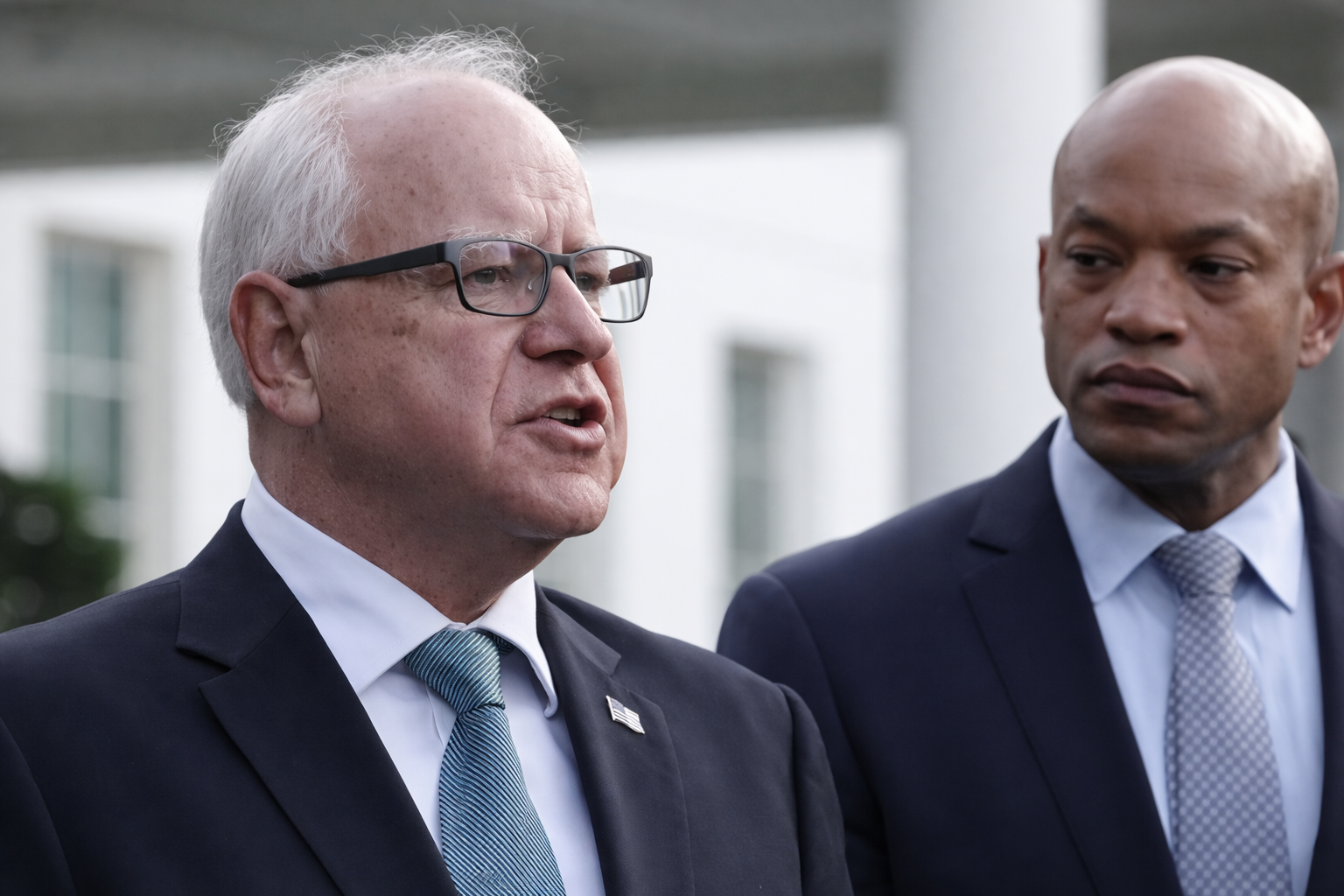
Minnesota Governor Tim Walz found himself at the center of an escalating political storm this week as viral allegations, public outrage, and renewed scrutiny of government oversight converged into a familiar national pattern. Online campaigns and social media posts calling for his resignation surged after claims of widespread fraud and administrative failures within state-funded programs gained traction, pushing Minnesota into a debate that echoes governance controversies unfolding in communities across the country.
The immediate catalyst has been a series of widely shared investigative videos and reports alleging that millions of dollars in public funds were improperly distributed to organizations that appeared inactive, noncompliant, or fraudulent. The claims focus heavily on childcare and social service programs that expanded rapidly during and after the pandemic, a period marked by emergency funding, loosened controls, and accelerated approvals. As the allegations circulated, frustration among residents who already felt burdened by rising costs and eroding trust in institutions intensified, fueling demands for accountability at the highest levels of state government.
The governor’s administration has acknowledged that fraud has occurred within certain programs, emphasizing that investigations, audits, and enforcement actions were already underway before the most recent wave of attention. Officials have pointed to closures of suspect operations, criminal prosecutions, and policy reforms designed to tighten oversight and improve transparency. At the same time, critics argue that the scale of the alleged misuse raises deeper questions about leadership, internal controls, and whether warning signs were ignored as spending surged.
What has elevated the situation beyond routine political criticism is the speed and reach of online mobilization. Calls for resignation have spread rapidly through social platforms, amplified by partisan figures and national commentators who frame the controversy as evidence of systemic incompetence rather than isolated failure. While there is no formal impeachment or recall process currently advancing through Minnesota’s legislature, the intensity of public rhetoric reflects a broader erosion of patience with bureaucratic explanations and incremental reforms.
The controversy arrives against a backdrop of nationwide skepticism toward government institutions, where local and state officials increasingly face demands not only to manage crises but to prove credibility in real time. In that environment, viral narratives often move faster than official findings, shaping public perception before investigations conclude. For supporters of the governor, the risk is that complex oversight failures are reduced to political slogans. For critics, the concern is that accountability will be diluted by procedural delays and administrative language.
Beyond the immediate allegations, the situation underscores a persistent challenge in modern governance, balancing rapid delivery of public services with safeguards that prevent abuse. Emergency funding programs created to meet urgent needs often outpace the systems designed to monitor them, leaving elected leaders vulnerable to backlash long after the crisis subsides. As Minnesota continues to unwind pandemic-era policies, the debate now centers on responsibility, not only for the fraud itself, but for the structures that allowed it to occur.
Whether the current uproar results in lasting political consequences remains uncertain. What is clear is that the controversy has become a case study in the collision of public trust, administrative oversight, and a political climate increasingly shaped by digital outrage. For Minnesota residents, and for observers elsewhere, the unfolding story serves as a reminder that confidence in government depends as much on transparency and accountability as it does on outcomes, and that once trust is shaken, restoring it can prove far more difficult than maintaining it.