


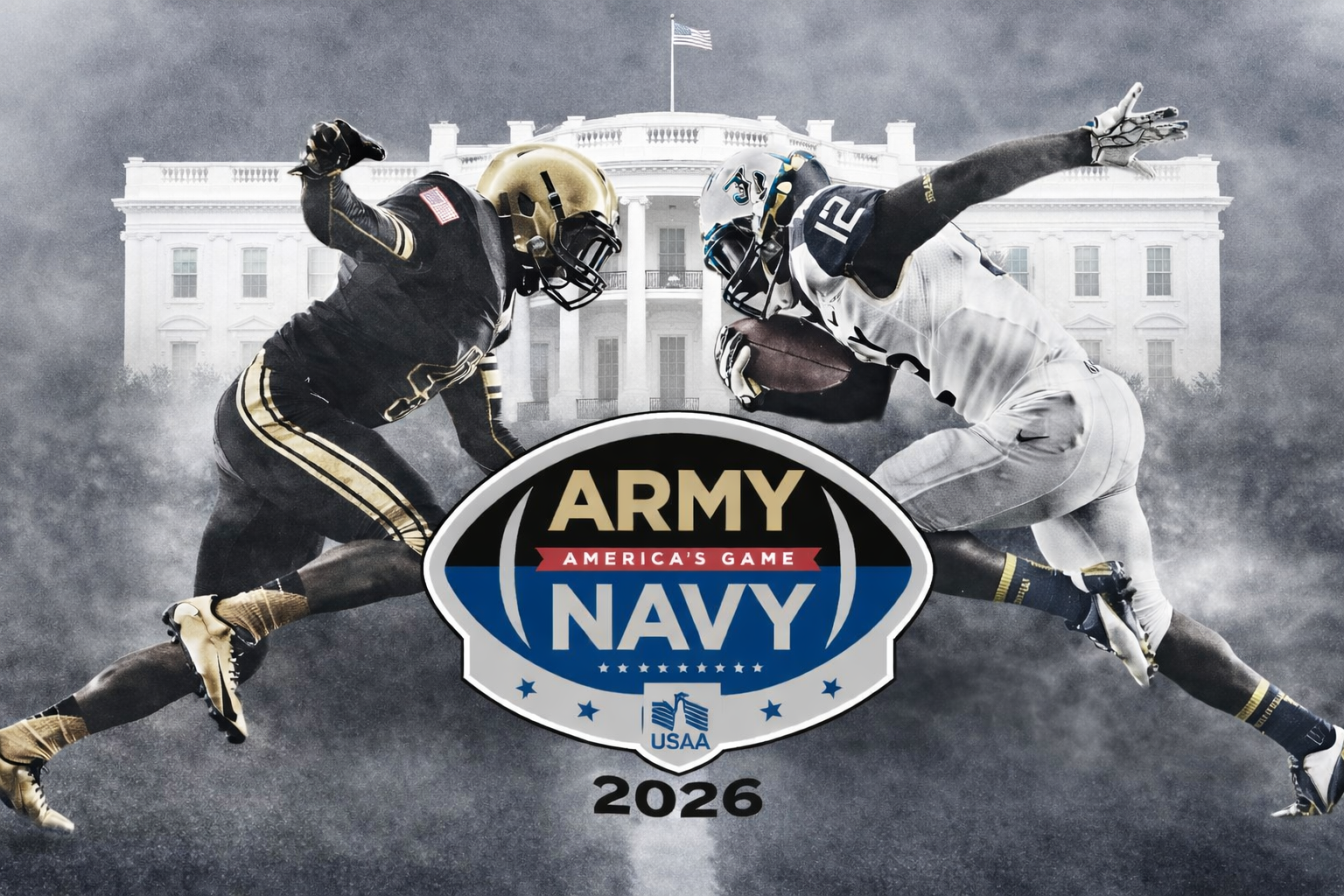
President Donald Trump has announced plans to formally protect the annual Army–Navy Game, elevating one of college football’s most enduring traditions into a national policy discussion that blends patriotism, media economics, and the evolving structure of the sport. The move reflects growing concern that the game’s historic place on the calendar is being squeezed by expanding postseason schedules and the increasing influence of television revenue.
For more than a century, the Army–Navy Game has stood apart from the rest of college football. Traditionally played on the second Saturday in December, it has long enjoyed an exclusive broadcast window, allowing it to command national attention without competing games. The matchup is more than a rivalry; it is a ceremonial event marked by military pageantry, flyovers, and the presence of senior defense and political leaders. In recent years, however, that exclusivity has come under pressure.
At the center of the issue is the rapid expansion of the College Football Playoff. As the playoff field grows and additional games are pushed deeper into December, television networks and conference partners have explored scheduling options that could overlap with the Army–Navy Game. While no direct conflict has yet occurred, the possibility has raised alarms among military leaders, alumni, and traditionalists who see the game as a rare unifying event in an increasingly commercialized sport.
Trump’s announcement signals an intention to intervene at the federal level to preserve the game’s protected status. The proposed action centers on ensuring that the Army–Navy Game retains an uninterrupted national broadcast window, free from competition with other major college football contests. Supporters argue that the game’s symbolic importance justifies extraordinary measures, noting that it represents service, sacrifice, and national identity in a way no other sporting event does.
The plan has drawn attention in part because it ventures into complex legal and regulatory territory. Broadcast rights for the Army–Navy Game are currently held by CBS under a long-term agreement, and television scheduling decisions are typically governed by private contracts rather than executive authority. Legal analysts have cautioned that any attempt to mandate network behavior could face constitutional challenges, particularly around free speech and the independence of private media companies. Even so, the announcement has already influenced the broader conversation around playoff scheduling and television priorities.
Beyond the legal debate, the move underscores a broader cultural divide within college football. On one side are traditions rooted in history and identity; on the other are financial realities driven by media deals worth billions of dollars. The Army–Navy Game sits at the intersection of those forces. Unlike playoff games that determine championships, this contest carries no postseason implications, yet it consistently draws strong ratings and national attention precisely because of what it represents rather than what is at stake in the standings.
Reaction across the college football has been mixed. Advocates for tradition have welcomed the announcement as a long-overdue defense of an event that predates modern conferences and television contracts. Others have expressed skepticism, questioning whether federal involvement is appropriate or practical in a sport governed by private organizations and market forces. Still, few dispute the symbolic weight of the game itself.
As of now, no formal order has been signed, and details about enforcement remain unclear. What is clear is that the Army–Navy Game has become a focal point in a larger debate about how college football balances history with growth. Trump’s involvement has ensured that the issue will remain in the national spotlight, at least through the upcoming season.
Whether the proposal ultimately reshapes broadcast schedules or simply reinforces existing norms, it has already succeeded in drawing attention to a tradition many believe should remain untouched. In an era of constant expansion and change, the Army–Navy Game stands as a reminder that some events in sports carry meaning beyond revenue and rankings, and that preserving them can become a matter of national conversation.