


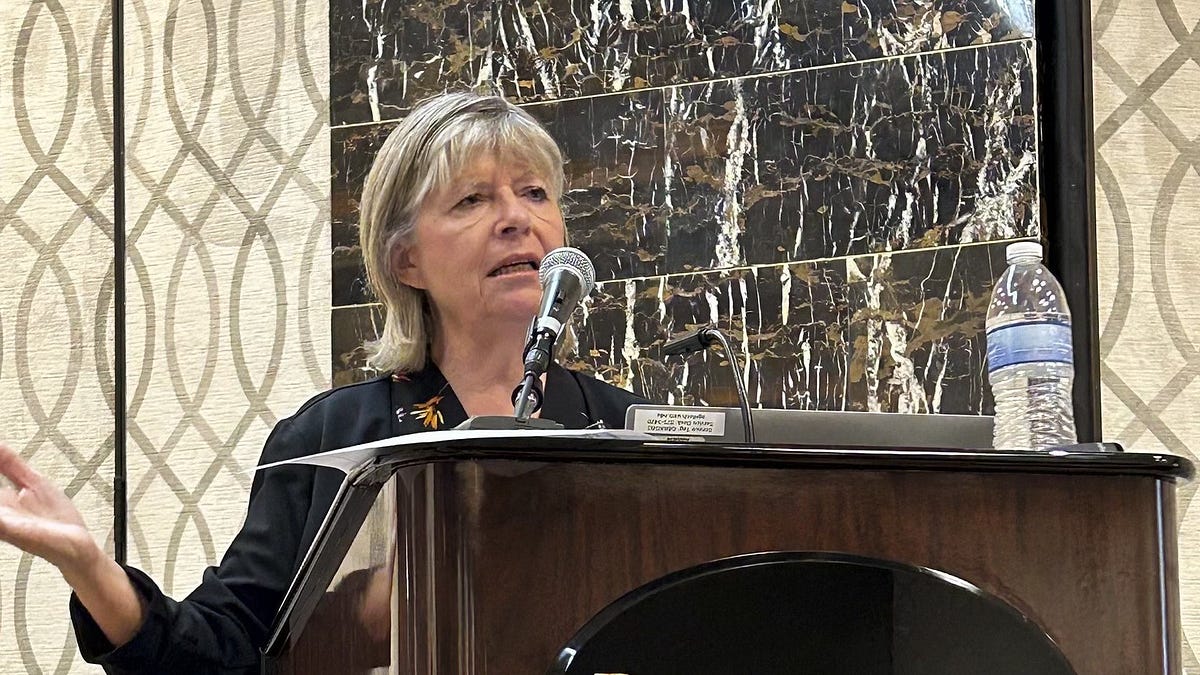
Federal scrutiny is intensifying around Karen Budd-Falen, a Wyoming attorney and senior official within the U.S. Department of the Interior, following a formal request from members of Congress urging a federal investigation into possible criminal and ethics violations. The request has elevated what had been a regional controversy into a national discussion about conflicts of interest, transparency in government, and oversight of public officials involved in major natural resource decisions.
Budd-Falen, who has long represented agricultural and property-rights interests in the West, has held influential legal roles within the U.S. Department of the Interior, an agency responsible for managing public lands, natural resources, and energy development. Lawmakers have raised concerns that her federal responsibilities may have intersected with private financial interests tied to her family, creating the appearance of a conflict that warrants closer examination.
At the center of the controversy is a multimillion-dollar water rights agreement connected to the Thacker Pass lithium mining project in northern Nevada. The project, one of the largest lithium developments in the United States, has drawn national attention because of its environmental footprint, tribal concerns, and its importance to domestic supply chains for electric vehicle batteries. Records indicate that Budd-Falen’s family ranch entered into a lucrative water deal associated with the project, raising questions about whether proper disclosures and recusals were made during key stages of federal review and approval.
Members of the U.S. House of Representatives have formally asked the Department of the Interior’s Office of Inspector General to examine whether Budd-Falen complied with federal ethics laws designed to prevent self-dealing and undisclosed conflicts of interest. Those laws require senior officials to disclose relevant financial interests and to refrain from participating in decisions that could directly or indirectly benefit themselves or their immediate family.
The lawmakers’ request emphasizes the importance of maintaining public trust in federal land and resource management, particularly as the federal government accelerates permitting and development of critical minerals. They argue that even the appearance of preferential treatment can undermine confidence in the integrity of agency decisions, especially when those decisions carry significant environmental, economic, and cultural consequences.
Advocacy and watchdog groups have echoed these concerns, calling for greater transparency and, in some cases, temporary removal of Budd-Falen from decision-making roles while any investigation proceeds. These groups contend that unresolved questions surrounding financial disclosures and agency involvement could cast doubt on Interior Department actions beyond the lithium project itself.
The Department of the Interior has defended Budd-Falen’s service and has indicated that existing ethics reviews found no wrongdoing. However, the department has not publicly released detailed findings addressing the specific issues raised by lawmakers, leaving the matter unresolved in the public eye.
As the Inspector General considers whether to open a formal inquiry, the case highlights broader national tensions between resource development, ethical governance, and accountability. For communities across the West and beyond, the outcome may influence not only how federal officials are held to ethical standards, but also how future large-scale energy and mineral projects are evaluated and approved.