


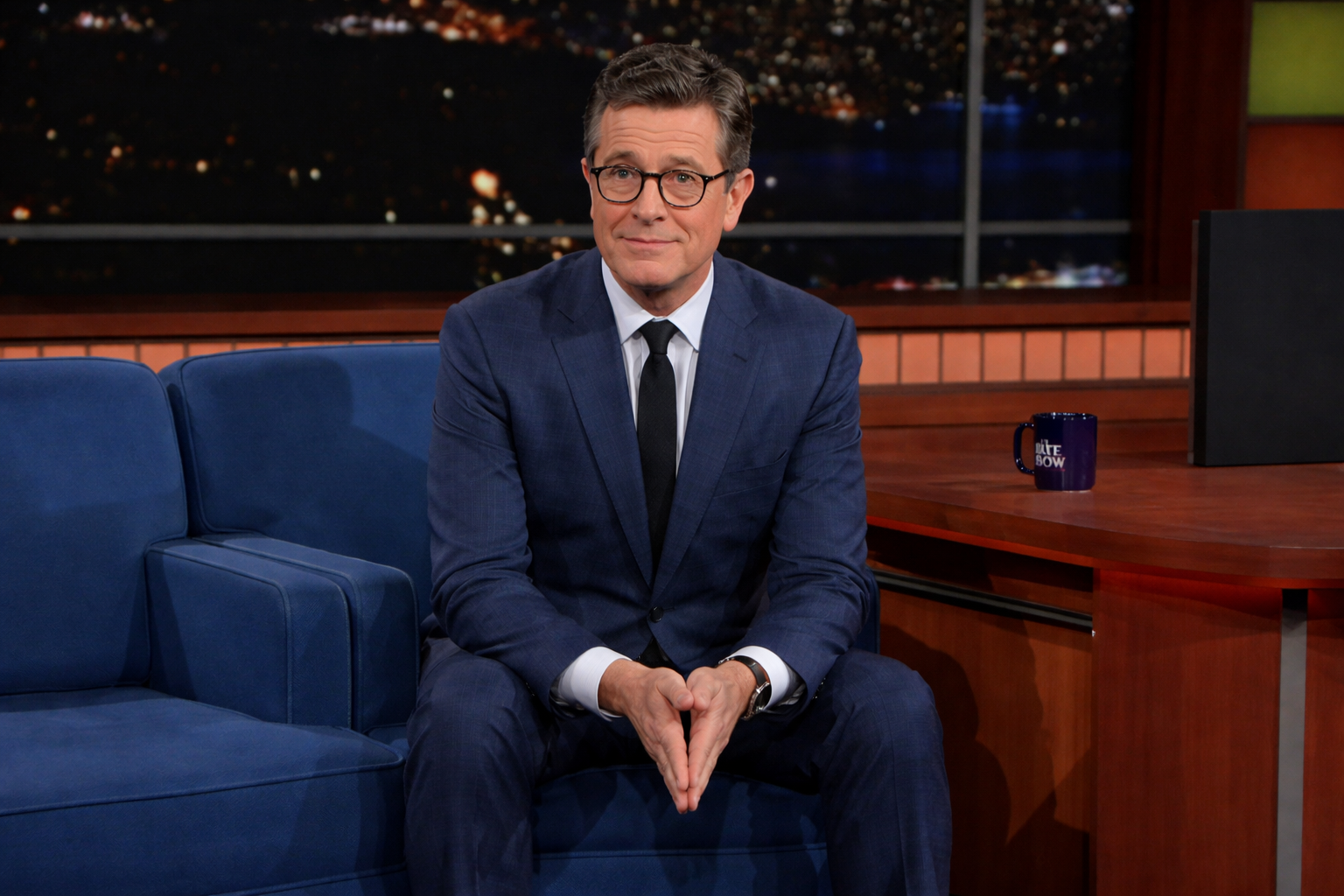
A decision to remove a political interview from a nationally televised late-night program has ignited discussion about federal broadcast regulations, editorial discretion, and the evolving boundaries between entertainment and political coverage. The controversy centers on The Late Show with Stephen Colbert and a planned interview with Texas state representative and U.S. Senate candidate James Talarico that did not air as originally scheduled.
According to statements made during the program, host Stephen Colbert said the interview with Talarico was recorded but pulled from the Monday night broadcast following internal legal review by CBS. The concern, Colbert indicated, was that airing the interview could potentially trigger equal-time obligations under federal communications law, particularly in light of recent guidance issued by the Federal Communications Commission under Chairman Brendan Carr.
The equal-time rule, established under Section 315 of the Communications Act of 1934, requires broadcast stations that give airtime to one legally qualified political candidate to offer comparable opportunities to opposing candidates. Historically, the rule has included exemptions for bona fide news programming, including regularly scheduled news interviews, documentaries, and on-the-spot news events. For decades, late-night talk shows that featured candidates in interview settings have generally fallen within the news interview exemption, allowing networks to air such segments without extending equal airtime to every opponent in a race.
Recent commentary from FCC leadership, however, has signaled a closer review of how that exemption is applied. Chairman Carr has publicly suggested that some entertainment-based programs may not automatically qualify for the news exemption if their content is viewed as overtly partisan. While no formal rule change rescinding the exemption for talk shows has been finalized, the public discussion appears to have prompted caution within broadcast networks.
CBS reportedly made the decision to withhold the segment from its over-the-air broadcast after consulting legal counsel. The interview was not discarded entirely. Instead, it was made available online through The Late Show’s digital platforms, including YouTube, where equal-time rules governing broadcast licenses do not apply in the same way as they do to terrestrial television stations. Cable and streaming platforms operate under different regulatory frameworks and are not bound by the same statutory equal-time provisions.
The situation unfolds during an active election cycle in Texas, where Talarico is seeking a U.S. Senate seat. The timing heightened sensitivity around compliance. If a broadcast network were found to have provided airtime to one candidate outside of a qualifying exemption, it could theoretically face complaints from opposing campaigns seeking comparable airtime. While such disputes are not uncommon during campaign seasons, the prospect of regulatory scrutiny can influence programming decisions before any formal complaint is filed.
Colbert addressed the removal on-air, describing the internal decision and the legal reasoning behind it. His remarks brought broader public attention to the intersection of entertainment programming and campaign law. The episode also prompted discussion across political and media circles about whether reinterpretations of existing FCC guidance could reshape how candidates appear on traditional broadcast television during election years.
The broader context includes heightened debate over media regulation and political speech. The FCC, as an independent federal agency, oversees broadcast licensing and enforces rules designed to ensure fairness in the use of publicly owned airwaves. The equal-time provision has long been viewed as a safeguard to prevent broadcasters from favoring one candidate over another. At the same time, critics of expansive interpretations argue that overly cautious enforcement could discourage legitimate journalistic interviews or limit the ability of programs to engage with political figures.
This incident underscores a distinction that has become increasingly relevant in modern media. Broadcast networks that transmit over public airwaves remain subject to federal oversight in ways that digital-first platforms do not. As audiences fragment across cable, streaming, and social media, regulatory frameworks written nearly a century ago continue to shape decision-making within legacy television outlets.
For CBS, the choice appears rooted in risk management rather than a directive from regulators. There is no indication that the FCC issued a formal order regarding the specific segment. Instead, the network’s legal team appears to have acted preemptively based on public regulatory guidance and the active status of the Texas Senate race.
Whether this episode marks an isolated instance of caution or signals a broader shift in how broadcast networks approach candidate interviews remains to be seen. What is clear is that longstanding rules governing political access to public airwaves continue to carry weight, even as media consumption habits evolve. As election season intensifies, similar questions about equal access, editorial discretion, and regulatory interpretation are likely to surface again, placing broadcast outlets at the center of a complex balance between compliance and conversation.