


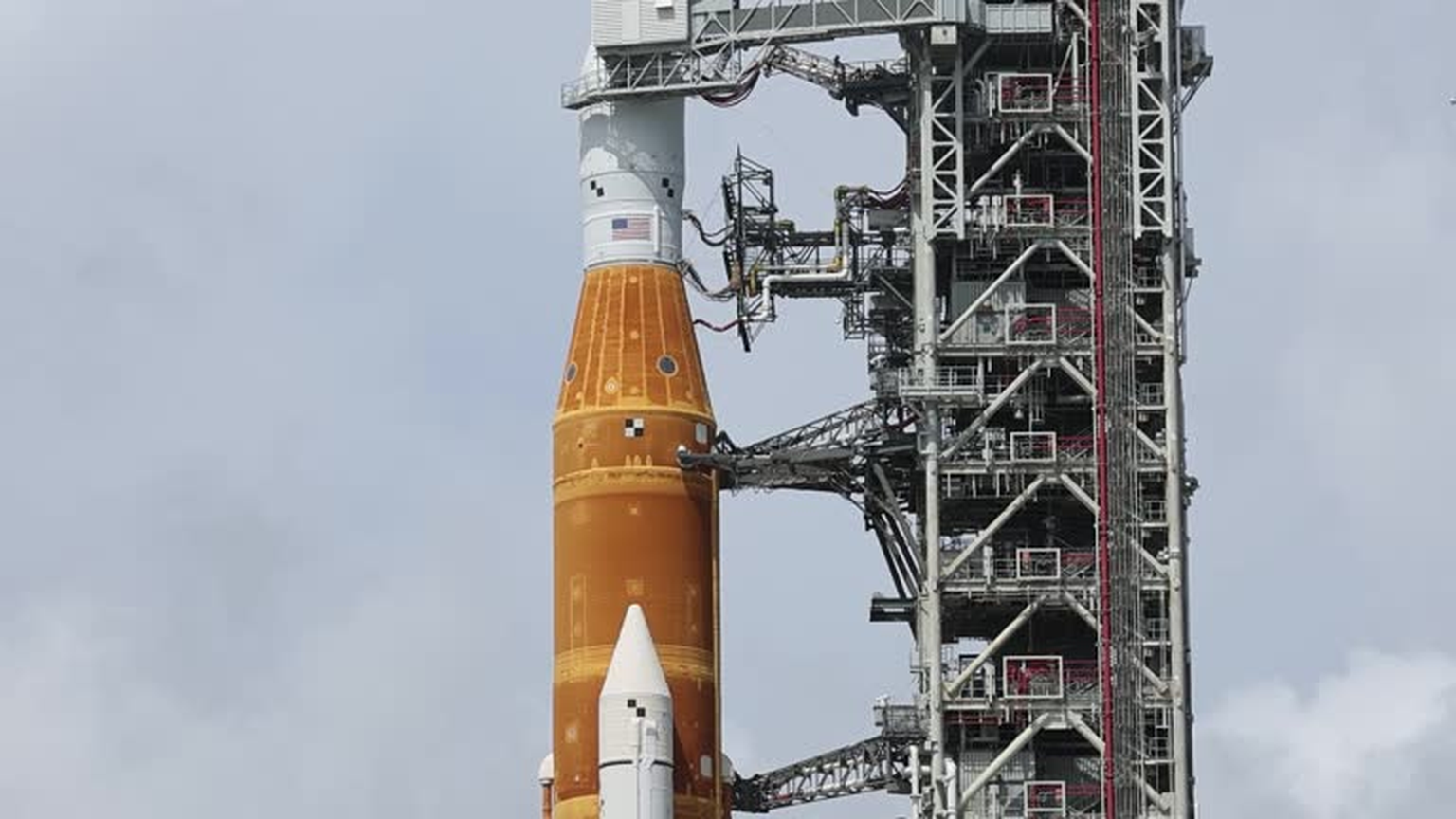
NASA’s next crewed mission to orbit the Moon has encountered another setback after engineers identified a technical issue requiring the agency’s massive Space Launch System rocket to be rolled back from the launch pad to its assembly facility at Kennedy Space Center in Florida. The decision postpones preparations for the highly anticipated lunar flight and pushes the expected launch timeline back by at least several weeks.
The 322-foot Space Launch System, the most powerful rocket ever built by NASA, had remained positioned at Launch Complex 39B since mid-January as teams conducted final testing and integration work ahead of the Artemis II mission. The flight is designed to carry four astronauts on a journey around the Moon, marking the first time humans will travel beyond low Earth orbit since the Apollo era more than five decades ago.
Engineers recently detected a blockage affecting the flow of helium within a portion of the rocket’s upper stage propulsion system. Helium plays a critical role in maintaining pressure inside fuel tanks and ensuring proper operation of the rocket’s engines during flight. Even minor irregularities in pressurization systems can create unacceptable risks during launch, prompting NASA to halt countdown preparations and return the vehicle indoors for closer inspection.
Moving the rocket back to the Vehicle Assembly Building is a complex process that involves a multi-hour crawl atop a massive crawler-transporter traveling at walking speed. Although the rollback delays the mission, NASA officials view the decision as consistent with the agency’s long-standing safety culture, prioritizing thorough testing over adherence to a fixed launch date.
The Artemis II mission represents a major milestone in the United States’ broader effort to reestablish a sustained human presence near the Moon. Unlike the uncrewed Artemis I mission in 2022, which successfully tested the rocket and Orion spacecraft without astronauts, the upcoming flight will place a crew aboard Orion for a multi-day lunar flyby. The mission is intended to validate life-support systems, navigation capabilities, and deep-space operations before a planned lunar landing later in the decade.
Delays have become a familiar part of the Artemis program, which combines new hardware development with legacy shuttle-derived technologies. The Space Launch System itself has faced years of schedule adjustments tied to manufacturing challenges, supply chain issues, and extensive safety verification requirements. Each additional inspection or repair reflects the complexity of launching humans into deep space, where rescue options are limited and system reliability must approach perfection.
The rollback also underscores the technical difficulty of returning astronauts to lunar exploration after decades focused primarily on operations in Earth orbit. Engineers must account for extreme environmental conditions, long-duration propulsion performance, and integration between spacecraft systems that have never before operated together with a crew.
Despite the latest delay, NASA continues to emphasize that Artemis remains central to future exploration goals, including establishing a lunar gateway station, supporting scientific research on the Moon’s surface, and preparing for eventual human missions to Mars. The agency expects that resolving the helium system concern now will reduce the risk of more serious complications later in the mission timeline.
Once repairs and testing are complete, NASA will set a revised launch window based on engineering readiness and weather conditions. For now, the temporary pause serves as a reminder that modern space exploration advances through cautious progress rather than rapid timelines, especially when human lives and historic ambitions are involved.