


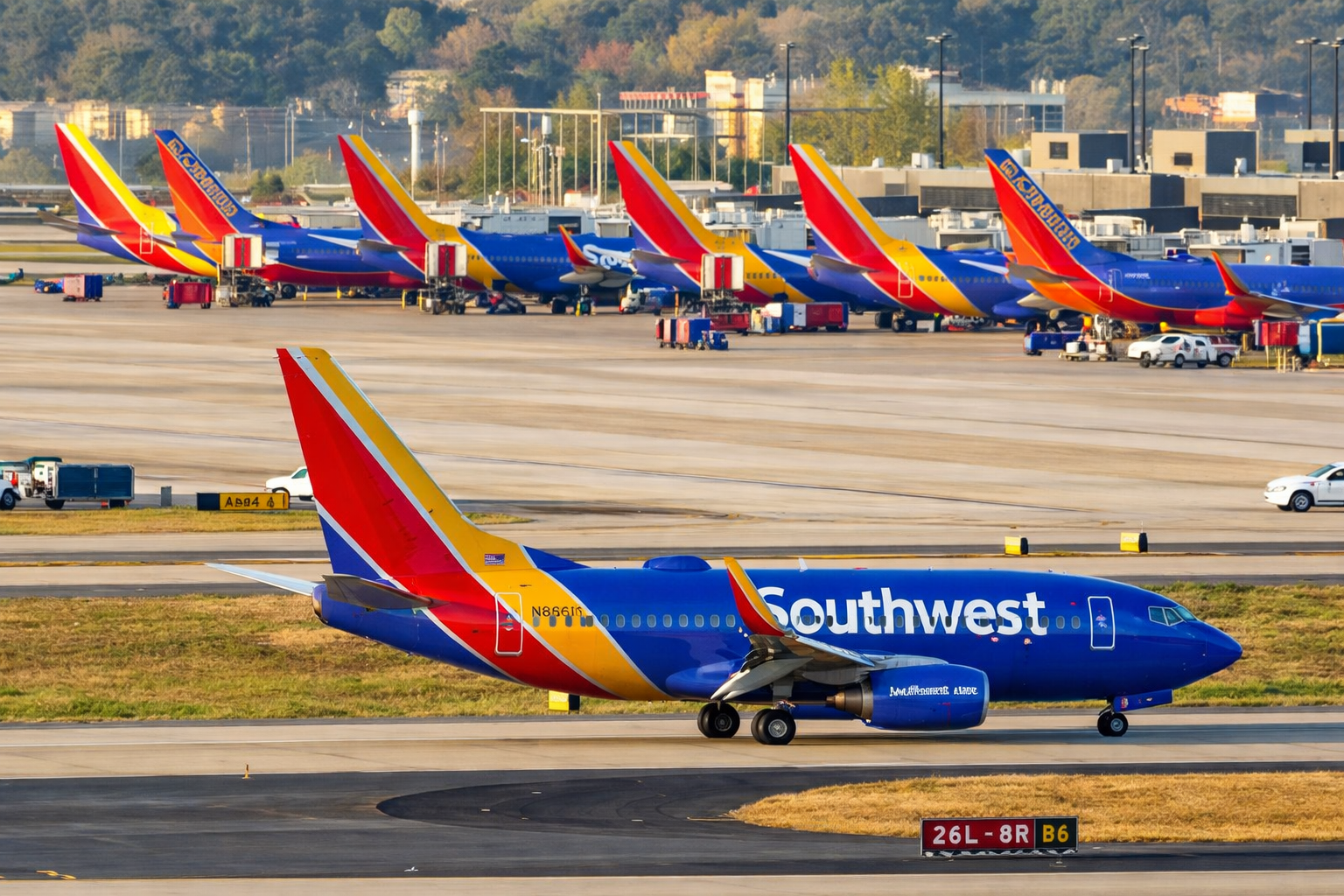
A notable shift is coming to two of the nation’s busiest aviation gateways this summer as Southwest Airlines prepares to discontinue service at Chicago O’Hare International Airport and Washington Dulles International Airport. The airline has confirmed that all flights at both locations will end in early June 2026, a move that effectively removes Southwest from two highly competitive hub airports and signals a broader realignment of its national route network.
Beginning June 4, 2026, Southwest will no longer operate departures or arrivals at either airport. Travelers with reservations after that date are expected to see their itineraries adjusted or refunded as the airline winds down operations in the weeks leading up to the final day of service. The decision marks a significant operational change for an airline that historically built its reputation around serving secondary airports and maintaining efficient, high-frequency schedules.
Although Southwest is withdrawing from O’Hare and Dulles, it is not leaving the Chicago or Washington metropolitan areas entirely. In Chicago, the airline will continue flying from Chicago Midway International Airport, which has long served as one of Southwest’s most established operating bases. Midway has historically provided the airline with the infrastructure and operating environment that aligns with its quick-turn flight model and simplified scheduling approach.
A similar strategy will remain in place in the Washington region. Southwest will maintain service from Baltimore/Washington International Thurgood Marshall Airport and Ronald Reagan Washington National Airport. Both facilities have supported strong passenger demand and allow the airline to continue serving travelers headed to and from the nation’s capital without the logistical challenges associated with Dulles.
Industry observers view the withdrawal as a reflection of the intense competitive pressure present at large hub airports. Chicago O’Hare functions as a major operational center for United Airlines and American Airlines, while Washington Dulles serves as a critical international gateway for United. Airports dominated by legacy carriers often present difficult environments for airlines attempting to expand market share without extensive gate access or connecting traffic networks.
Southwest’s presence at O’Hare was relatively recent compared with its decades-long relationship with Chicago Midway. The airline began flying to O’Hare in 2021 during a period when the airline industry was reshaping route networks amid the uncertainty of the pandemic era. At that time, airlines across the country experimented with new airport markets and scheduling opportunities as passenger demand fluctuated dramatically.
Five years later, the airline appears to have reassessed the long-term value of maintaining service at the airport. Operating in large international hubs can introduce additional complexities, including air traffic congestion, limited gate flexibility, and higher operational costs. Federal efforts to reduce congestion at O’Hare have also resulted in flight limitations during peak periods, further tightening scheduling opportunities for airlines seeking to grow service there.
The withdrawal from O’Hare and Dulles comes during a broader period of transformation within Southwest Airlines as it reevaluates its network structure and competitive strategy. Rising operating costs, shifting travel demand, and increased competition throughout the domestic aviation market have prompted the airline to focus resources on routes and airports where it can operate more efficiently.
For passengers, the change will likely mean adjusting departure airports when planning trips to or from Chicago and Washington, D.C. While travelers who prefer O’Hare or Dulles may need to choose other carriers, Southwest customers will continue to find extensive flight options through Midway, Baltimore, and Reagan National.
In an industry where route networks constantly evolve in response to economic pressures and operational realities, Southwest’s exit from two prominent airports highlights how even the largest airlines regularly refine their strategies. The decision underscores a growing trend among carriers to concentrate service in locations where efficiency, cost control, and market strength offer the greatest long-term advantage.