


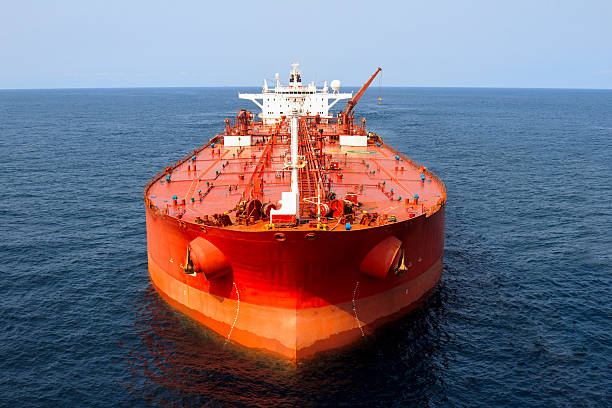
A developing standoff involving Russian oil shipments bound for Cuba is beginning to ripple beyond the Caribbean, raising new questions about energy policy enforcement, global supply chains, and the economic consequences for the United States.
The situation centers on a recent U.S. policy decision that explicitly prohibits Cuba from receiving Russian oil, even as limited allowances remain in place for certain global transactions involving Russian crude. At the same time, multiple tankers carrying Russian fuel have been tracked moving toward the island, creating a direct conflict between stated U.S. policy and real-world maritime activity. Early indications suggest that at least one vessel has already altered course, signaling that enforcement pressure is having an immediate effect on shipping decisions.
While the dispute may appear geographically isolated, its implications are far broader. The United States is effectively testing its ability to enforce targeted energy restrictions in a global market that remains highly interconnected. Oil is not a localized commodity, and disruptions in one region can quickly influence pricing, availability, and trade behavior elsewhere. As suppliers, insurers, and shipping companies assess the risks associated with violating or even appearing to violate U.S. sanctions, hesitation within the market can tighten supply routes and introduce volatility.
For American consumers and businesses, the most immediate concern lies in energy price stability. Even modest disruptions in global oil distribution can contribute to upward pressure on fuel prices, particularly when layered on top of existing geopolitical tensions. The perception of risk alone can influence futures markets, driving speculative pricing that ultimately filters down to gasoline, diesel, and transportation costs across the United States. In an economy already sensitive to inflation, any sustained increase in energy costs has the potential to affect everything from food distribution to manufacturing overhead.
Beyond pricing, the situation underscores a deeper strategic challenge for U.S. policymakers. By attempting to restrict energy flows to specific nations, the United States is engaging in a form of economic leverage that depends heavily on international compliance. However, enforcement becomes increasingly complex when alternative suppliers, such as Russia, are willing to operate outside traditional financial and regulatory systems. This dynamic can encourage the development of parallel trade networks, reducing the long-term influence of U.S. sanctions and reshaping global energy alliances.
There is also a domestic economic dimension tied to competitiveness. American energy producers may benefit in the short term if global supply constraints support higher prices. However, volatility is rarely a net positive for long-term planning. Industries that rely on stable fuel costs, including transportation, agriculture, and logistics, face greater uncertainty when global supply chains are disrupted. That uncertainty can slow investment, complicate budgeting, and ultimately impact job growth.
At the same time, the situation places additional pressure on U.S. foreign policy credibility. If Russian shipments ultimately reach Cuba despite restrictions, it could signal limitations in enforcement capability. Conversely, aggressive intervention to stop deliveries could introduce new geopolitical tensions, particularly in already strained relationships involving Russia and other aligned nations.
What is unfolding is not simply a dispute over a pair of tankers. It is a real-time test of how far economic policy can extend into global energy markets without triggering unintended consequences at home. For the United States, the outcome will help define not only its influence over international trade routes, but also the degree to which domestic economic stability can be insulated from geopolitical maneuvering abroad.