


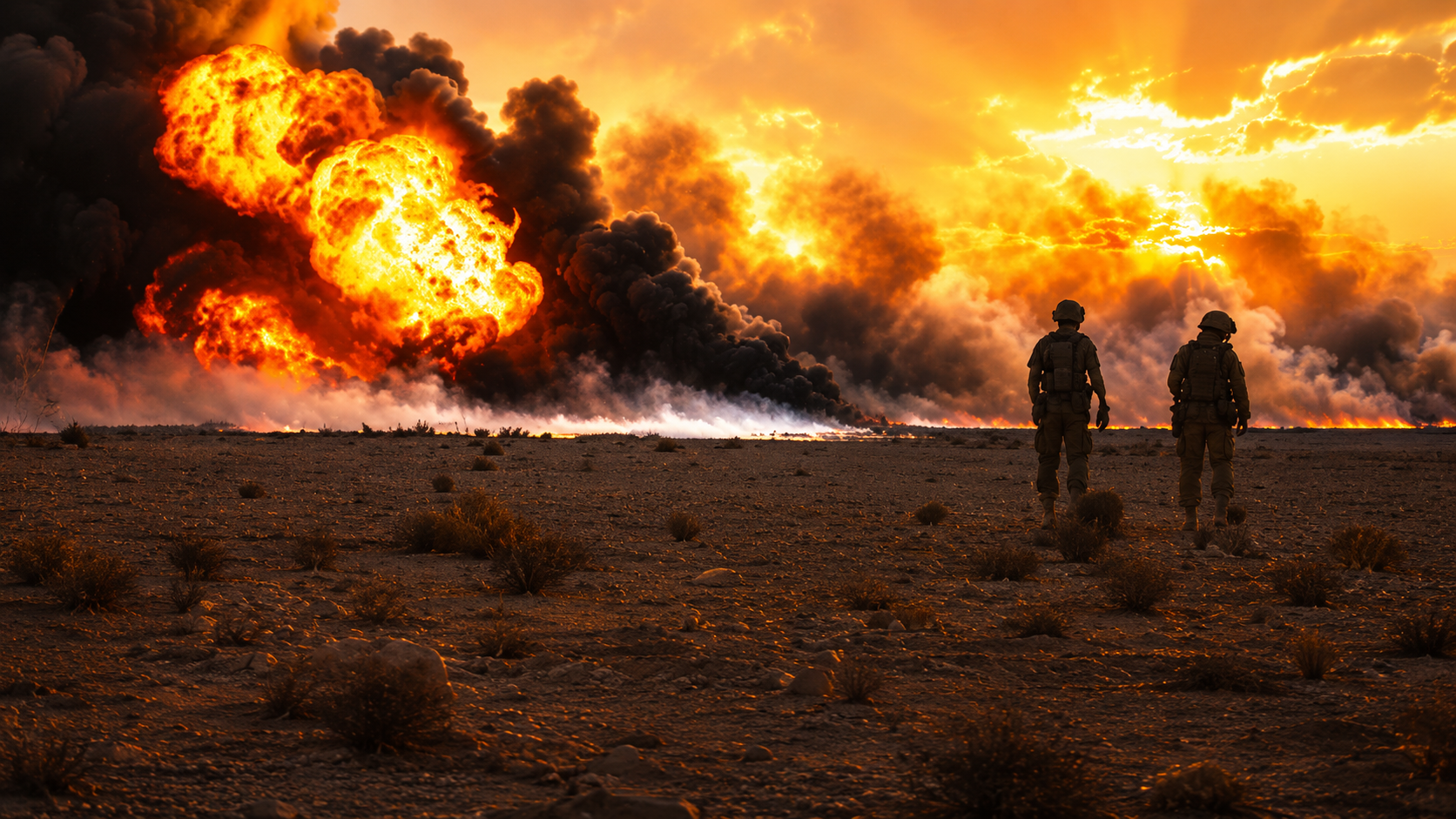
There is a feeling spreading across America right now that many people cannot quite put into words, but those old enough to remember the first Gulf War know exactly what it is. It is that uneasy sensation that history may once again be circling back around. The headlines are dominated by oil, military movements, shipping lanes, energy fears, rising fuel costs, and escalating tensions in the Middle East. The names may be different, the technology may be more advanced, and the political players may have changed, but the foundation underneath it all feels hauntingly familiar.
Oil and power.
That was the center of gravity during the Gulf War involving Saddam Hussein, and many Americans are beginning to ask whether that same gravity is pulling the world once again toward another prolonged conflict with uncertain consequences. Back then, the American public watched fuel prices jump while television screens filled with military briefings, maps of the Persian Gulf, and warnings about instability in the Strait of Hormuz. Today, Americans are once again waking up to headlines dominated by oil prices, military operations, tanker concerns, and fears of disruption in one of the most important energy corridors on Earth.
If this all feels like déjà vu, you are not alone.
There is a reason these stories suddenly feel heavier than normal. There is a reason the conversation keeps returning to gasoline, shipping routes, inflation, energy dependence, and military escalation. When oil dominates the headlines, Americans should pay attention because history has shown repeatedly that energy drives economies, elections, military strategy, and political power around the globe.
But this conversation should not stop at national politics or overseas conflicts.
The struggle over power, resources, influence, and control exists everywhere, including at the local level. Communities across America see their own versions of these same battles unfold through political infighting, economic control, land disputes, taxation debates, and fights over development and public resources. Here in Oregon, residents already feel squeezed by rising fuel prices, layered taxation, transportation fees, and the growing cost of simply trying to live and work in rural communities. Every increase at the pump echoes through local businesses, trucking costs, food prices, agriculture, and household budgets.
Josephine County is no stranger to political power struggles, competing interests, and ongoing fights over resources and influence. The scale may be smaller than global conflicts, but the underlying human behavior remains remarkably similar. Throughout history, societies have repeatedly demonstrated the same patterns when power, money, resources, and control are involved. Whether it is oil in the Middle East or economic influence in local government, the same warning signs continue to emerge when people stop paying attention.
History does not always repeat itself exactly, but it often rhymes loudly enough for those willing to listen.
That is why this moment matters.
Americans should be asking difficult questions right now. Is this current escalation truly about long-term stability and security, or are we once again watching a global struggle centered around energy and geopolitical leverage? Will the end result eventually bring relief to consumers and stability to world markets, or will ordinary citizens once again bear the financial burden while powerful institutions and governments strengthen their positions?
Those are fair questions.
The uncomfortable truth is that nobody truly knows how this latest chapter ends. What people do know is that when oil begins dominating the headlines and military tensions rise alongside fuel prices, history has taught Americans to pay very close attention.