


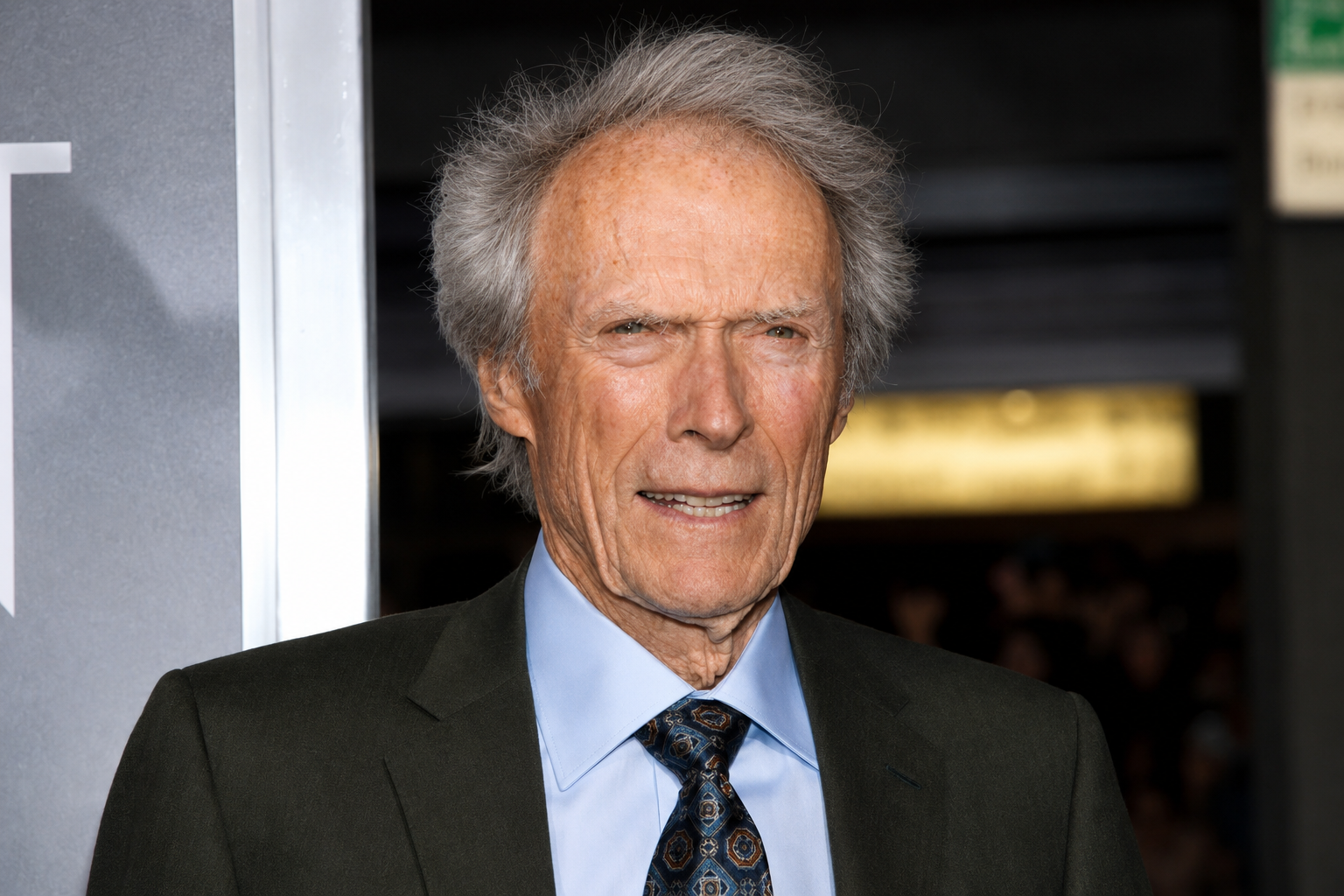
For more than seven decades, Clint Eastwood stood as one of the most recognizable and influential figures in American cinema. From the dusty landscapes of classic westerns to the director’s chair behind some of Hollywood’s most celebrated films, Eastwood built a career that few in the entertainment industry could ever hope to match. Now, according to reports stemming from comments made by his son, musician and composer Kyle Eastwood, the legendary actor and filmmaker has stepped away from Hollywood filmmaking at the age of 96.
While Eastwood himself has not issued a formal public statement announcing his retirement, multiple national entertainment publications have reported that his son confirmed the celebrated filmmaker has concluded his work in the industry. If those reports prove to be the final word, it would bring an end to one of the longest and most successful careers in motion picture history.
Eastwood’s story began long before he became a household name. Born during the Great Depression, he entered an entertainment industry that looked vastly different from the one audiences know today. His early years in Hollywood were marked by modest roles and steady persistence before he gained widespread recognition through the television western Rawhide. The role introduced him to millions of viewers and laid the foundation for a career that would soon expand far beyond television.
His rise to international fame accelerated when he partnered with Italian filmmaker Sergio Leone for a series of westerns that would help redefine the genre. Films such as A Fistful of Dollars, For a Few Dollars More, and The Good, the Bad and the Ugly transformed Eastwood into a global star. The stoic gunslinger with few words and unwavering determination became one of cinema’s most enduring characters.
During the decades that followed, Eastwood continued to evolve. He became synonymous with the Dirty Harry franchise, portraying a tough San Francisco detective whose influence on action films can still be seen today. Yet his greatest accomplishments may have come behind the camera.
As a director, Eastwood developed a reputation for efficiency, discipline, and storytelling. His films often explored themes of redemption, sacrifice, resilience, and the complexities of human nature. The results earned both critical acclaim and commercial success.
Among his most notable directing achievements were Unforgiven, Mystic River, Million Dollar Baby, Gran Torino, Sully, American Sniper, and many others. Several of these productions earned Academy Award recognition, cementing Eastwood’s place among the most respected filmmakers of his generation.
What distinguished Eastwood throughout his career was not merely longevity, but relevance. While many actors and directors fade from prominence over time, he remained active well into his nineties. His ability to adapt to changing audiences and changing technologies allowed him to continue creating films long after many of his contemporaries had retired.
His most recent directing effort, Juror No. 2, released in 2024, may now stand as the final chapter of that extraordinary legacy. The legal drama demonstrated that Eastwood’s storytelling instincts remained sharp even after decades of filmmaking. Industry observers noted at the time that the project carried the feeling of a filmmaker still committed to thoughtful and character-driven stories.
The possibility of Eastwood’s retirement has prompted reflection across Hollywood and among moviegoers worldwide. Few artists have influenced as many genres or remained productive across so many generations. His work helped shape the modern western, redefine crime dramas, and inspire countless actors, directors, and writers who followed in his footsteps.
Even as reports suggest he has stepped away from filmmaking, Eastwood’s impact will continue to resonate throughout the industry. His films remain part of the cultural landscape, studied by aspiring filmmakers and revisited by audiences who appreciate the craftsmanship and storytelling that defined his career.
Whether this marks the true conclusion of Clint Eastwood’s journey in Hollywood remains to be seen. Throughout his life he repeatedly defied expectations, returning to projects when many assumed his work was complete. At 96, he has already accomplished more than most artists could imagine.
For now, however, Hollywood appears to be witnessing the closing scene of an extraordinary career. If this is indeed Eastwood’s final bow, it represents the end of a remarkable era in American filmmaking. Yet history has shown that Clint Eastwood has never been one to follow a script written by others, leaving open the possibility that audiences may someday hear one more call of action from a man whose imagination and vision helped define generations of cinema.