


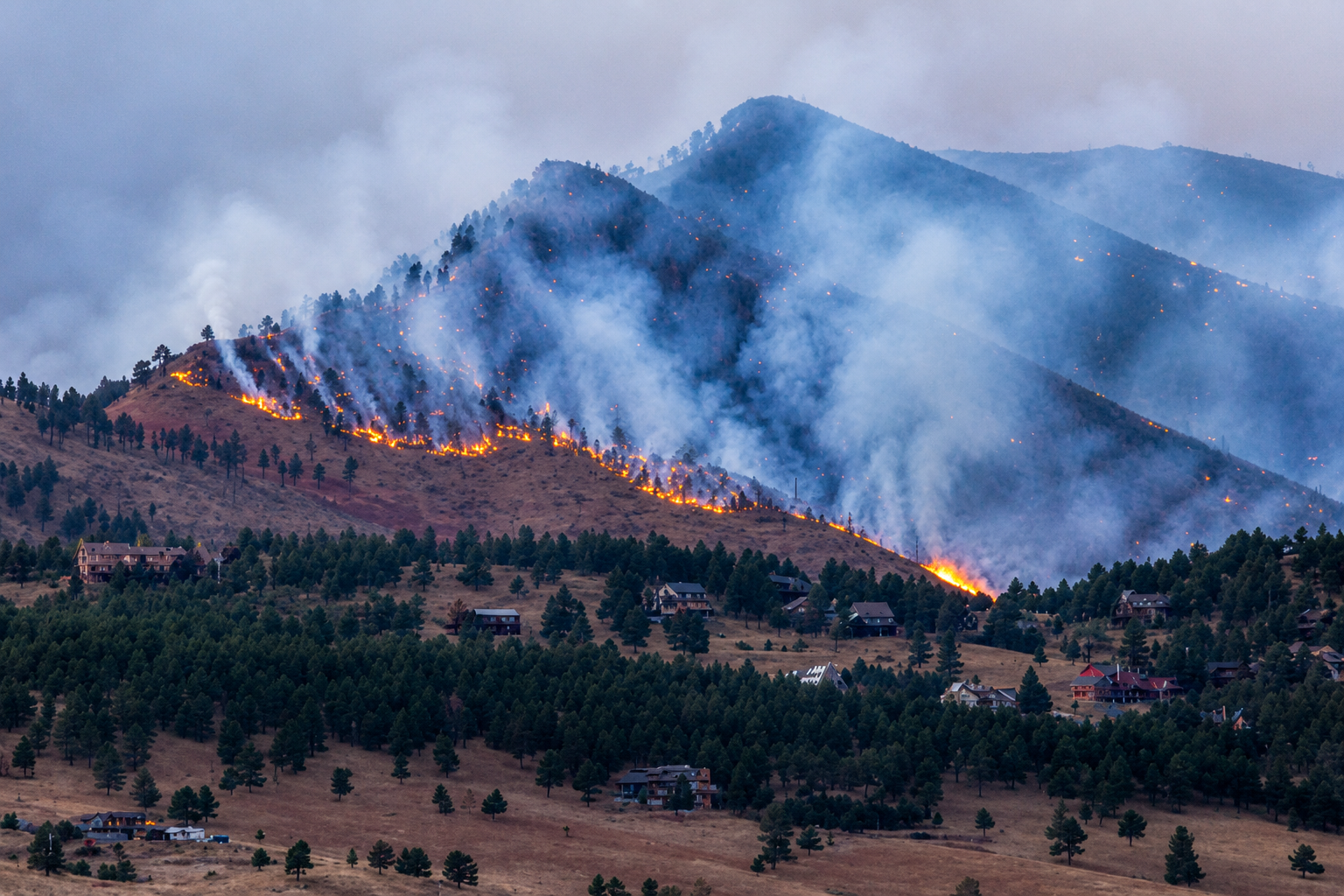
A fast-moving wildfire near the Colorado-Utah border turned deadly this weekend, claiming the lives of three firefighters and injuring two others during an interagency response to a pair of fires that rapidly grew into a major emergency across rugged western terrain.
The firefighters were battling the Knowles and Gore fires Saturday when conditions intensified with dangerous speed. By Sunday, officials reported that the two fires had merged into the larger Snyder Fire, a wind-driven blaze that expanded across tens of thousands of acres under extreme fire weather. The names of the firefighters had not yet been released pending notification of their families, but the loss was immediately felt across the national firefighting community and in every Western town that understands the danger of wildfire season.
The tragedy is a painful reminder that wildland firefighting is not only physically exhausting work, but one of the most dangerous public service missions in the country. These crews do not respond from the safety of pavement and hydrants. They move through steep canyons, dry grass, timber, smoke, heat, shifting winds and unpredictable terrain, often with limited visibility and little room for error. When a wildfire changes direction, seconds can matter. When the wind rises, escape routes can disappear.
The fire conditions near the Colorado-Utah border were described as extreme. Strong winds, low humidity and dry vegetation allowed flames to move quickly across the landscape. Spot fires ignited ahead of the main fire, pushing crews into a dangerous and changing environment. Fire managers temporarily pulled some personnel back from the fireline as the situation became too hazardous, underscoring the severity of the conditions.
Two injured firefighters were evacuated from the scene and taken for medical treatment. Officials had not released details about the extent of their injuries. As investigators begin the difficult process of determining exactly what happened, the immediate focus remains on the families of the fallen, the recovery of the injured and the safety of crews still working the fire.
For Southern Oregon residents, the news lands with a familiar weight. Communities across Josephine, Jackson, Douglas and Klamath counties know what it means to watch the sky darken with smoke, to pack evacuation bags, to follow fire maps, to wait for highway closures and to hope the wind does not shift toward home. Wildfire is not an abstract threat in this part of the country. It is part of summer life, part of rural survival and part of the shared memory of communities that have seen flames come too close.
That is why the deaths of three firefighters hundreds of miles away still feel personal. The men and women who fight these fires are often the reason entire towns are given time to evacuate, homes are spared and families survive the worst hours of a firestorm. They stand between advancing flames and communities they may never live in, protecting people they may never meet.
The Snyder Fire also comes during a difficult start to the Western wildfire season, with drought, heat and wind creating hazardous conditions across several states. Fire officials throughout the region continue urging residents to prepare early, register for emergency alerts, maintain evacuation plans and understand that wildfire conditions can change quickly.
The deaths near the Colorado-Utah border will now become part of a larger conversation about firefighter safety, weather-driven fire behavior and the growing danger of wildfires across the American West. Every fatal incident brings grief, but it also brings investigation, reflection and hard lessons for future crews. That process will take time. For now, the loss is immediate and human.
Three firefighters went to work Saturday to protect land, communities and lives. They did not return home. Two others were injured doing the same work. Their sacrifice reaches beyond one fire, one state line or one agency. It belongs to every community that has ever waited for firefighters to arrive and every family that has ever prayed for a crew to come safely back from the line.
As the Snyder Fire continues to burn, the nation is left with sorrow, gratitude and a clearer understanding of the cost carried by those who confront wildfire at its most dangerous edge.