


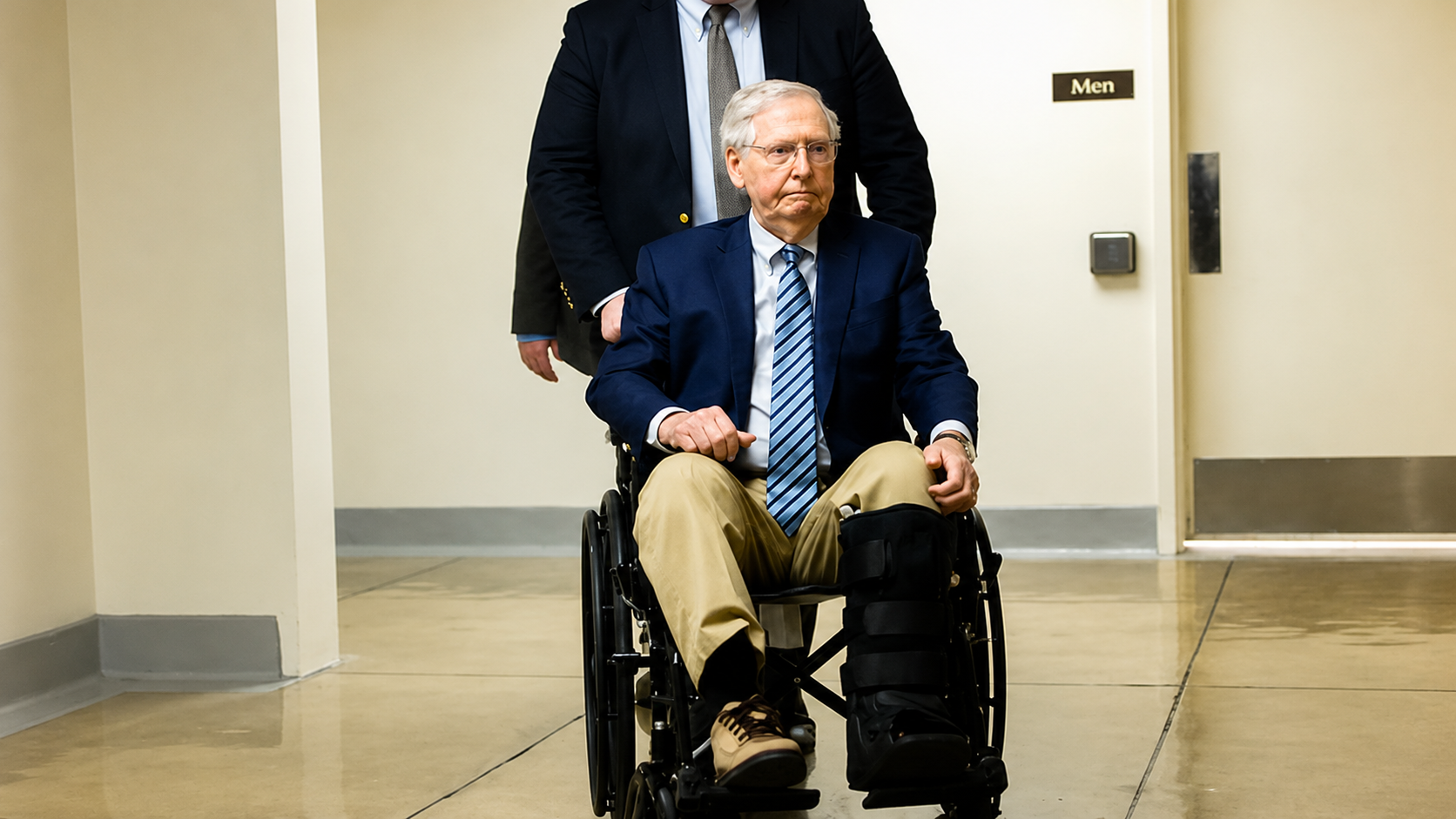
More than three weeks after U.S. Senator Mitch McConnell was admitted to a Washington, D.C., hospital following a medical emergency, uncertainty continues to surround the veteran lawmaker’s condition. Although his office has confirmed that he remains hospitalized and is recovering, few details have been released about the medical circumstances that led to his admission or when he may be able to return to the United States Senate.
McConnell, 84, was hospitalized on June 14 after emergency responders were called to his Washington residence. Public reports indicate that first responders were dispatched after he was found unconscious, but his office has not publicly confirmed the specific nature of the medical event or identified an official diagnosis. Since his hospitalization, updates have remained brief, stating only that he continues to receive medical treatment while recovering under the care of his physicians.
The limited information has left many questions unanswered, prompting widespread public interest and considerable speculation. While rumors regarding McConnell’s health have circulated across social media and other online platforms, no official statements have confirmed many of the claims being shared. As a result, the verified facts remain limited to his continued hospitalization and the updates released by his office indicating that he is recovering.
McConnell’s absence has drawn national attention because of his longstanding role in American politics and his influence within the United States Senate. Having served in the Senate since 1985, he has been one of the chamber’s most recognizable and influential members, shaping federal legislation, judicial confirmations, tax policy, defense spending, and numerous other issues over the course of four decades.
His current hospitalization also follows several well-publicized health challenges over the past few years. In 2023, McConnell sustained a concussion and fractured ribs after suffering a fall that required hospitalization and rehabilitation. Later that year, he experienced two separate episodes during public appearances in which he briefly froze while speaking, raising additional questions about his health. More recently, he was hospitalized earlier this year after experiencing flu-like symptoms before returning to Senate duties. Throughout the past year, he has also relied at times on a wheelchair because of mobility limitations associated with previous injuries and the lasting effects of childhood polio.
Earlier this year, McConnell announced that he would not seek another term in the United States Senate. His current term is scheduled to conclude in January 2027, marking the end of a congressional career spanning more than 40 years. Despite that announcement, he has continued serving as Kentucky’s senior senator while participating in Senate business whenever his health has permitted.
His continued hospitalization raises important practical questions for Congress. Senators play a direct role in voting on legislation, confirming federal judicial nominees, approving executive appointments, and participating in committee work. A prolonged absence by any senator can affect legislative scheduling and vote margins, particularly when Congress is considering closely divided legislation.
At the same time, federal law recognizes the privacy of elected officials regarding their medical information. Members of Congress are not required to publicly disclose diagnoses, treatment plans, or prognoses, leaving those decisions largely to the individual and their family. That balance between personal medical privacy and public accountability often becomes the subject of increased attention whenever a senior elected official experiences a significant health event.
For now, the facts remain straightforward. Mitch McConnell entered the hospital on June 14 following a medical emergency at his Washington residence and remains under medical care. His office continues to report that he is recovering and receiving treatment, but it has not announced when he may return to the Senate or released additional details regarding his condition. Until further official information becomes available, the senator’s recovery and the timing of his return to public service remain uncertain.