


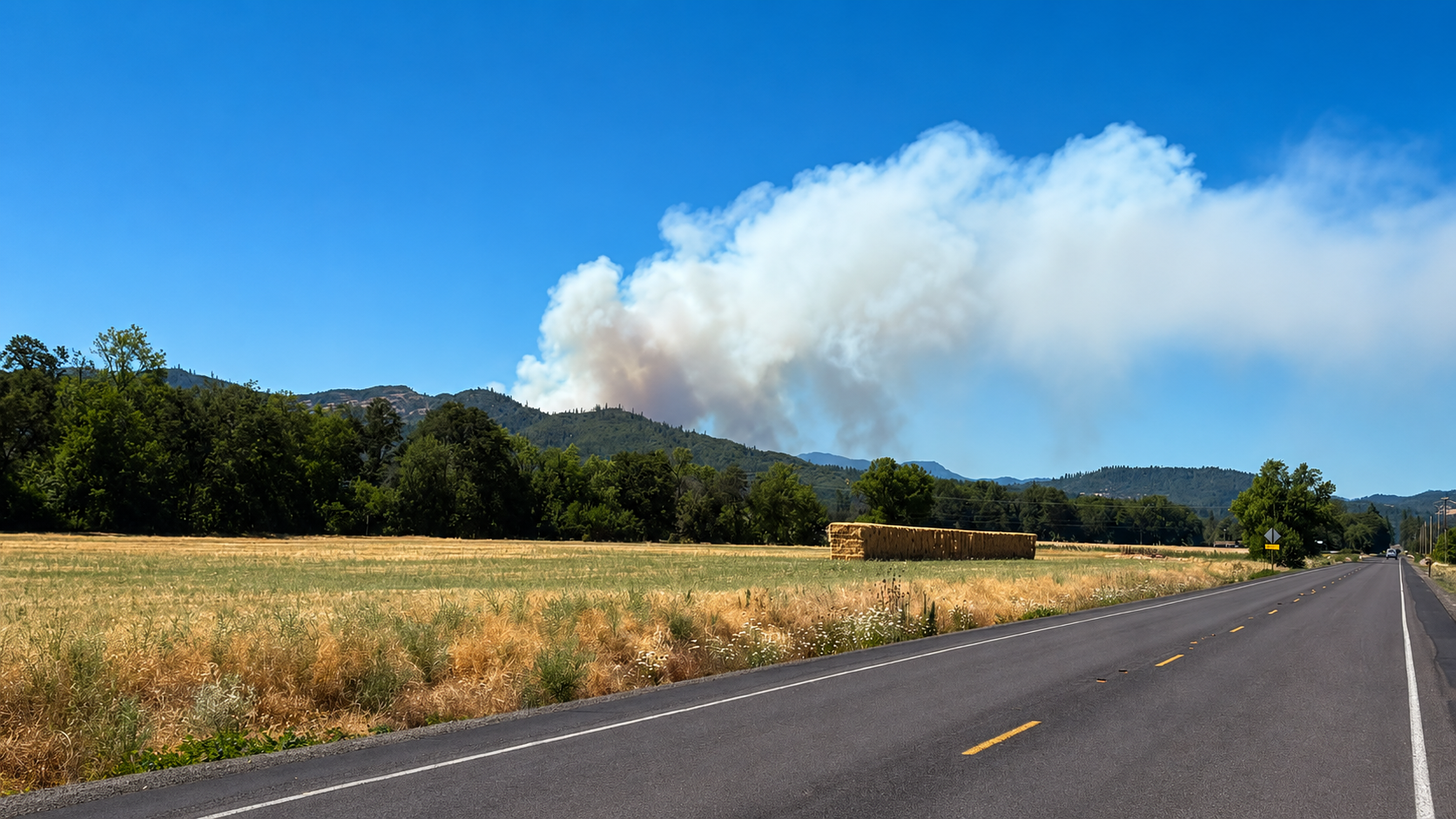
Southern Oregon remains firmly in the heart of wildfire season as firefighters continue strengthening containment on recent fires while preparing for the possibility of new ignitions across the region. Although several of the largest incidents that threatened communities in recent days have shifted into recovery and patrol operations, fire officials continue emphasizing that the combination of prolonged heat, critically dry vegetation, low humidity, and afternoon winds leaves Jackson, Josephine, Douglas, Curry, and Klamath counties vulnerable to rapid fire growth should new fires develop.
The most significant recent wildfire activity has centered in Jackson and Josephine counties, where firefighters have spent days constructing containment lines, extinguishing hotspots, and protecting homes and infrastructure. Extensive suppression efforts have greatly reduced the immediate threat posed by several of the region’s largest fires, but crews remain actively engaged in securing fire perimeters and monitoring areas where smoldering vegetation could reignite under changing weather conditions.
In Jackson County, firefighters continue extensive mop-up operations around the East Evans Creek Fire, one of Southern Oregon’s largest recent wildfire incidents. Although containment has improved considerably, firefighting resources remain committed to extinguishing lingering hotspots, reinforcing containment lines, and preventing flare-ups along the fire’s perimeter. Residents living throughout the Evans Creek corridor, Rogue River area, Wimer, and neighboring communities continue to receive updates as conditions evolve and fire managers assess remaining risks.
Josephine County has likewise transitioned from emergency suppression to recovery efforts following the fast-moving wildfire that burned near Interstate 5, Beacon Hill, and the West Jones Creek area. Firefighters have steadily improved containment while emergency officials have reduced or lifted many evacuation notices that were previously issued during the height of the incident. Even as residents return home, officials continue urging caution around damaged trees, weakened infrastructure, firefighting equipment, and isolated hotspots that may remain within the burned landscape.
Elsewhere across Southern Oregon, fire agencies remain engaged in monitoring numerous smaller incidents and lightning-caused fires located in more remote portions of Douglas, Curry, and Klamath counties. Many of these fires are burning in rugged terrain away from population centers, allowing firefighters to concentrate on containment while minimizing threats to nearby communities. Despite this progress, patrols continue throughout the region as agencies remain prepared to respond quickly should weather conditions cause existing fires to become more active.
Fire danger remains classified at elevated levels across much of Southwest Oregon, with agencies warning that virtually every county in the region continues to experience critically dry fuels capable of supporting rapid fire spread. Officials continue reminding residents that a single spark from outdoor equipment, vehicles, recreational activities, or improperly extinguished campfires can quickly ignite surrounding vegetation during the current weather pattern.
Public fire restrictions remain in effect throughout much of Southern Oregon. Activities capable of producing sparks remain heavily restricted on protected forestlands, including outdoor welding, grinding, metal cutting, debris burning, and many forms of equipment operation during the hottest portions of the day. Restrictions on campfires remain in place across numerous public lands except within specifically designated recreation sites where permitted. Fire officials continue asking residents to carefully review local regulations before conducting any outdoor work that could generate heat or sparks.
Although no widespread highway closures are currently affecting Southern Oregon’s major transportation corridors, travelers should continue exercising caution while driving throughout the region. Interstate 5, U.S. Highway 199, Highway 62, Highway 140, and other primary routes remain open, but motorists may encounter localized smoke, firefighting equipment entering or leaving active incidents, temporary traffic control, or short-term delays in areas where suppression work continues. Visibility can also change rapidly as shifting winds move wildfire smoke across valleys and mountain passes.
Air quality remains another concern throughout Southern Oregon. Smoke conditions continue fluctuating from one community to another depending on wind direction and fire activity. Communities including Grants Pass, Medford, Ashland, Central Point, White City, Rogue River, Cave Junction, Glendale, Merlin, Gold Hill, and Shady Cove may experience periods of reduced air quality, particularly during afternoon and evening hours when smoke settles into valley locations. Residents with respiratory or cardiovascular conditions, along with children and older adults, are encouraged to limit prolonged outdoor activity whenever smoke concentrations increase.
Outdoor recreation also requires additional planning during the current fire season. Campers, hikers, anglers, hunters, and visitors traveling into national forests or Bureau of Land Management lands should expect fire restrictions, occasional temporary trail or road closures near active incidents, and increased patrol activity by firefighting personnel. Travelers are encouraged to verify local conditions before departing, particularly when visiting remote forested areas where restrictions may change quickly.
Weather conditions are expected to remain a significant factor throughout the coming week. Forecasts continue calling for hot afternoons, warm overnight temperatures, little or no widespread rainfall, and persistently dry vegetation across Southern Oregon. These conditions will continue placing pressure on firefighting resources while increasing the likelihood that any new wildfire could spread rapidly before initial attack crews are able to establish containment.
Emergency managers continue encouraging every Southern Oregon household to remain prepared by monitoring evacuation information, maintaining emergency supply kits, reviewing family evacuation plans, and staying aware of changing weather, smoke, and fire conditions. While recent firefighting efforts have significantly reduced immediate threats across much of the region, the wildfire season remains far from over, and officials emphasize that continued public awareness and prevention remain among the most effective tools for protecting lives, property, and Southern Oregon’s forests.