


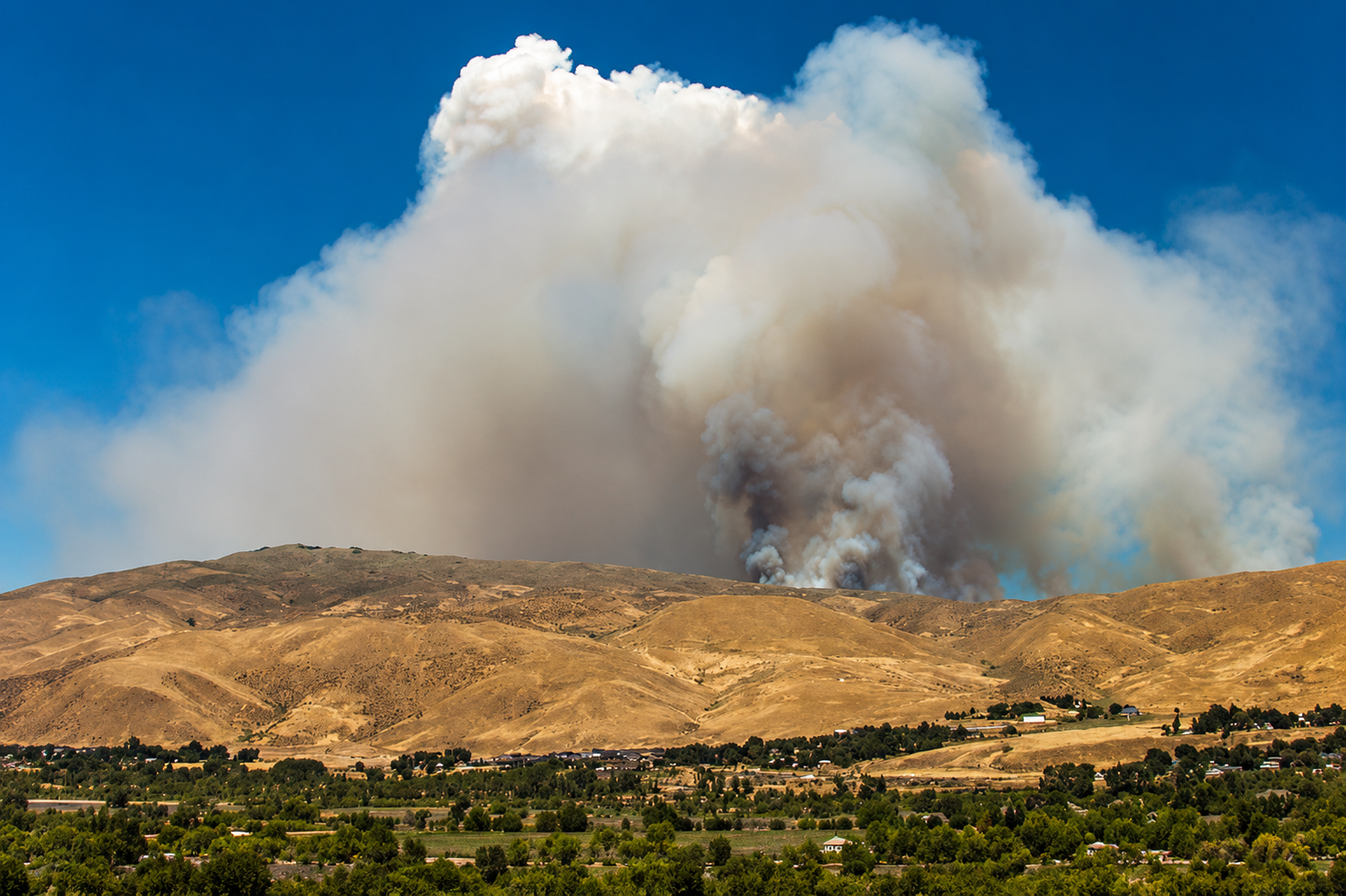
Fire suppression efforts along the Idaho–Oregon border have been complicated by an unusual and troubling challenge after threats and harassment directed at firefighting personnel prompted incident managers to temporarily withdraw crews from portions of an active wildfire. The decision, made to protect emergency responders working on the Tartar Fire and nearby Fox Fire, highlights a growing concern among wildfire agencies that dangers to firefighters now extend beyond flames, smoke, and rugged terrain.
Wildland firefighters routinely face hazardous conditions that include rapidly changing fire behavior, extreme heat, falling trees, steep landscapes, heavy equipment, and unpredictable weather. In recent years, however, emergency officials have increasingly recognized another risk that can significantly affect wildfire operations: interference and intimidation from members of the public. The latest incident along the Idaho–Oregon border demonstrates how threats unrelated to the fire itself can disrupt suppression efforts and require immediate operational adjustments.
According to fire officials, crews assigned to portions of the Tartar Fire were temporarily pulled back after reports of threatening and harassing behavior in the Devil’s Elbow area. Incident commanders determined that the safety of personnel could no longer be assured in that section of the fire, prompting firefighters to disengage until conditions could be evaluated and law enforcement addressed the situation.
The withdrawal was not the result of changing fire behavior or deteriorating weather conditions. Instead, it reflected standard wildfire management protocols that require personnel to avoid unnecessary risks whenever safety cannot be maintained. Firefighters are trained to disengage from operations whenever hazards outweigh the benefits of continued suppression, regardless of whether those hazards are created by natural conditions or human activity.
Although authorities have not publicly released detailed information about the individuals involved or the specific nature of the reported threats, officials have indicated that the incidents occurred in an area with a long history of disagreements involving federal land management. Rural communities throughout portions of the West have experienced periodic conflicts over issues such as grazing rights, public land access, and natural resource management. Investigators have not suggested that the actions of a small number of individuals represent the views of the surrounding communities, many of which have long supported firefighters during wildfire emergencies.
Large wildfires frequently require cooperation among numerous agencies operating under a unified command structure. Personnel assigned to incidents may include firefighters from the United States Forest Service, Bureau of Land Management, state forestry agencies, county fire districts, local departments, tribal organizations, emergency medical services, and law enforcement agencies. Each organization contributes specialized resources designed to safely and efficiently contain fires while protecting lives, homes, infrastructure, and natural resources.
When threats against firefighters arise, responsibility for scene security shifts to law enforcement agencies, allowing fire personnel to focus on suppression operations once the affected areas have been deemed safe. Maintaining that separation of responsibilities is considered essential to protecting emergency responders while preserving the effectiveness of firefighting operations.
Interruptions to suppression efforts can have meaningful operational consequences. Every hour firefighters are unable to strengthen containment lines, extinguish hotspots, or conduct strategic firing operations can provide additional opportunities for wildfires to spread, particularly during periods of high temperatures, low humidity, and gusty winds. While temporary withdrawals are sometimes necessary to protect personnel, they can delay progress toward containment and require incident managers to modify tactical plans until crews can safely return.
Fire officials emphasize that responder safety remains the foundation of every wildfire operation. Decisions regarding crew deployment are continually evaluated using established risk assessment procedures that account for fire behavior, weather forecasts, terrain conditions, aviation operations, equipment limitations, and emerging threats. Human-caused safety concerns are treated with the same seriousness as any other operational hazard because firefighters cannot effectively protect communities if their own safety is compromised.
The incident also comes at a time when emergency agencies continue to examine responder security following several high-profile attacks against first responders across the country. One of the most significant occurred in northern Idaho in 2025, when firefighters responding to a wildfire were ambushed, resulting in the deaths of two firefighters and serious injuries to another. That tragedy prompted wildfire agencies nationwide to strengthen coordination with law enforcement and review procedures for responding to potentially hostile situations while continuing emergency operations.
As wildfire seasons across the western United States become longer and more demanding, emergency management leaders continue adapting to challenges that extend beyond traditional fire suppression. Modern wildfire incidents require agencies to balance aggressive firefighting strategies with evolving safety concerns that include public interference, evacuation management, transportation issues, communications, and responder security.
Authorities have not announced any arrests related to the reported threats along the Idaho–Oregon border, and the investigation remains ongoing. Fire officials continue encouraging residents and visitors to respect wildfire closures, avoid entering active incident areas, and allow emergency personnel to perform their duties without interference. Officials also urge anyone who witnesses threatening or suspicious behavior directed toward firefighters or other emergency responders to immediately report it to law enforcement.
The temporary withdrawal of crews serves as a reminder that successful wildfire response depends not only on skilled firefighters and coordinated resources, but also on public cooperation. Every interruption to suppression efforts carries the potential to affect containment strategies, increase operational complexity, and place additional demands on emergency resources. As wildfire activity continues across the West, ensuring the safety of those working on the front lines remains an essential component of protecting both communities and the firefighters committed to defending them.