


Long before Dutch Bros became one of the fastest-growing drive-thru beverage companies in the United States, the business occupied a much smaller footprint. Its first customers were served from a coffee cart in Grants Pass, where a local startup built its reputation one drink and one conversation at a time. More than three decades later, the company that grew out of Southern Oregon is preparing for what could become one of the largest single-property acquisitions in its history.
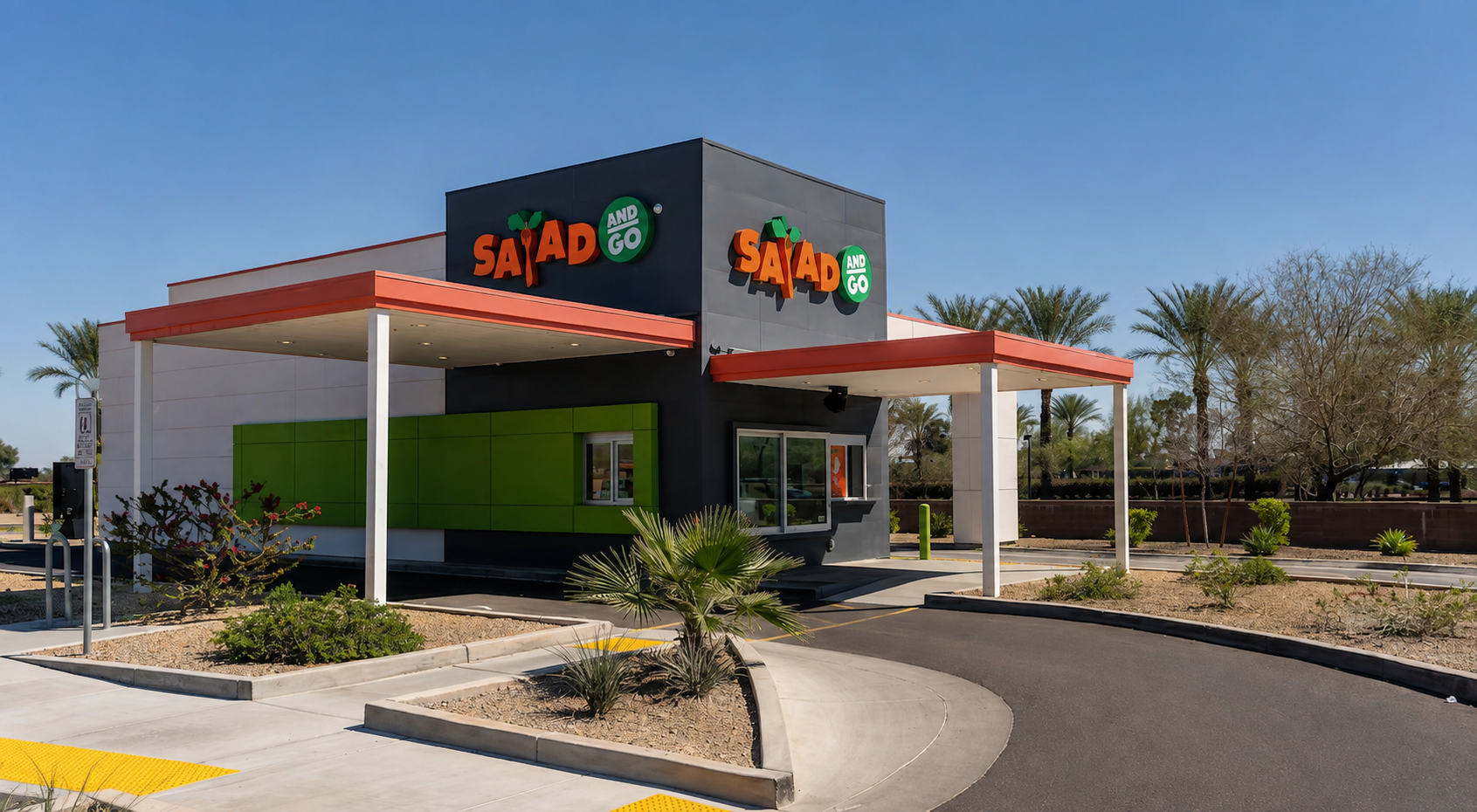
Court filings connected to the Chapter 11 bankruptcy of Salad And Go show Dutch Bros has reached an agreement to acquire a portfolio of former restaurant properties valued at approximately $105 million. The proposed transaction, still awaiting approval through the federal bankruptcy process, would place roughly 65 former Salad And Go locations under Dutch Bros ownership, giving the company an opportunity to expand its presence across Arizona, Nevada, Texas and Oklahoma through existing drive-thru facilities rather than newly constructed stores.
The filing has attracted national attention because of both the size of the proposed purchase and what it signals about the direction of one of the country’s fastest-growing restaurant brands. It also illustrates how bankruptcy proceedings often reshape the competitive landscape, allowing financially stable companies to expand by acquiring commercial assets that have already been developed, permitted and built.
For residents of Southern Oregon, the announcement resonates for another reason. Although Dutch Bros moved its corporate headquarters to Tempe, Arizona, last year, the company’s identity remains closely connected to Grants Pass, where its founders launched the business in 1992. That local beginning helped shape a company that has grown from a regional coffee stand into a publicly traded corporation operating hundreds of locations across the country.
The proposed acquisition is not a purchase of the Salad And Go restaurant chain itself. Instead, bankruptcy documents identify a transaction focused on commercial real estate interests, leases, restaurant equipment and other operating assets associated with former Salad And Go locations. Once the bankruptcy process concludes, those properties could be redeveloped and reopened as Dutch Bros locations.
That approach reflects a growing trend throughout the restaurant industry as expansion becomes increasingly expensive. Building a new restaurant requires land acquisition, engineering work, utility connections, permitting, construction and months of site preparation before serving the first customer. Existing drive-thru properties eliminate much of that process, allowing operators to move from acquisition to opening in significantly less time.
For a company whose business model has always centered on fast drive-thru service, the former Salad And Go buildings present an uncommon opportunity. The locations were originally designed around vehicle traffic, efficient customer flow and compact building layouts, characteristics already central to Dutch Bros operations.
Court records identify Boersma Bros., LLC, an entity affiliated with the founders of Dutch Bros, as the purchaser named in the agreement. The proposed sale carries a purchase price of approximately $105 million, including a $10 million deposit while bankruptcy proceedings continue. As with other Chapter 11 asset sales, the transaction remains subject to review by the bankruptcy court, and other qualified offers may still be considered before a final order is entered.
The largest portion of the proposed acquisition includes more than 50 locations in Arizona and Nevada, with additional sites in Texas and Oklahoma bringing the total package to approximately 65 properties.
The opportunity emerged after Salad And Go sought bankruptcy protection following several years of financial challenges that steadily eroded one of the industry’s most closely watched growth stories.
Founded on the idea of offering fresh, affordable meals through compact drive-thru restaurants, Salad And Go expanded rapidly throughout the Southwest and into Texas and Oklahoma. Investors and industry analysts viewed the concept as an innovative approach to fast food, combining lower-priced menu offerings with streamlined operations designed to reduce labor and operating costs.
Rapid expansion, however, also required significant investment.
Bankruptcy filings describe substantial spending on production facilities intended to support the company’s growing geographic footprint. Those investments were made as inflation increased operating expenses throughout the restaurant industry, pushing higher costs for labor, ingredients, transportation and utilities. At the same time, many consumers began reducing discretionary spending as household budgets tightened, creating additional pressure for restaurant operators nationwide.
The filings also reference declining customer traffic during a nationwide Cyclospora outbreak affecting portions of the fresh produce supply chain. Although the outbreak was not attributed directly to Salad And Go restaurants, the broader impact on consumer confidence surrounding fresh produce became another obstacle for a business already facing mounting financial strain.
As losses continued, Salad And Go began reducing its footprint, closing locations before ultimately seeking protection under Chapter 11 of the U.S. Bankruptcy Code. The bankruptcy process opened the door for buyers interested in acquiring individual assets rather than assuming responsibility for the company itself.
For Dutch Bros, the proposed transaction represents an opportunity to accelerate growth in markets where the company has already established a substantial presence. Arizona has become one of its largest operating regions, and acquiring existing drive-thru properties could allow the company to strengthen its position while avoiding many of the delays associated with traditional commercial development.
The proposal also reflects broader changes unfolding throughout the restaurant business.
Commercial properties that once housed one concept are increasingly finding new life under another as companies search for efficient ways to expand during a period marked by higher construction costs and longer development timelines. Rather than waiting years for new projects to move through planning and construction, operators are increasingly turning to existing restaurant facilities capable of being adapted for new brands.
That strategy has become particularly attractive for businesses built around convenience, where location often determines long-term success. Established drive-thru sites located along busy commuter routes or commercial corridors can offer immediate visibility and customer access that would otherwise require years to develop.
For Grants Pass, the proposed acquisition represents another chapter in a business story that began locally but now reaches well beyond Oregon’s borders. Dutch Bros may no longer call Southern Oregon home from a corporate perspective, but the company’s origins remain inseparable from the community where it first built its customer base and established the culture that became synonymous with its brand.
Whether the bankruptcy court ultimately approves the sale remains to be determined. Until that process concludes, the agreement remains a proposed transaction subject to federal court review and the legal procedures governing Chapter 11 asset sales.
If approved, dozens of former Salad And Go restaurants could eventually reopen under one of Oregon’s most recognizable business names, adding another milestone to the growth of a company whose journey began more than three decades ago with a single coffee cart in Grants Pass before expanding into a national brand.