


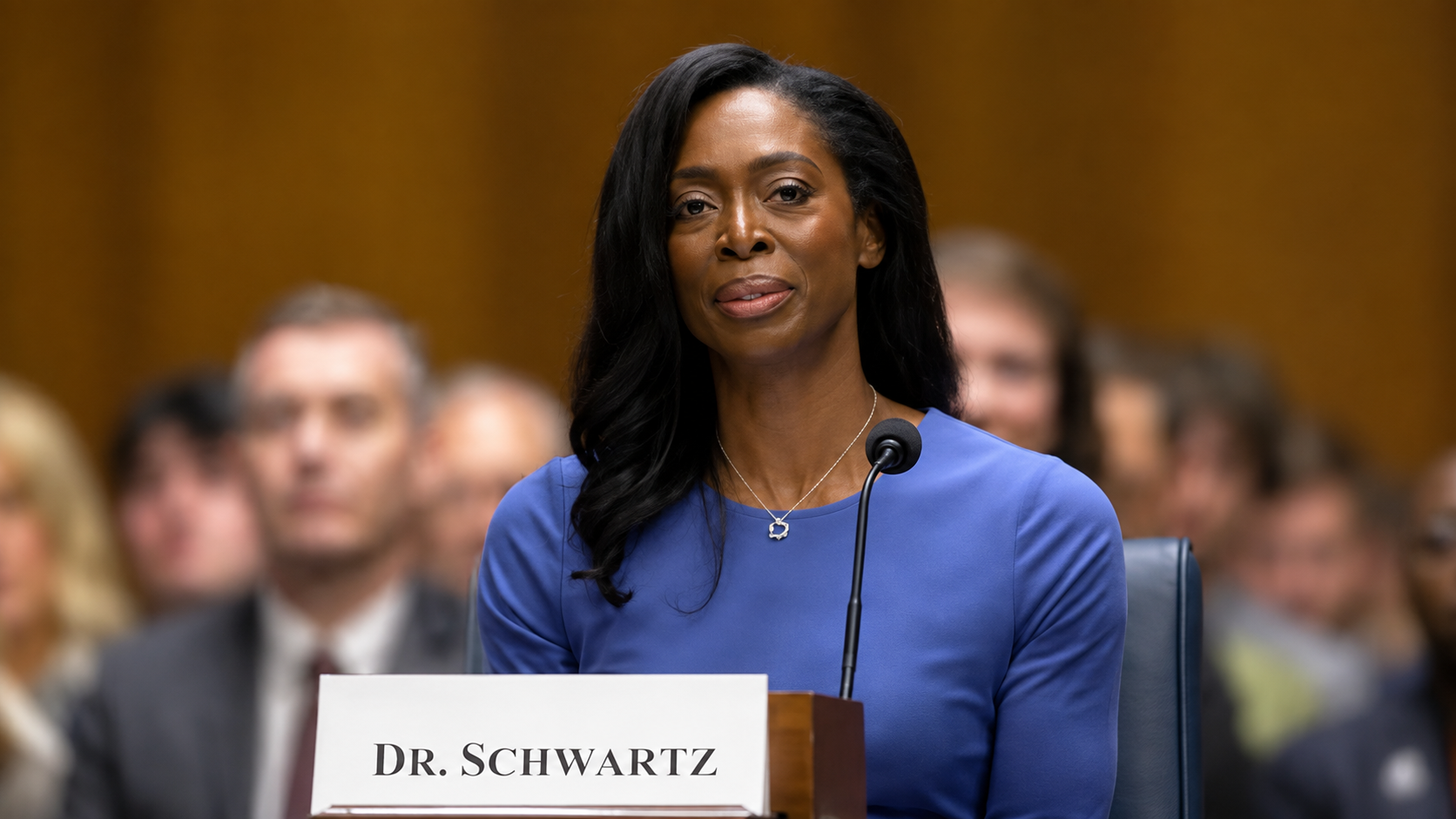
The United States Senate confirmed Dr. Erica G. Schwartz as the next director of the Centers for Disease Control and Prevention on Wednesday, marking a significant leadership transition for one of the federal government’s most influential public health agencies. Her confirmation follows months of uncertainty at the CDC and places a physician with decades of experience in military medicine, preventive healthcare, and federal public health administration at the helm during a period defined by emerging disease threats, evolving public health policy, and renewed national attention on government health institutions.
Approved by a narrow Senate majority, Dr. Schwartz assumes responsibility for an agency that serves as the nation’s primary authority for disease surveillance, outbreak response, emergency preparedness, health research, and public health guidance. Her confirmation concludes an extended period of leadership instability that saw multiple changes at the top of the organization, leaving the CDC without long-term direction during a time when public confidence in federal health agencies has remained under close scrutiny.
Dr. Schwartz brings an extensive professional background to the position. A physician specializing in preventive medicine, she has served in several senior federal health leadership roles throughout her career. Her previous service includes leadership positions within the United States Public Health Service and the United States Coast Guard, where she oversaw major healthcare operations and medical readiness initiatives. Her academic credentials span medicine, public health, and law, reflecting a career that has combined clinical practice with healthcare administration and public policy.
Her appointment arrives as the CDC continues confronting several significant public health responsibilities across the United States and abroad. Federal health officials remain engaged in monitoring infectious disease outbreaks, responding to foodborne illness investigations, strengthening vaccination programs, and maintaining nationwide disease surveillance systems designed to identify emerging health threats before they develop into larger public health emergencies.
Among the agency’s immediate priorities are ongoing efforts to respond to one of the nation’s largest measles outbreaks in decades while continuing international coordination involving outbreaks of Ebola and other infectious diseases overseas. The CDC also continues working alongside state and local health departments to monitor seasonal illnesses, improve laboratory capabilities, modernize disease reporting systems, and enhance emergency preparedness for future biological threats and natural disasters.
The confirmation also reflects the changing role of the CDC director within the federal government. Following congressional action enacted in recent years, the position now requires Senate confirmation, adding another layer of public accountability to an office that historically had been filled through presidential appointment without Senate approval. As a result, the confirmation process has become increasingly prominent, with lawmakers examining nominees not only for their scientific qualifications but also for their approach to public communication, agency management, and implementation of national health policy.
During the confirmation process, senators questioned Dr. Schwartz about maintaining scientific integrity while leading an agency that has often found itself at the center of political debate in recent years. Lawmakers from both parties examined her views on transparency, scientific research, vaccine policy, and the CDC’s relationship with the Department of Health and Human Services. Her testimony emphasized evidence-based decision-making, accountability, and the importance of preserving public confidence in federal health recommendations while carrying out the priorities established by the administration.
Her confirmation comes after several previous nominations and leadership changes left the CDC operating under interim leadership for much of the past year. The absence of a permanent director created uncertainty at a time when the agency continued managing complex public health responsibilities across the nation while coordinating with international partners on emerging health concerns.
As Dr. Schwartz begins her tenure, she inherits an organization responsible for protecting the health of hundreds of millions of Americans through disease prevention, epidemiological research, emergency response, laboratory science, and partnerships with public health agencies at every level of government. Her leadership will influence national strategies addressing infectious diseases, chronic health conditions, emergency preparedness, and public health modernization while helping shape the federal government’s response to future health challenges.
With permanent leadership once again established, the CDC enters its next chapter facing both familiar responsibilities and new expectations. As disease surveillance expands, medical technologies continue evolving, and public health challenges grow increasingly complex, the agency’s direction under Dr. Schwartz is expected to play a central role in shaping the nation’s public health infrastructure for years to come.